Navigating the Twelve-Month Cash Flow Forecast: A Practical Guide
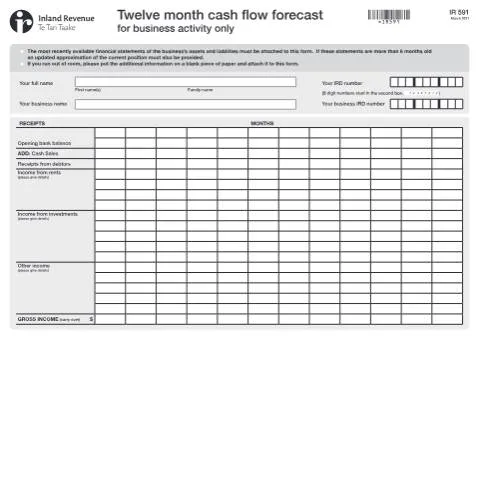
Imagine you’re a business owner on the brink of launching a new product line. You understand the market well, and you’ve laid the groundwork for your venture. However, to ensure your business stays afloat and thrives, it’s crucial to maintain a healthy cash flow. This is where the Twelve-Month Cash Flow Forecast (IR591) comes into play—a vital tool for managing your finances, securing loans, and planning for future expenses.
Who Needs to Provide This Forecast?
The Twelve-Month Cash Flow Forecast is essential for various business profiles, particularly:
- Small Business Owners: Individuals running their businesses must provide a cash flow forecast to manage day-to-day expenses effectively.
- Startups: New ventures seeking funding from banks or investors need to demonstrate their anticipated cash flow to secure financial backing.
- Established Businesses: Even long-standing companies may find this forecast useful to anticipate seasonal changes in cash flow and plan for unexpected costs.
However, there are specific circumstances and exceptions to consider:
- If your business operates at a loss or has fluctuating income, the detailed prediction of cash inflow and outflow becomes even more critical.
- Non-residents or foreign entities conducting business in New Zealand may have different reporting requirements, necessitating local advice.
Understanding the Sections of the Cash Flow Forecast
The form comprises numerous sections, each requiring careful attention to detail. Here’s a breakdown of important components:
Opening Bank Balance
This section asks for your business’s current bank balance. Misreporting this can lead to inaccurate forecasts:
- Ensure you provide the correct figure from your latest bank statement.
- Any overdraft facilities should also be noted, as they affect cash availability.
Income Streams
Next, you'll detail your income sources, which can include:
- Cash Sales: Project your revenue from direct sales.
- Receipts from Debtors: Ensure you’re realistic about the payments expected from clients.
- Investment Income: If you earn from investments, provide specific details here.
Note that it’s critical to back up your estimates with historical data or market research to avoid overestimating your income.
Projected Payments
This section outlines your anticipated outgoings, which include:
- Salaries and Wages: Include all staff-related expenses.
- Overheads: Such as utilities and rental expenses. Be thorough in detailing these, as they significantly impact your available cash.
- Capital Expenditure: If you plan to purchase significant assets, include a projection here.
What Sets This Forecast Apart from Other Financial Documents?
The Twelve-Month Cash Flow Forecast differs from other financial documentation like annual budgets or profit and loss statements in a few crucial ways:
- Time Frame: This forecast emphasizes short-term financial health—specifically the next twelve months—while other documents may consider longer periods.
- Cash Versus Accrual: Unlike profit and loss statements that account for sales when made, cash flow focuses strictly on when cash actually moves in and out.
- Dynamic Nature: It’s a living document that should be updated regularly to reflect actual performance, whereas budgets can remain static for longer periods.
Special Cases: Unique Considerations for Different Profiles
When filling out the IR591, certain profiles may need to adopt additional strategies:
For Non-Residents
If you are a non-resident, ensure compliance with New Zealand’s tax obligations. You may need to consult with a local accountant to align your business forecasts with NZ tax regulations.
For Minors in Business
Minors (under 18) may face restrictions on business ownership but can still fill out the cash flow forecast under the guidance of a guardian. Accurate representation of any income and expenses is crucial for transparency.
Complex Situations
Business owners facing complex financial situations (e.g., partnerships, multiple income streams) must be particularly diligent with their forecasts:
- Consider utilizing accounting software for accuracy.
- Be sure to consult with a professional who understands your specific needs to avoid common pitfalls.
Preparing Required Documentation
Filing the IR591 requires specific documentation to back up your forecasts:
Financial Statements
The most recently available financial statements of the business's assets and liabilities must be attached. If these statements are more than six months old, provide an updated approximation. This will demonstrate the current financial position of your business.
Supporting Documents
Be prepared to include additional documentation that may strengthen your application, such as:
- Bank statements
- Contracts or quotes for expected income
- Inventory lists showing projected sales
Submission and Consequences of Non-Compliance
Once you have completed the forecast and gathered the necessary documentation, it’s time to submit. The process is predominantly online:
- Filing Online: Use the IRD’s official services to submit your form electronically for faster processing.
- Deadlines: Be aware of any deadlines pertinent to your business type, especially if you are filing as part of a tax return.
Non-compliance or inaccurate submissions can lead to dire consequences:
- Potential audits from the IRD.
- Fines or interest on unpaid taxes if your forecast inaccurately represents your financial situation.
- Loss of credibility with creditors or investors if projections are not met.
What Happens After Submission?
Upon submission, you can expect the following:
- Review Period: The IRD may take time to process your forecast. Keep an eye on your account for any notifications.
- Real-Time Adjustments: If your business circumstances change (e.g., unexpected expenses, changes in revenue), be proactive in updating your forecast and informing your stakeholders.
Ultimately, the Twelve-Month Cash Flow Forecast is more than just a form to fill out—it’s a strategic tool that can empower your business decisions, minimize risks, and ensure sustainability.
Understanding the Importance of a Twelve Month Cash Flow Forecast
A twelve-month cash flow forecast is crucial for both new and established businesses in New Zealand. It allows business owners to predict their financial situation over the coming year, helping to ensure they have enough cash on hand to meet obligations and invest in growth opportunities. Proper cash flow management can prevent insolvency and enable companies to thrive in a competitive environment.
A cash flow forecast helps identify periods of surplus or deficit. For instance, if a business anticipates a cash shortage at a specific time, it can plan accordingly—whether that means negotiating with suppliers for better payment terms or scheduling expenditures to align with periods of higher revenue. This proactive approach lays the groundwork for smarter decision-making and financial stability.
Moreover, investors and lenders often require a cash flow forecast as part of their assessment process. A well-prepared forecast demonstrates that management has a clear understanding of the business' financial health and a strategic plan to maintain it. This can enhance the likelihood of securing funding or investment.
Tools and Templates for Creating a Cash Flow Forecast
Creating a cash flow forecast doesn’t have to be a daunting task. Various tools and templates are available to simplify this process. Many businesses in New Zealand opt for online accounting software that includes cash flow forecasting features, allowing for easy tracking of income and expenses in real-time. These tools typically integrate with other financial data, making it easier to update forecasts as circumstances change.
For those who prefer a more manual approach, Excel spreadsheets can be a powerful option. A typical cash flow forecast template might include sections for projected income, fixed and variable expenses, and any anticipated changes in assets and liabilities. It's important to update these spreadsheets regularly and adjust projections based on actual figures, which will lead to more accurate forecasts over time.
Regardless of the method chosen, it’s essential to clearly define categories within the forecast. For instance, income might be broken down into sales revenue, interest income, and any other streams. Expenses could include rent, utilities, salaries, and marketing costs. By categorizing data, business owners can identify potential areas for cost reduction or investment.
Common Mistakes to Avoid When Creating a Cash Flow Forecast
When putting together a twelve-month cash flow forecast, several common pitfalls can hinder its effectiveness. One mistake is to underestimate expenses. Many entrepreneurs may have optimistic views about their spending, but it’s critical to account for all costs accurately. This includes one-off expenses that might be easy to overlook, like equipment repairs or seasonal fluctuations in utility bills.
Another frequent error is failing to update the forecast regularly. Cash flow is not static; it changes with market conditions and business performance. An outdated forecast can lead to poor financial decisions, such as overspending or missing opportunities to invest. Therefore, it is vital to revisit the forecast monthly, or even weekly, and adjust it based on the latest financial data.
In addition, neglecting to account for the timing of cash inflows and outflows can distort the forecast. For example, a business may expect a lump sum payment from a client but may not receive it until the following month. This misalignment can create misleading projections that could result in financial strain. Always factor in the expected payment dates and regular payment cycles when preparing the forecast.
Finally, be wary of using overly simplistic assumptions about growth rates or expense increases. Market trends may suggest certain growth rates, but real-world factors such as competition, economic conditions, and consumer behaviour can greatly affect these projections. A more nuanced analysis that considers the business environment will yield a more reliable forecast.