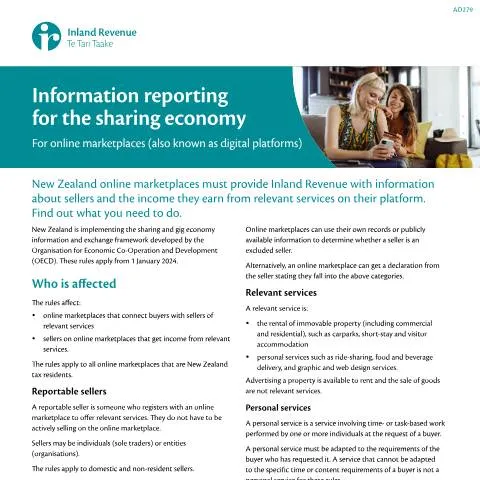
Navigating the AD279 Form: A Key Document for Online Marketplace Operators
The introduction of the AD279 form marks a significant shift in how online marketplaces in New Zealand manage and report income related to the sharing economy. As digital platforms increasingly connect buyers with sellers of various services, understanding the nuances of this form is essential for compliance and fiscal responsibility. Effective from January 1, 2024, the sharing and gig economy information exchange framework developed by the OECD introduces a comprehensive approach to taxation that has implications for both marketplace operators and their sellers.
Understanding the Historical Context of AD279
The evolution of the AD279 form is rooted in the broader regulatory efforts to enhance transparency and tax compliance within the burgeoning sharing economy. Historically, the rise of digital platforms has outpaced existing tax frameworks, leading to challenges in ensuring that all income generated through these channels is reported accurately. In response, the New Zealand government, through Inland Revenue (IRD), has crafted the AD279 to streamline information reporting.
This initiative is part of a global trend to capture revenue from non-traditional sources, as highlighted by the OECD's guidelines. The intent is not only to uphold tax fairness but also to foster a sustainable digital economy. By mandating specific reporting protocols for online marketplace operators, New Zealand aims to create a level playing field for all service providers, ensuring that no income goes unaccounted for.
Key Dates and Reporting Obligations
The timeline surrounding the AD279 is critical for both online marketplace operators and their sellers. With the rules coming into effect on January 1, 2024, here’s what you need to know:
- Start Date: The reporting obligations commence on January 1, 2024.
- Reporting Period: Information must be collected and reported for the calendar year ending December 31.
- Submission Deadline: Operators are expected to submit their reports to the IRD no later than January 31 of the following year.
Failure to comply with the reporting deadlines can lead to penalties and interest on unpaid taxes, emphasizing the need for meticulous record-keeping throughout the year.
Implications for Marketplace Operators and Sellers
Completing the AD279 form is not merely a bureaucratic requirement; it has real implications for the rights and responsibilities of all parties involved. Online marketplace operators must be diligent in their reporting duties, as failing to provide accurate information could result in penalties from the IRD.
For sellers, this means increased scrutiny of their income streams. While some may find the reporting requirements burdensome, it also opens up avenues for legitimate income recognition and potential eligibility for various tax deductions. However, it's essential for sellers to understand their status—whether they are classified as reportable, excluded, or active sellers—since this classification influences their tax obligations.
Who Falls Under the Reporting Requirements?
The AD279 form defines several key categories of sellers that need to be reported. Understanding these distinctions is crucial for compliance:
Reportable Sellers
- Must register with an online marketplace to offer relevant services.
- Can be individuals (sole traders) or entities (organizations).
- Applies to both domestic and non-resident sellers.
Active Sellers
- Provide services or receive income between January 1 and December 31 of the reporting year.
Excluded Sellers
- Government entities.
- Businesses listing more than 2,000 nights of accommodation per property in a year.
- Listed companies selling on online marketplaces.
Operators must accurately assess whether sellers fall into these categories, as this will dictate the necessary reporting actions.
Decoding Relevant Services and Consideration
At the heart of the AD279 form is the definition of "relevant services." Understanding what constitutes these services is critical for both marketplace operators and sellers. The following are noted as relevant services:
- Rental of immovable property, including commercial and residential accommodations.
- Personal services, such as ride-sharing and food delivery.
It is important to note that advertising a property for rent or the sale of goods does not qualify as relevant services under this framework. Moreover, the concept of "consideration"—which refers to any form of compensation provided to sellers—must be reported comprehensively, encompassing money, crypto assets, and payments in kind, all converted into New Zealand dollars for reporting purposes.
Detailed Breakdown of Reporting Information
Marketplace operators are required to gather and report a specific set of information for each reportable seller. The details vary slightly depending on whether the seller is an individual or an entity:
Information for Individual Sellers
- First name and last name.
- Primary address.
- Tax identification number (TIN) issued to them.
- Date of birth.
Information for Entity Sellers
- Legal name.
- Primary address.
- Tax identification number (TIN) issued to them.
- Business registration number (for New Zealand companies).
In addition to seller information, the marketplace must also report details related to immovable properties used in relevant services, including:
- Address of each property listing.
- Land registration number (if known).
- Number of days each property was rented during the calendar year.
- Type of each property listing.
Handling Non-Compliance and Corrections
It's imperative for marketplace operators to stay proactive in their reporting to avoid complications. Should any discrepancies arise—whether from an incomplete submission, incorrect information, or missing documentation—the operator must take immediate action. The following steps should be considered:
- Review the reported data for accuracy.
- Contact the IRD to clarify reporting requirements or correct any errors.
- Ensure that all communication is documented for future reference.
- Keep sellers informed of any changes that may affect their tax obligations.
Prompt reporting of corrections not only fosters transparency but can also mitigate penalties that could arise from non-compliance.
Special Cases and Considerations
While the AD279 framework is comprehensive, there are nuances that operators must consider for specific scenarios. Certain sellers may present unique situations that deviate from standard reporting requirements:
Foreign Sellers
For non-resident sellers, it’s crucial to ascertain their tax obligations under New Zealand law. Operators should collect the necessary TINs and confirm the seller’s residency status to ensure accurate reporting.
Minors and Guardianship Issues
Sellers that are minors (under 18 years of age) may require additional considerations. Operators should ensure that parental consent is obtained for any income reporting related to such sellers.
Urgent Situations
In cases of urgent compliance or reporting situations, operators are advised to seek immediate guidance from the IRD. It’s essential to remain vigilant about any changes in legislation that may affect reporting protocols.
Conclusion: Beyond Compliance
Completing the AD279 form is more than just a compliance task; it is a vital part of navigating the complexities of the sharing economy in New Zealand. By understanding the implications of this reporting requirement, online marketplace operators and sellers alike can not only ensure compliance but also contribute positively to the fiscal landscape of the nation. As such, embracing these regulations can position operators for success in an increasingly regulated digital economy.
Understanding the Tax Obligations for Online Marketplace Operators
Online marketplace operators in New Zealand have specific tax obligations that they must adhere to under the Goods and Services Tax (GST) regime. If your platform facilitates transactions between buyers and sellers, it is essential to understand if you're required to register for GST. The threshold for GST registration is NZD 60,000 in taxable supplies over the past 12 months. This includes not only direct sales but also services provided by the platform itself.
Once registered, operators must ensure they are collecting GST on eligible transactions. This can get complicated, especially in the sharing economy where services like accommodation, ridesharing, and freelance work are prevalent. The IRD (Inland Revenue Department) has issued guidelines specifying when GST applies to these transactions. For instance, if your platform earns a commission from services rendered, you may need to charge GST on your service fee.
Moreover, it’s crucial to maintain accurate records of all transactions. Marketplace operators are expected to provide detailed reports to the IRD, which include the total amount of GST collected and how it correlates with the revenue generated from the transactions. Failure to comply could result in penalties or further audits by the IRD.
Reporting Requirements for Marketplace Providers
As a marketplace provider in the sharing economy, you have additional reporting requirements under the Tax Administration Act. This includes the obligation to report income earned by your users, particularly if they reach a certain income threshold. The IRD mandates that if a user earns above NZD 1,000 in a tax year through your platform, you must report this income to the IRD.
To facilitate this, online marketplace operators need to collect relevant information from their users at the time of account creation. This includes personal details, tax numbers, and income declarations. Utilizing digital tools to streamline this data collection is advisable. Additionally, sharing this information with the IRD can usually be done through the IRD’s online portal, which is user-friendly and supports bulk uploads for large datasets.
Operators must also ensure compliance with privacy laws while handling user data. The Privacy Act 2020 requires that user information is safeguarded and used only for the purposes for which it was collected. Providing clear privacy policies to your users will not only enhance transparency but will also build trust in your platform.
Implications of Non-Compliance in the Sharing Economy
Neglecting the reporting obligations as an online marketplace operator can have serious implications. The IRD has been increasingly vigilant in enforcing compliance among platforms that fall within the sharing economy. Non-compliance could lead to substantial financial penalties, which can amount to percentage-based fines on unpaid GST or other discrepancies discovered during audits.
Moreover, persistent non-compliance could result in the revocation of your GST registration status, which can have a cascading effect on your business operations. Without GST registration, any transactions made through your platform may be deemed illegal, leading to potential legal ramifications.
Additionally, the reputational risk associated with tax non-compliance cannot be overstated. In an era where consumers are more socially conscious, demonstrating responsibility in tax matters can influence buyer behavior significantly. Many consumers prefer platforms that are transparent and compliant with local laws, which can ultimately affect your bottom line.
For these reasons, it's prudent for online marketplace operators to seek advice from tax professionals who specialize in GST and sharing economy compliance. They can assist in establishing robust reporting processes and ensure that you are meeting all regulatory requirements.