Navigating the Māori Authority Credit Account Return: An Essential Guide
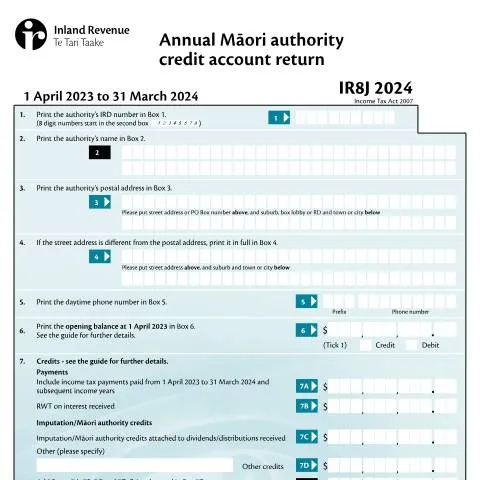
The Māori Authority Credit Account Return, designated as IR8J, is a crucial document for Māori authorities in New Zealand, facilitating their compliance with income tax obligations. This return is particularly significant for entities recognized as Māori authorities under the Income Tax Act 2007, allowing them to manage tax credits efficiently over the fiscal year running from 1 April 2023 to 31 March 2024.
The Importance of the Māori Authority Credit Account Return
Understanding the role of the IR8J form is paramount for Māori authorities. This document serves as a record-keeping tool for tracking various income tax activities, including credits and debits related to Māori authority operations. The return not only ensures compliance with tax regulations but also enables Māori authorities to claim credits and account for any tax liabilities.
What Makes the IR8J Distinct
- The IR8J specifically applies to entities classified as Māori authorities, distinguishing it from other tax returns such as the IR4 for partnerships or the IR3 for individuals.
- Unique to Māori entities, this form incorporates specific credits related to Māori authority distributions, which are not applicable to other tax forms.
- It emphasizes the importance of tracking income tax payments, Māori authority credits, and debits in a culturally respectful manner.
Filing the IR8J: A Step-by-Step Journey
Successfully filing the IR8J involves a structured process. Understanding the timeline and necessary actions can alleviate potential stress. Here’s an overview:
1. Gathering Required Information
Before filling out the form, gather necessary information:
- IRD Number: The unique Inland Revenue Department number assigned to the Māori authority.
- Authority's Name and Address: Ensure that both postal and street addresses are accurate to avoid any correspondence issues.
- Financial Records: Accumulate records of all credits and debits from the fiscal year.
2. Completing the IR8J Form
As you fill out the form, consider the following tips:
| Box Number | Description | Common Pitfalls |
|---|---|---|
| 1 | Print the authority’s IRD number | Ensure it is 8 digits and correctly formatted. |
| 6 | Opening balance as of 1 April 2023 | Double-check prior year figures for accuracy. |
| 7E | Total credits during the year | Be cautious of incorrect summation of Box 7A to 7D. |
| 9 | Closing balance as of 31 March 2024 | Follow the calculations closely to avoid reporting discrepancies. |
| 10 | Māori authority distribution penalty tax | Remember to multiply any debit by 0.1. |
3. Submission Process
Once completed, you must submit the IR8J. The following details your options:
- Submit by mail to the address specified on the form:
- Inland Revenue, PO Box 39090, Wellington Mail Centre, Lower Hutt 5045
- Electronic submissions can also be made through the Inland Revenue online portal, adhering to the guidelines provided there.
Understanding Potential Rejections or Errors
Despite careful preparation, there may be instances where your return could be questioned or rejected. Knowing how to address these situations is crucial.
Common Issues Leading to Rejection
- Incomplete Information: Failing to fill in all required boxes can trigger a rejection.
- Mismatched Numbers: Discrepancies in IRD numbers between submitted forms and records can lead to complications.
- Calculation Errors: Mistakes in calculating totals can result in penalties or additional inquiries from the tax office.
What to Do if Your Return is Rejected
- Review the rejection notice carefully to understand the reason.
- Gather any additional documentation or information requested by the Inland Revenue.
- Contact the Inland Revenue Department directly for clarification if needed.
- Make necessary corrections and resubmit the form, ensuring all adjustments are noted and justified.
Tracking Your Submission: The Role of Administration
Once submitted, it is important to keep track of your Māori Authority Credit Account Return. Here's how:
Monitoring Your Submission
- Use your RealMe digital ID to log into your account on the Inland Revenue website.
- Check the status of your submission and any communications from the tax office regularly.
- If you notice delays or lack of feedback, proactively reach out to the Inland Revenue for assistance.
Responding to Administration Inquiries
If queries arise from the Inland Revenue regarding your submission, respond promptly. Provide detailed explanations or additional documentation as necessary, while ensuring clarity in communication.
Implications of Late Submission and Penalties
Filing your IR8J late can have significant consequences:
Understanding Penalties
- Late Filing Fees: A penalty may apply for returns filed after the due date of 20 June 2024.
- Interest on Outstanding Amounts: If you owe tax and do not submit on time, interest may accumulate on any unpaid amounts.
- Impact on Future Filings: Continuous late submissions can lead to increased scrutiny from tax authorities in future filings.
Strategies to Avoid Penalties
- Set reminders for key dates associated with your filing obligations.
- Consider preparing your return well in advance of the due date to mitigate last-minute issues.
- Engage with tax professionals familiar with Māori authority requirements if needed.
The Future of the Māori Authority Credit Account Return
As regulations evolve, the importance of compliant filing remains steadfast. Keeping abreast of any changes to the Income Tax Act 2007 and the Māori authority framework will be vital for all entities.
Anticipated Changes and Updates
Entities should stay updated on any announcements from the Inland Revenue Department regarding adjustments to the IR8J form, especially concerning credits or reporting requirements. Regular updates are often conveyed via official channels, ensuring all parties remain informed.
Conclusion: Embracing Compliance and Cultural Responsibility
Filing the Māori Authority Credit Account Return, while potentially complex, is a vital responsibility for Māori authorities. Embracing this process not only facilitates compliance with tax obligations but also fortifies the integrity and sustainability of Māori entities within New Zealand’s economic framework. By approaching this task with diligence and cultural respect, Māori authorities can continue to thrive and contribute meaningfully to their communities.
Understanding Māori Authority Credits
In New Zealand, Māori authorities play a crucial role in the economic landscape, particularly in relation to land management and the generation of income from various assets. The Māori Authority Credit Account (MACA) system allows these entities to account for their tax obligations effectively. A Māori authority is essentially an entity that has been incorporated specifically for the benefit of Māori, often established to manage assets, investments, or land on behalf of the tribe (iwi) or hapū. Understanding the credits available to these authorities is essential for optimal financial management.
Māori authorities can apply for tax credits on certain income types, including dividends or distributions received from companies. The IRD identifies these credits, and they can be claimed through the Māori authority credit account return, making it an effective way to manage the financial affairs of the authority and its beneficiaries. It's worth noting that Māori authorities also benefit from the unique tax treatment under the Income Tax Act 2007, which can sometimes lead to reduced tax obligations compared to mainstream entities.
The return process involves filling out the appropriate forms (typically, the IRD provides a specific form for Māori authority returns). This is where authorities report their income and calculate their tax credits, ensuring they comply with New Zealand's tax regulations while maximizing any available benefits. To prepare for this return, authorities should have thorough documentation of all income sources and distributions made during the fiscal year, which runs from 1 July to 30 June.
Filing the Māori Authority Credit Account Return: Step-by-Step Guide
The process of filing a Māori authority credit account return can seem daunting, but breaking it down into manageable steps can streamline the experience. Here's a step-by-step guide to help Māori authorities navigate this important process.
- Gather Necessary Financial Information: Before completing the return, ensure that all financial records are up to date. This includes income from various sources, operating expenses, and any distributions made to beneficiaries. Accurate record-keeping is essential to justify all claims made in the return.
- Complete the Relevant Forms: The primary form for Māori authority returns is the IRD's specific application, which can be accessed online. Make sure to follow the guidance provided by IRD for filling out the form accurately. Pay careful attention to sections regarding income types and distributions to ensure correct calculations of tax credits.
- Submit Online via MyIR: New Zealand's IRD encourages online submissions through its MyIR portal, a user-friendly digital interface that allows authorities to manage their tax affairs efficiently. If you don’t already have a MyIR account, it’s advisable to create one, as this not only simplifies the filing process but also allows for quick access to important tax information.
- Review and Verify Submission: After submitting, take the time to review the confirmation message from IRD. It's important to keep a copy of the submitted return along with any supporting documents in case of future queries or audits by the IRD.
- Stay Informed About Compliance: After filing, remain proactive about compliance with the IRD. This includes being aware of deadlines for future filings and ensuring all income and rows are reported accurately. Regularly check IRD updates or changes in tax regulations that may affect Māori authorities.
By following these steps, Māori authorities can effectively manage their tax obligations and leverage the available credits to support their financial health.
Common Challenges and Solutions for Māori Authorities
While the Māori authority credit account return system is designed to facilitate tax management for these entities, there are various challenges that may arise. Understanding these challenges and their solutions can empower Māori authorities to navigate their financial responsibilities more effectively.
One prevalent challenge is the complexity of tax legislation, which can often be daunting for those who are not tax experts. To address this, it is advisable for Māori authorities to engage with a tax advisor familiar with Māori tax law and the specific needs of iwi entities. This not only ensures compliance but also helps maximize the benefits of tax credits.
Another common issue is the record-keeping process. Many Māori authorities may struggle with maintaining accurate and thorough financial records, which are critical for completing the MACA return. Establishing a robust financial management system can alleviate this issue. Regular training for staff responsible for financial management can enhance their skills and ensure consistency in record-keeping practices.
A further complication arises with the changing landscape of tax regulations. Māori authorities need to be aware of changes and how they affect their operations. Joining a professional network or group that focuses on Māori business and tax matters can provide valuable resources and insights, keeping authorities informed and prepared for any changes that may impact them.
Lastly, there can be challenges related to the engagement of beneficiaries regarding how tax credits affect distributions. Clearly communicating the process and the implications of tax obligations to the beneficiaries can foster better understanding and cooperation, ultimately leading to more harmonious financial management.