Understanding the Māori Authority Credit Account Return: A Vital Document
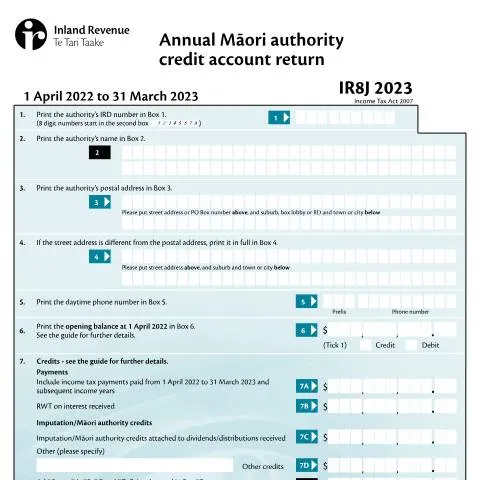
The Māori Authority Credit Account Return, referenced as IR8J, is a crucial component for Māori authorities in managing their income tax obligations within New Zealand. This return encapsulates the financial performance of Māori authorities over the fiscal year running from 1 April 2022 to 31 March 2023, necessitating accurate reporting of income, credits, and debits. Here, we delve into its significance, the profiles of those who must complete it, and the intricacies of filling out the form effectively.
Who Must File the IR8J?
The obligation to file the IR8J primarily rests on Māori authorities recognized under the Income Tax Act 2007. These organizations, which serve the economic interests of Māori communities, must adhere to specific guidelines set out by the Inland Revenue Department (IRD). Here are some categories of individuals and entities that might need to file this return:
- Māori Authorities: Registered entities that manage collective resources and benefit Māori communities.
- Trusts: Māori trusts that handle financial assets on behalf of beneficiaries.
- Incorporated Societies: Groups that have been established with specific objectives, including preserving Māori culture and heritage.
Each of these entities must ensure that they correctly report their financial activities to remain compliant with taxation laws.
The Role of the IR8J in Financial Accountability
The IR8J not only serves as a tax return but also plays an essential role in the broader context of financial accountability for Māori authorities. This document helps to:
- Report Credits and Debits: Capture the total financial activities impacting the Māori authority’s credit account.
- Assess Tax Liabilities: Determine the amount of tax payable based on revenue and expenses.
- Enhance Transparency: Provide a clear record that can be audited, promoting trust within the community.
Without proper filing of this return, Māori authorities risk penalties and a lack of accountability to their members.
Navigating the IR8J: A Breakdown of Each Section
Completing the IR8J requires careful attention to detail. Below is a section-by-section guide to help filers navigate the form effectively, highlighting common areas of confusion:
| Box Number | Description | Common Pitfalls |
|---|---|---|
| 1 | Authority’s IRD number | Ensure the IRD number is accurate; errors can delay processing. |
| 2 | Authority’s name | Use the official name as registered with IRD. |
| 3 | Postal address | Include a full postal address; incomplete details can lead to lost correspondence. |
| 6 | Opening balance | Check the prior year’s closing balance for accuracy. |
| 9 | Closing balance | Calculate carefully, as this informs future tax liabilities. |
Each box plays a critical role in ensuring the return is comprehensive and compliant with tax obligations.
Specific Considerations for Filing
While the IR8J is designed for Māori authorities, individuals or organizations may face specific circumstances that complicate their filing. Here are some noteworthy considerations:
- Foreign Entities: If your Māori authority engages with foreign markets, ensure compliance with international tax laws as well.
- Multiple Income Streams: Authorities with diverse activities (e.g., tourism, agriculture) must accurately report each source to avoid discrepancies.
- Changes in Structure: Any changes to the structure of the authority, such as mergers or acquisitions, may affect the reporting requirements.
It’s crucial for each authority to evaluate their unique circumstances and seek advice if necessary to ensure compliance.
How to Submit the IR8J: Channels and Procedures
Submitting the IR8J can be done through various channels, each with its process and advantages. Understanding these options allows authorities to choose the path most suited to their capabilities:
- Online Submission: The most efficient method. Filers can use the IRD's online services to complete and submit the IR8J. This method ensures quicker processing and immediate acknowledgment.
- Paper Submission: Authorities opting for the traditional method must ensure that the completed form is sent to the correct postal address: Inland Revenue, PO Box 39090, Wellington Mail Centre, Lower Hutt 5045.
- In-Person Submission: For those who prefer face-to-face interaction, visiting an IRD office allows for real-time assistance. However, it's advisable to book an appointment in advance.
Tracking the Progress of Your Submission
Once the IR8J has been submitted, it’s essential for Māori authorities to stay informed about the progress of their return. Here are some strategies to track submissions:
- Use Online Tools: The IRD provides online tools to check the status of submissions and any outstanding tax obligations.
- Keep Records: Always maintain copies of submissions for reference. If any issues arise, this documentation will be vital.
- Contact the IRD: If there are delays or concerns, reaching out to the IRD can clarify any issues and expedite resolution.
Conclusion: Empowering Financial Management through Compliance
Completing the IR8J not only fulfills a legal obligation but also empowers Māori authorities to manage their financial affairs responsibly. By engaging in transparent reporting and adhering to tax regulations, these authorities can enhance their credibility and support their communities effectively. The process may seem daunting, but with detailed understanding, accurate reporting, and the right support, Māori authorities can navigate the IR8J successfully.
Understanding the Māori Authority Credit Account: Key Elements
The Māori Authority Credit Account is a vital tool for Māori authorities in New Zealand, designed to streamline the process of tax credits related specifically to Māori entities. A Māori authority is defined as a body corporate that is either established under Te Ture Whenua Māori Act 1993, or a company that's majority-owned by Māori. These entities play an essential role in the economic and social development of Māori communities.
This credit account essentially functions as a mechanism for Māori authorities to claim tax credits on distributions made to their members. The process of filing a return for this account is distinct and requires a solid understanding of its implications for both the authority and its members. The primary benefit is that it allows Māori authorities, which often operate in a unique financial and legal environment, to manage their tax obligations and benefits more efficiently.
To successfully navigate this system, it’s critical for Māori authorities to maintain accurate records of distributions to members, as this information is essential when completing the Māori Authority Credit Account return. Furthermore, it ensures compliance with the regulations set by the Inland Revenue Department (IRD). The IRD provides specific guidelines on how to calculate the entitlements, which may vary based on the authority's income and the number of eligible members.
Filing Process for Māori Authority Credit Account Returns
Filing returns for the Māori Authority Credit Account involves several steps, each requiring diligence and accuracy. Authorities must prepare an annual return detailing the credit account's activities for the fiscal year ending 30 June. The return should be submitted to the IRD by the due date to avoid any potential penalties or interest charges.
First, authorities need to determine their eligibility. To qualify, at least 50% of the decision-making governance of the authority must consist of Māori. This ensures that the benefits directly serve the Māori community. Next, the authority must gather data on the distributions made to members throughout the fiscal year. This includes keeping detailed records of any dividends, returns, or distributions from the authority's income sources.
Once the necessary data has been collated, the authority will complete the IRD form specifically for the Māori Authority Credit Account, designated as IRD Form MA 1. This form requires comprehensive details, including the total income earned, total distributions made, and any credits that are being claimed. Authorities must also ensure that their RealMe digital ID is up to date for secure online logins, as the IRD emphasizes the use of their online services.
Submitting the return can be done directly through the IRD's online platform or by mail. Authorities are encouraged to opt for the online submission to expedite processing times, as it’s generally faster and more efficient. Upon successful submission, authorities will receive an acknowledgment of receipt, which should be retained for their records.
Common Challenges and How to Overcome Them
While the Māori Authority Credit Account return process is designed to be straightforward, several challenges can arise that may complicate an authority's ability to file accurately and on time. One common issue is the difficulty in maintaining comprehensive and accurate records of distributions. Given that many Māori authorities operate in diverse sectors, tracking these distributions can become complex. To address this, implementing robust accounting software tailored for Māori enterprises is crucial. This can automate record-keeping and ensure compliance with IRD requirements.
Another challenge that many authorities face is understanding the nuances of tax laws applicable to Māori entities. The legislation surrounding Māori authorities can be intricate and is often subject to change. Staying informed about updates or changes in the law is essential. Authorities may consider engaging with tax professionals who have experience working with Māori entities. They can provide valuable insights and guidance tailored to the unique needs of Māori authorities.
Additionally, establishing a dedicated team within the authority to manage compliance and filing can alleviate pressure, especially during peak filing times. This team should be well-versed in the specifics of the Māori Authority Credit Account return and serve as a resource for other members of the authority. Training sessions can also be beneficial for staff to ensure everyone understands the filing requirements, deadlines, and processes involved.