Diving Into the IR1250 Form: Understanding 'BEPS Disclosure Preparation'
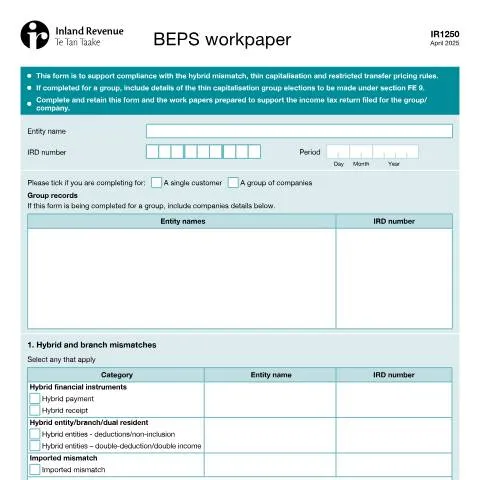
The IR1250 form, formally known as the BEPS (Base Erosion and Profit Shifting) disclosure preparation document, plays a pivotal role in New Zealand's tax compliance landscape. This form is tailored for individuals and entities engaged in cross-border transactions and aims to ensure compliance with rules surrounding hybrid mismatches, thin capitalization, and restricted transfer pricing. The implications of this form reach far and wide, impacting how multinational corporations structure their financial arrangements to align with local and international tax regulations.
The Significance of BEPS Regulations in New Zealand
In recent years, the New Zealand government has taken significant strides to combat tax avoidance practices that could erode its tax base. The introduction of the BEPS regulations marks a fundamental shift towards greater transparency and fairness in tax compliance. By requiring detailed disclosures of financial arrangements, New Zealand aims to mitigate risks associated with profit shifting and ensure that taxable income is reported accurately.
Key Components of the IR1250 Form
- Hybrid Mismatches: This section focuses on identifying instances where financial instruments or entities lead to discrepancies in tax treatment across jurisdictions.
- Thin Capitalization Group Information: Here, entities must disclose their debt levels in relation to their equity, providing insights into their financial structures.
- Restricted Transfer Pricing: This aspect addresses the pricing of transactions between related entities, ensuring compliance with established market rates.
Who Should Complete the IR1250 Form?
The obligation to complete the IR1250 form falls on various entities that engage in international transactions, particularly those that may trigger BEPS concerns. This includes:
- Corporations with cross-border operations.
- Groups of companies that collectively report financial information.
- Trusts and partnerships involved in significant international dealings.
Understanding whether you fall into these categories is crucial, as non-compliance can lead to substantial penalties and reputational damage.
Chronological Flow: From Trigger to Submission
The process of filling out the IR1250 form can be broken down into several key stages:
- Identify Triggering Events: Common triggers include new cross-border transactions or changes in the group’s financial structure.
- Gather Required Documentation: Compile all relevant financial documents, including prior tax returns and any agreements pertinent to hybrid mismatches or thin capitalization.
- Complete the IR1250 Form: Carefully fill out each section, ensuring that all required details are accurately reported.
- Internal Review: Conduct a thorough review to check for completeness and accuracy. This may involve consultations with tax advisors or legal experts.
- Submission: File the completed form with the IRD, either electronically or through traditional mail, ensuring compliance with submission deadlines.
Document Preparation: A Detailed Look at Justifications
Accurate completion of the IR1250 form is essential, as it requires substantial justification for the entries made. The justifications vary depending on the section being filled out:
1. Hybrid Mismatches Justifications
This section requires disclosures related to financial instruments that may have differing tax treatments. Key justifications include:
- Documenting the specific nature of the financial instrument or arrangement.
- Providing evidence of tax residency and applicable regulations in the foreign jurisdiction.
2. Thin Capitalization Group Justifications
For entities falling under thin capitalization rules, justifying the debt-to-equity ratio is crucial. This includes:
- Financial statements demonstrating the group's overall financial standing.
- Interest deduction claims supported by valid contracts and agreements.
3. Restricted Transfer Pricing Justifications
This segment demands detailed explanations regarding pricing strategies used in cross-border transactions:
- Evidencing compliance with arm’s length pricing standards.
- Providing market analysis or reports that support pricing decisions.
Submitting Your Form: Digital vs. Paper Channels
New Zealand emphasizes digital solutions for administrative processes, including the submission of the IR1250 form. Each channel offers distinct advantages and considerations:
| Submission Method | Advantages | Considerations |
|---|---|---|
| Online Submission | Faster processing, immediate confirmation, reduced paper usage. | Requires RealMe digital ID; potential technical issues. |
| Paper Submission | Familiar for some; no digital access required. | Longer processing times; confirmation may be delayed. |
Choosing the appropriate submission method can impact how swiftly your form is processed and any subsequent communications from the IRD.
Distinguishing the IR1250 from Other Tax Forms
It’s easy to confuse the IR1250 form with other tax-related documentation, especially given the intricate landscape of New Zealand's tax regulations. Here’s how the IR1250 stands apart:
- Focus on International Transactions: Unlike other forms that may pertain strictly to domestic affairs, the IR1250 specifically addresses cross-border concerns.
- Complexity of Reporting: The detailed disclosures required for hybrid mismatches and thin capitalization give this form a complexity not found in standard forms like the IR3 (individual income tax return).
- Specific to BEPS Regulations: The unique emphasis on BEPS compliance sets the IR1250 apart from general tax compliance forms.
Handling Special Situations: Guidance for Complex Cases
Certain circumstances can complicate the filling out of the IR1250. Here’s how to navigate some of these unique scenarios:
Foreign Entities
For entities based outside New Zealand filing the IR1250, consider the following:
- Establish residency for tax purposes.
- Ensure compliance with both New Zealand and foreign tax regulations to avoid dual taxation.
Minor Involvement
In situations where a minor is a stakeholder or beneficiary in a trust or partnership, additional considerations include:
- Understanding the implications of minors in tax disclosures.
- Potential parental or guardian involvement in decision-making and reporting.
Urgent Filings
If you find yourself needing to file the IR1250 form urgently due to impending deadlines or audits:
- Prioritize the collection of key financial data.
- Seek immediate professional guidance to ensure compliance under tight timelines.
Next Steps After Submission: What to Expect
Once the IR1250 form is submitted, several follow-up actions may ensue:
- Confirmation of Receipt: Expect a notice from the IRD confirming that your submission has been received.
- Review Process: The IRD may conduct a review of the submitted information, potentially leading to requests for additional documentation.
- Assessment Outcomes: Depending on the review, you may receive notification of any adjustments to your tax obligations or further actions required.
Maintaining communication with the IRD during this period is crucial, as it can facilitate smoother resolution of any queries that may arise.
Final Consideration: Navigating the Complexities of International Tax Compliance
The IR1250 form encapsulates the complexities of international tax compliance in New Zealand. As businesses increasingly operate on a global scale, understanding and correctly navigating these requirements is vital to ensuring compliance, avoiding penalties, and fostering a transparent fiscal environment.
For individuals or entities unsure about their obligations or how to properly complete the form, seeking expertise from tax professionals who specialize in New Zealand's tax laws can be invaluable. Engaging with knowledgeable advisors can help elucidate complicated tax scenarios and assist in preparing a robust submission that stands up to scrutiny.
Understanding the BEPS Framework in New Zealand
The Base Erosion and Profit Shifting (BEPS) framework, developed by the Organisation for Economic Co-operation and Development (OECD), aims to combat tax avoidance strategies that exploit gaps and mismatches in tax rules. In New Zealand, the application of BEPS principles is designed to ensure that profits are taxed where economic activity occurs and where value is created. The New Zealand government has committed to implementing these principles, and businesses must align their tax practices accordingly.
As part of the BEPS initiative, New Zealand has adopted measures that focus on several key areas, including transfer pricing, harmful tax practices, and increased transparency through reporting requirements. Businesses operating across borders must be aware of these factors, as compliance is not only a matter of legality but also impacts a company's reputation and long-term sustainability in the global market.
To prepare for BEPS disclosure, organizations should first conduct a comprehensive review of their current tax arrangements. This involves an assessment of intercompany pricing policies and the geographical allocation of profits and losses. Engaging with tax professionals who understand the nuances of both New Zealand tax law and international tax treaties can help ensure compliance and mitigate risks associated with BEPS non-compliance.
Key Steps for BEPS Disclosure Preparation
Preparing for BEPS disclosure in New Zealand can be a complex process. Here are some key steps that businesses should consider to ensure they meet the requirements set forth by the IRD:
- Gather Relevant Data: Collect financial data and documentation pertinent to the financial year. This includes financial statements, tax returns, and details regarding intercompany transactions.
- Review Transfer Pricing Policies: Assess your organization’s transfer pricing arrangements against international standards. This includes ensuring that your pricing strategies are consistent with the arm's length principle as outlined in the OECD guidelines.
- Prepare the Local File and Master File: Companies need to maintain a Local File that details the financial and operational information of the local entity, as well as a Master File that provides a comprehensive overview of the multinational enterprise’s global business structure and financials.
- Conduct a Risk Assessment: Perform a risk assessment regarding potential BEPS risks. This should include evaluating the tax environment of each jurisdiction in which your company operates.
- Consult with Experts: Engage tax advisors or specialists familiar with BEPS requirements and local legislation to ensure that all disclosures are accurately completed and submitted.
- Submit Required Documentation: Ensure timely submission of all required disclosures to the IRD in accordance with local deadlines.
By following these steps, businesses can better prepare for BEPS disclosure and maintain compliance with New Zealand tax obligations.
Common Challenges in BEPS Disclosure and How to Overcome Them
Despite the proactive steps a business may take in preparing for BEPS disclosure, there are common challenges that can arise:
- Complexity of Transfer Pricing: Many companies struggle with the intricacies of transfer pricing regulations and documentation requirements. To overcome this, businesses should invest in training for their finance teams or hire external advisors who specialize in this area.
- Data Management Issues: The collection and organization of relevant data can be burdensome. Implementing robust financial systems or software that facilitate data aggregation and reporting can significantly streamline this process.
- Understanding Local and International Tax Laws: The evolving nature of tax laws can create confusion. Regular training and updates from tax professionals can keep companies informed about changes that may affect their BEPS compliance.
- Time Constraints: Preparing for BEPS disclosure can be time-consuming, especially for large organizations. Prioritizing BEPS preparation as part of corporate strategy can help allocate necessary resources effectively.
By addressing these challenges, businesses can enhance their BEPS compliance and avoid potential penalties from non-compliance.