Navigating the IR1145 Form: A Comprehensive Guide for Taxpayers
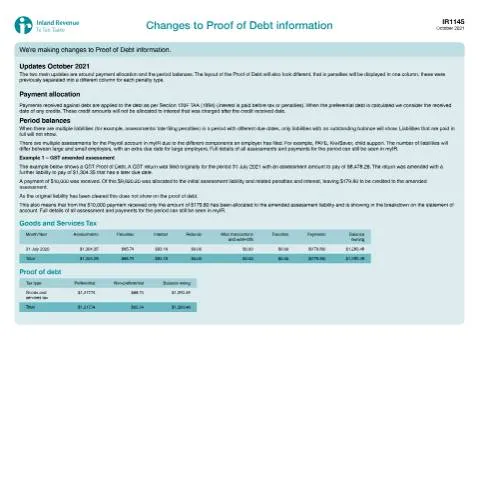
Tax obligations can be daunting, especially when they involve procedures like filing the IR1145, also known as the Proof of Debt. This document plays a pivotal role in maintaining tax compliance, and understanding its specifications is crucial for anyone engaged in the tax system in New Zealand. Whether you're an individual taxpayer, a business owner, or an accountant, having a clear grasp of how to manage this form can save you time and stress in the long run.
Understanding the Context: Who Engages with the IR1145?
The IR1145 is primarily used by individuals and entities who owe tax or have outstanding debts with the Inland Revenue Department (IRD). This form is particularly pertinent in the following scenarios:
- Individuals: If you are a sole trader or individual taxpayer who has unpaid liabilities.
- Businesses: Companies or organizations that are responsible for employee taxes or GST (Goods and Services Tax) and need to clarify their debt status.
- Agents or Accountants: Professionals acting on behalf of clients may also find themselves needing to fill out this form to address tax-related matters.
Moreover, understanding the categories of taxpayers and their specific obligations can lead to different implications regarding the IR1145. For example, corporate entities may have more complex liabilities compared to individual taxpayers.
Special Cases: When the IR1145 is Essential
While the IR1145 is relevant for general debt proofing, certain situations can make the form particularly critical:
- A business undergoing financial difficulties may use the IR1145 to negotiate payment terms with the IRD.
- Taxpayers facing penalties or interest charges may reference the document for disputing claims or clarifying amounts owed.
- When involved in an insolvency process, the IR1145 can be necessary for legal compliance and transparency.
Clarifying the Distinctions: IR1145 vs Other Tax Forms
Confusion often arises between the IR1145 and other tax-related forms, such as the IRD's IR365 or the IR595. Understanding what sets the IR1145 apart is crucial for effective tax management:
| Form | Purpose | Usage Context |
|---|---|---|
| IR1145 | Proof of Debt | Documenting outstanding liabilities and payments due |
| IR365 | Employer Monthly Schedule | Reporting PAYE deductions and employee-related taxes |
| IR595 | GST Return | Reporting GST collected and payable |
This distinction is essential, as filing the wrong form can lead to miscommunication with the IRD and potentially more pressing issues, such as penalties or interest accruing due to incorrect filings.
The Big Picture: The Role of the IR1145 in the Tax Process
The IR1145 is not merely an isolated document but a crucial component of a broader tax compliance framework. Its role can be viewed as follows:
- Documenting Debt: The IR1145 officially records any outstanding tax liabilities.
- Facilitating Payments: By clarifying owed amounts, it helps taxpayers plan and manage their payment schedules.
- Supporting Disputes: It serves as a concrete reference point when disputing wrongful charges or claims made by the IRD.
Taxpayers must recognize that effective management of the IR1145 can influence their overall fiscal health. By staying proactive in addressing debts, taxpayers can minimize the risk of penalties and further complications.
Getting Prepared: Gathering Required Documentation
Before diving into the completion of the IR1145, preparing the necessary documentation can streamline the process significantly. Depending on the taxpayer's situation, the following documents may be relevant:
For Individuals
- Recent tax assessments or statements from the IRD.
- Bank statements reflecting any payments made towards the tax liabilities.
- Any correspondence from the IRD regarding outstanding debts.
For Businesses
- Payroll records showing tax contributions and liabilities.
- GST returns filed within the financial year.
- Documentation of any additional penalties incurred.
Gathering this information before starting the form completion ensures that taxpayers can provide accurate and timely data, avoiding unnecessary delays.
Decoding the IR1145: A Section-by-Section Breakdown
Completing the IR1145 requires attention to detail. Below is a detailed walkthrough of its various sections, highlighting common pitfalls to avoid:
Section 1: Taxpayer Information
This section requires the taxpayer's details, including name and IRD number. Ensure that the information matches exactly what is on record with the IRD to avoid discrepancies.
Section 2: Outstanding Debt Details
Here, taxpayers must outline their debts. It's critical to provide accurate balances. If you are unsure, consult your myIR account for precise figures. Misstated amounts can lead to further complications.
Section 3: Payment History
Document any payments made towards the debt. This history should correlate with the IRD records. Double-check this against your bank statements.
Section 4: Additional Information
In this section, you may need to include reasons for outstanding balances or circumstances impacting your ability to pay. Clarity here can aid in future negotiations with the IRD.
Common Errors to Avoid
- Omitting essential information, such as correct IRD numbers or addresses.
- Providing outdated payment records.
- Failing to cross-check submitted figures with myIR accounts.
Submitting the IR1145: Navigating the Process
Once the IR1145 is prepared, the next step is submission. Understanding the various submission methods is vital:
- Online Submission: Taxpayers can submit the IR1145 through their myIR account, which is the quickest and most efficient method.
- Mail: Alternatively, taxpayers can print and mail the completed form to the relevant IRD address. Ensure you have adequate postage and proof of mailing.
It's advisable to keep a copy of everything submitted for your records. Documentation is your ally, especially if discrepancies arise later.
Post-Submission: Tracking Your IR1145 Status
After submission, staying informed about the progress of your IR1145 can be done through various channels:
- Log into your myIR account to monitor any updates or changes regarding your outstanding debts.
- Contact the IRD directly if you have not received confirmation or if there are complications.
Be proactive in following up if you notice that your submission has not been processed within a reasonable timeframe. Sometimes, administrative errors can delay processing, and it's better to check than to assume everything is on track.
The Future of Tax Compliance: Keeping Your IR1145 Updated
Tax regulations and obligations can change, and the IRD occasionally updates forms and processes. It's crucial to stay informed about any legislative changes affecting your tax obligations. Regularly reviewing your IR1145 and ensuring all information is current will facilitate smoother interactions with the IRD.
Staying Engaged with the IRD
- Subscribe to IRD updates or newsletters for the latest information.
- Consider attending tax workshops or seminars to enhance your understanding of compliance requirements.
Engaging actively with the IRD not only helps you remain compliant but also positions you as an informed taxpayer, potentially easing the overall process in future tax years.
Understanding the IR1145 Form: Key Points
The IR1145 form, officially known as the "Application for a Tax Code Declaration," is an important document for individuals who need to apply for or update their tax code in New Zealand. It is essential to have the correct tax code as it directly affects the amount of tax withheld from your income. This form is particularly relevant for employees, contractors, and anyone receiving taxable income who wishes to ensure their tax deductions are accurately calculated to avoid overpayment or underpayment.
When filling out the IR1145, applicants must provide personal details such as their name, address, IRD number, and details about their employment or income sources. It is crucial to select the appropriate tax code that reflects your income situation, such as being a standard employee, earning additional income, or being on a special tax arrangement. The IRD provides guidelines on selecting the correct code, and the consequences of choosing incorrectly can lead to unnecessary tax liabilities or refunds.
Moreover, the IR1145 is not only for new applicants; existing taxpayers can also use it to update their tax code if their circumstances change. For instance, if you begin or end a secondary job, your tax situation may be different, and filing an updated IR1145 will help ensure that your tax deductions are current. Submitting this form can be done online through the IRD’s online services, which is encouraged as it speeds up processing times and offers a more streamlined experience.
Common Mistakes to Avoid When Submitting IR1145
Filling out the IR1145 form can seem straightforward, but there are several common pitfalls that applicants should avoid to ensure their application is processed smoothly. One of the most frequent mistakes is providing incorrect personal information. Double-checking your IRD number, name spelling, and address is critical. Even a small error can lead to delays in processing your application.
Another common issue arises from selecting the wrong tax code. Many individuals may not fully understand the different tax codes and their implications. For example, using a tax code meant for part-time or casual work while being employed full-time can result in under-taxation and subsequent tax liabilities. It’s advisable to refer to the IRD's guidance materials or consult with a tax professional if you are unsure about which code applies to your situation.
Additionally, timely submission of the IR1145 is essential. While you can submit it at any time, doing so at the beginning of the fiscal year or right before a new job starts can help align your tax deductions with your income from the outset. Delays can lead to interim tax deductions that may not reflect your actual tax obligations. Always keep a copy of your submitted form for your records, as this can be beneficial should any issues arise later.
How to Check the Status of Your IR1145 Submission
Once you have submitted your IR1145 form, it is important to track its status to confirm that your tax code has been updated accordingly. The IRD provides several online tools that allow you to check your tax code and ensure that the information is correct. To do this, you can log in to your IRD online account, where you can view your tax details and any pending actions related to your submissions.
If you do not have an online account, it is highly recommended to create one through the IRD’s RealMe digital ID service. This secure platform not only provides access to your tax information but also makes it easier to manage your tax affairs in New Zealand. If you notice any discrepancies in your tax code or have not received confirmation of the update, you can contact the IRD directly via their helpline or visit a local office for assistance.
In some cases, the processing of your IR1145 may take longer, especially during peak periods, such as the start of the new fiscal year or tax season. Therefore, it’s a good practice to submit your form as early as possible and keep an eye on your email or postal mail for any communications from the IRD. Having your tax affairs in order is vital not just for compliance, but also for financial planning and peace of mind.