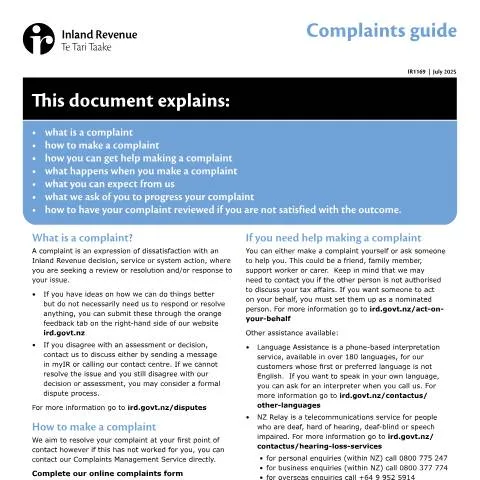
Understanding the IR1169: Guidance on Making a Complaint to Inland Revenue New Zealand
Introduction to IR1169 and Its Purpose
The document IR1169, titled "Contact us," serves as an official guide issued by Inland Revenue (IRD) of New Zealand to assist individuals and entities in understanding the process of lodging complaints. Published in July 2025, this notice aims to clarify how to communicate dissatisfaction regarding IRD decisions, services, or system actions, and outlines the procedures to seek resolution or review. It is part of IRD’s commitment to transparency and customer service excellence, aligning with the principles of the Official Information Act 1982 and the Plain Language Act 2022.
Scope and Applicability of the Guidance
This guidance is relevant for anyone who interacts with IRD services and wishes to formally express dissatisfaction. Whether you are an individual taxpayer, a business owner, or a representative acting on behalf of someone else, IR1169 provides essential information on how to effectively raise a complaint. It also offers insights into the support available for those facing language barriers, hearing impairments, or other needs, emphasizing IRD’s commitment to equitable service delivery.
What Constitutes a Complaint?
According to IR1169, a complaint is defined as an expression of dissatisfaction with a decision, service, or system action by IRD, where the complainant seeks a review, resolution, or response. This includes disagreements with assessments, decisions about entitlements, or the quality of service received. The guide clarifies that feedback on ideas for improvement, which do not require a response or resolution, can be submitted via the online feedback tab on IRD’s website.
The Complaint Process: From Submission to Resolution
How to Make a Complaint
- Online: The preferred method is to complete the online complaints form available on IRD’s website. This ensures that all relevant information is captured to facilitate an efficient review.
- Phone: Call the dedicated contact centre, leave a detailed voice message, and IRD will respond within one business day. The contact numbers differ for New Zealand and overseas callers.
- Mail: Send a written complaint to IRD’s Complaints Management Service at their postal address in Wellington.
Support and Assistance During the Complaint Process
IRD recognizes that some individuals may need help to make their complaint. Support options include language assistance through a telephone interpretation service in over 180 languages, and specialized services for those with hearing impairments. Additionally, individuals can appoint a nominated person or support worker to assist them, provided proper authorization is given.
What to Expect After Submitting a Complaint
Once a complaint is received, IRD commits to acknowledging it within one business day by assigning a case number. The department aims to resolve issues within 20 business days, although complex cases may require additional time. During this period, IRD may contact the complainant for further information and will keep them informed of progress. The outcome will be communicated through the preferred contact channel, usually via email, letter, or phone.
Standards of Service and Expectations
IRD pledges to handle complaints professionally, courteously, and efficiently, respecting the rights and dignity of all individuals. They also emphasize the importance of constructive and respectful communication from complainants, requesting that individuals provide complete information and refrain from abusive or threatening behaviour. This mutual respect supports a fair and transparent resolution process.
Review and Escalation of Complaints
If a complainant is dissatisfied with the outcome, IRD provides avenues for review and escalation. The process encourages individuals to follow the specified channels to seek further review, ensuring that concerns are addressed thoroughly and fairly. IRD’s commitment to continuous improvement means that feedback from complaints is valued as an opportunity to enhance service quality and responsiveness.
Conclusion
The IR1169 guide exemplifies IRD’s dedication to accessible, transparent, and respectful communication with the public. By clearly outlining the steps to lodge a complaint and the support available, IRD aims to foster trust and accountability in its dealings with New Zealanders. Whether resolving disputes or providing feedback, this process is designed to be straightforward, ensuring that everyone’s voice can be heard and addressed appropriately.