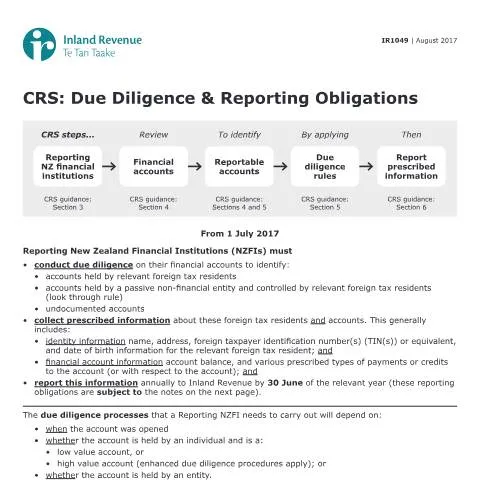
Navigating the CRS: A Comprehensive Look at Form IR1049
The landscape of international finance is intricate, with regulatory frameworks evolving constantly. In New Zealand, the Common Reporting Standard (CRS) has introduced specific due diligence and reporting obligations that financial institutions must adhere to. Form IR1049, officially titled CRS: Due Diligence and Reporting Obligations, stands at the forefront of this regulatory requirement, primarily aimed at New Zealand Financial Institutions (NZFIs). Understanding this document is crucial for ensuring compliance while navigating the complex terrain of tax transparency.
The Evolution of CRS and Its Regulatory Framework
The CRS was established by the Organisation for Economic Co-operation and Development (OECD) as a global standard for the automatic exchange of financial account information between countries. This initiative emerged in response to the increasing demand for transparency in tax matters and the need for jurisdictions to combat tax evasion through the use of foreign accounts.
New Zealand adopted the CRS framework, with the due diligence obligations commencing on 1 July 2017. This adoption is part of a broader commitment to international taxation standards and aligns with the Official Information Act 1982 and the Plain Language Act 2022, which emphasize clarity and accessibility in governmental communications.
Financial institutions in New Zealand were tasked with implementing these due diligence processes, ensuring they could identify accounts held by foreign tax residents. The transition to this new regulatory environment required training, system upgrades, and a significant shift in operational protocols. Form IR1049 is a reflection of this commitment.
Understanding the Distinctions: Form IR1049 vs. Other Reporting Forms
Form IR1049 is often misunderstood or conflated with other reporting requirements. It's essential to recognize its specificity:
- Target Audience: While many forms deal with general financial reporting, IR1049 is specifically aimed at NZFIs responding to CRS obligations.
- Focus on Foreign Tax Residents: Unlike other forms that may address local tax obligations, IR1049 is explicitly designed to identify accounts held by foreign tax residents, which requires a particular diligence approach.
- Self-Certification Requirement: The form mandates that financial institutions obtain self-certification from account holders, a unique requirement that differentiates it from standard financial reporting forms.
Understanding these distinctions will help institutions better prepare for and comply with the CRS requirements.
Timelines: Key Dates and Reporting Periods
The CRS reporting framework operates on a specific timeline, and adherence to these deadlines is crucial for compliance. The reporting periods and associated deadlines are detailed below:
| Reporting Period | Due Diligence Commencement | Reporting Deadline |
|---|---|---|
| Transitional Period | 1 July 2017 | 30 June 2018 |
| Subsequent Periods | 1 April - 31 March | 30 June |
| Pre-existing High Value Individual Accounts | 30 June 2017 | 30 June 2018 |
| All Other Pre-existing Accounts | 30 June 2017 | 30 June 2019 |
It is critical for NZFIs to maintain accurate records and stay informed about these timelines to avoid potential penalties for non-compliance. The importance of proper timing cannot be understated in ensuring that reporting obligations are met without issue.
Submission Channels: Online vs. Paper
New Zealand's government emphasizes digital services, and the submission of Form IR1049 is no exception. Financial institutions can submit the IR1049 form through various channels, each with its nuances and requirements.
Online Submission
The online submission process is streamlined and user-friendly, leveraging the RealMe digital ID system. This method allows for:
- Efficiency: Submissions can be made quickly and easily without the need for physical paperwork.
- Tracking: Institutions can receive immediate confirmation of their submissions, facilitating better record-keeping.
- Accessibility: Financial institutions can access and complete forms at their convenience, eliminating the constraints of office hours.
Paper Submission
While online is preferred, some institutions may opt for paper submissions. However, this method is often less efficient:
- Processing Delays: Paper forms may take longer to process, potentially impacting compliance timelines.
- Higher Margin of Error: Errors are more common in handwritten forms, which can lead to further complications.
- Limited Confirmation: Institutions may not receive immediate confirmation of their submissions, complicating follow-ups.
For most institutions, online submission is the recommended path, utilizing the benefits of digital efficiency and accuracy.
Special Cases: Navigating Complex Situations
Certain situations necessitate a tailored approach when completing Form IR1049. These include scenarios involving foreign entities, minors, or complex financial arrangements.
Foreign Entities
For accounts held by foreign entities, institutions must ensure that they have adequate procedures to:
- Identify the controlling persons of the entity.
- Obtain relevant self-certification from these individuals to assess their tax residency status.
- Collect and report prescribed information in accordance with CRS requirements.
Failure to adequately assess these accounts can result in serious compliance issues, making it critical for NZFIs to have a comprehensive understanding of their obligations.
Minors and Undocumented Accounts
When dealing with minors or undocumented accounts, the due diligence process becomes more complex. Institutions may need to:
- Implement additional safeguards to ensure that the information gathered is accurate and complete.
- Consider legal guardianship implications for minor account holders.
- Report undocumented accounts to the Inland Revenue if the account status cannot be confirmed.
The nuanced requirements in these cases necessitate that institutions invest time in training their staff and ensuring that they have clear protocols in place.
Administration Processing and Dossier Follow-Up
Once Form IR1049 is submitted, it enters the hands of the Inland Revenue Department (IRD). Understanding the processing stages can aid institutions in managing their compliance effectively.
Processing Stages
The administration of submitted forms typically follows these steps:
- Initial Review: The IRD conducts a preliminary examination of the submitted documents for completeness and accuracy.
- Data Verification: Information is cross-checked against existing records and databases to ensure consistency.
- Final Assessment: The IRD may reach out for further clarification if discrepancies arise, or to confirm details.
- Reporting Outcomes: Institutions are notified of the results of the review, including any required actions or follow-ups.
How to Follow-Up
If an institution wishes to check the status of their submission, there are specific channels available:
- Online Portals: Utilizing the RealMe digital ID to access submission records.
- Direct Contact: Calling or emailing the IRD for specific inquiries regarding submitted forms.
Maintaining open lines of communication with the IRD can help mitigate issues and clarify any uncertainties surrounding compliance obligations.
Final Thoughts on Complying with the CRS Obligations
Completing Form IR1049 is a critical step for New Zealand Financial Institutions in adhering to international tax standards. Understanding the nuances surrounding the form, including its specific purpose, submission channels, and processing requirements, can empower institutions to navigate the complexities of the CRS landscape effectively.
Ensuring compliance requires diligence, attention to detail, and a commitment to understanding regulatory obligations. As the global financial landscape continues to evolve, staying informed will be key to maintaining compliance and fostering trust in the financial system. By engaging proactively with these obligations, NZFIs can contribute to a more transparent international financial environment.
Understanding CRS: The Basics of Due Diligence
The Common Reporting Standard (CRS) is an international standard for the automatic exchange of financial account information between tax authorities. Implemented in over 100 countries, including New Zealand, it aims to combat tax evasion and ensure transparency. Financial institutions in New Zealand are required to perform due diligence on account holders to identify their tax residency status. This is critical to fulfill their reporting obligations. In this section, we delve deeper into the due diligence processes that New Zealand's financial institutions must undertake.
Due diligence under the CRS involves several steps, starting with the identification of account holders. Financial institutions must collect self-certification forms to ascertain an account holder's tax residency. For New Zealand, the self-certification must conform to the requirements set forth by the Inland Revenue Department (IRD), specifically through the use of designated forms which have been explicitly designed for CRS compliance. The IRD provides detailed guidelines on acceptable self-certification formats and the required information.
Account holders are categorized based on their residency status—whether they are tax residents of New Zealand or another CRS participating jurisdiction. This classification is crucial as it dictates the reporting requirements. Financial institutions must also consider ‘controlling persons’ of entities, especially in the context of trusts or companies. A controlling person is typically a natural person exercising control over the entity. Institutions must gather adequate information to determine the residency of these individuals as well.
After establishing residency status, institutions must maintain accurate records. The IRD mandates that records should be kept for at least five years, which includes the self-certification forms and any other documentation supporting the due diligence process. This record-keeping is vital not only for compliance but also in the event of inquiries or audits by the IRD. New Zealand’s rigorous approach to due diligence ensures that financial institutions are actively participating in the global effort to enhance tax compliance.
Reporting Obligations: What Financial Institutions Need to Know
Once the due diligence process is completed, financial institutions in New Zealand have specific reporting obligations under the CRS. This involves submitting data regarding reportable accounts to the IRD, which subsequently exchanges this information with other tax jurisdictions. Reporting is typically annual and must be completed by the deadlines set by the IRD.
Information to be reported includes the account holder's name, address, tax identification number (TIN), account balance, and any income generated from the accounts. It's essential for institutions to ensure accuracy in the information reported, as errors can lead to significant legal penalties and reputational damage. Institutions are also encouraged to have robust internal processes and compliance programs in place to facilitate accurate reporting.
The IRD has developed a specific reporting schema that institutions must utilize. This schema outlines the format and structure in which the data must be submitted and is available on the IRD’s official website. Moreover, institutions are required to make use of standardized validation processes to confirm that the data they submit is complete and complies with CRS requirements. This proactive approach to compliance not only safeguards institutions but also enhances their credibility in the financial sector.
In the event of any discrepancies or issues identified during the reporting process, institutions are obligated to rectify these promptly. They must also ensure they have a clear channel of communication with the IRD to address any queries that may arise concerning the data submitted. This emphasizes the importance of an ongoing relationship with the tax authority to maintain compliance and avoid penalties.
Challenges and Best Practices for CRS Compliance
While the CRS aims to standardize reporting practices across jurisdictions, New Zealand financial institutions face unique challenges in complying with these regulations. One significant challenge is the complexity and breadth of the information that needs to be collected. Account holders may not always understand the requirements of self-certification, leading to incomplete or inaccurate information being submitted. Educating account holders about their obligations under the CRS is vital for successful compliance.
Another challenge arises from the varying interpretations of CRS regulations across different jurisdictions. This can create confusion regarding the classification of accounts and the subsequent reporting requirements. Financial institutions must stay updated with the latest guidelines published by the IRD and other relevant authorities to ensure alignment with international standards.
To mitigate these challenges, institutions should adopt best practices in their compliance programs. Regular training sessions for staff responsible for CRS reporting can enhance understanding and ensure that everyone involved is aware of the latest developments in CRS requirements. Additionally, employing automated systems for data collection and reporting can significantly reduce the risk of human error.
Collaboration with legal and tax professionals is also advisable. These experts can provide valuable insights into navigating compliance complexities and any changes in legislation that could affect reporting obligations. By establishing a robust network of support, financial institutions can ensure they are well-equipped to handle the demands of CRS compliance.
Ultimately, a proactive and educated approach to CRS due diligence and reporting obligations will not only protect institutions from potential penalties but also contribute to the broader goal of enhancing tax transparency and compliance on an international scale.