Understanding the Impact of the World Bank Doing Business Report on Mauritius
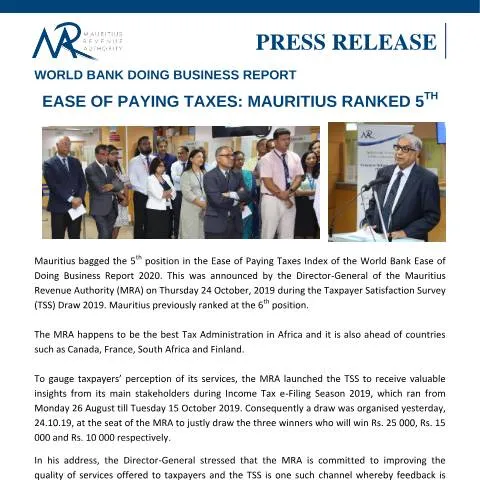
The recent announcement from the Mauritius Revenue Authority (MRA) highlights an important milestone for Mauritius in the realm of taxation. As reported on October 25, 2019, the country achieved the fifth position in the Ease of Paying Taxes Index, as part of the World Bank’s Doing Business Report 2020. This ranking is not just a number; it signifies the effectiveness of Mauritius's tax administration and its commitment to enhancing taxpayer experience.
The Role of the MRA and Its Ongoing Initiatives
The MRA, recognized as the leading tax administration in Africa, has implemented various initiatives aimed at simplifying tax compliance for its citizens. Among these initiatives is the Taxpayer Satisfaction Survey (TSS), aimed at garnering feedback from taxpayers. This survey, running from August 26 to October 15, 2019, allowed the MRA to collect invaluable insights into the perception and satisfaction levels among taxpayers.
Enhancing Taxpayer Services
- Electronic Filing: A staggering 185,612 income tax returns were submitted electronically in 2019, reflecting a nearly total adherence to e-filing.
- Refunds Processed: More than 54,000 individuals received refunds exceeding Rs. 330 million, underlining the efficiency of the MRA's refund process.
- Positive Feedback: The TSS revealed that 85% of respondents rated the overall service delivery as Good or Very Good.
Navigating the Submission Process for the Taxpayer Satisfaction Survey
Participating in the TSS not only provides feedback but also allows taxpayers to win prizes, further incentivizing engagement with the MRA. The draw took place on October 24, 2019, rewarding taxpayers who participated in the survey. This event illustrated the MRA's commitment to actively involving taxpayers in the improvement of services.
Steps to Participate in the TSS
- Registration: Ensure you are registered with the Mauritius Revenue Authority.
- Survey Completion: Fill out the TSS questionnaire, which can be accessed online during the submission period.
- Entry for Draw: Upon completion, your entry automatically qualifies you for the prize draw.
What Distinguishes This Publication from Other Documents
While many forms and documents are associated with tax submissions in Mauritius, the Press Release regarding the World Bank’s Doing Business Report serves a unique purpose. Unlike standard tax forms that require detailed financial information, this publication focuses on communicating the performance of the MRA and the effectiveness of tax systems.
Key Differences
| Document Type | Purpose | Submission Requirements | Frequency of Release |
|---|---|---|---|
| Press Release | Inform the public about rankings and performance | No submission required | As needed |
| Tax Forms (e.g., Income Tax Returns) | File taxes and claim refunds | Financial documents required | Annually |
Preparing for the Upcoming Tax Seasons
With the fiscal year in Mauritius running from July 1 to June 30, taxpayers should be proactive in preparing for upcoming obligations. The MRA’s recognition as a top-performing tax authority places an expectation on citizens to engage with their processes promptly.
Key Dates and Considerations
- Fiscal Year: Remember the fiscal year timeline, as it directly impacts filing deadlines.
- Documentation: Begin collecting all necessary documents early to avoid last-minute rushes during tax season.
- Engagement: Stay updated with MRA communications for any changes in procedures or requirements.
Continuous Improvement Through Feedback Mechanisms
The MRA’s ongoing commitment to gathering taxpayer feedback demonstrates a proactive approach to governance. The statistics shared by the Director-General during the announcement are particularly telling of the administration's effectiveness and responsiveness to taxpayer needs.
Statistics Revealed
- 80% of taxpayers reported an overall trust in the MRA.
- Only 4% felt that the tax system was not administered fairly, indicating strong public confidence in the authority.
Conclusion: An Invitation to Engage
As Mauritius continues to climb global rankings in ease of tax payment, the onus is on taxpayers to remain engaged with the MRA. Not only does participation in surveys like the TSS allow for improvements in services, but it also reinforces the relationship between the tax authority and its citizens. Each taxpayer has a role in shaping a more efficient and transparent tax environment.
The MRA urges all citizens to be active participants, ensuring that Mauritius remains a leader in tax administration in Africa and beyond.
Understanding the Taxation Framework in Mauritius
The taxation framework in Mauritius is multifaceted, governed by a hybrid system that incorporates both French civil law and English common law principles. This duality influences the overall ease of paying taxes, as well as the compliance obligations taxpayers face. The primary tax authority overseeing tax matters is the Mauritius Revenue Authority (MRA), which administers various taxes including income tax, value-added tax (VAT), and other levies. Understanding this framework is essential for businesses and individuals alike, as it directly impacts their tax obligations and rights.
The corporate tax rate in Mauritius is notably competitive at around 15%, with the government continually seeking to foster a favorable business climate. Tax incentives are available for specific sectors, such as technology and financial services, which can significantly reduce the effective tax rate for eligible entities. Moreover, Mauritius has strategic double taxation agreements (DTAs) with several countries, encouraging foreign investment while mitigating the risk of double taxation for residents and non-residents.
For individual taxpayers, the progressive income tax rates range from 0% for low-income earners to 15% for higher earners. These rates are designed to ensure equity in tax contributions while stimulating economic growth. Additionally, the MRA has streamlined the tax filing process through the use of e-filing, which has revolutionized compliance. Taxpayers can file returns and pay taxes online, significantly reducing the time and effort traditionally associated with tax payments.
Challenges and Opportunities in Tax Compliance
While Mauritius ranks highly in the ease of paying taxes, challenges still persist, especially for small and medium-sized enterprises (SMEs). The tax compliance burden, despite improvements, can still be daunting due to the need for meticulous record-keeping and understanding the various tax obligations. SMEs often lack the resources to hire tax professionals, leading to potential compliance risks.
However, the MRA has introduced several initiatives aimed at easing this burden. For instance, the introduction of the Business Facilitation Act aims to simplify the taxation process and provide a more business-friendly environment. Furthermore, the MRA regularly conducts workshops and seminars for SMEs to educate and inform them about their tax obligations, thus fostering a culture of compliance.
Moreover, there exists an opportunity for businesses to leverage technology in their tax compliance processes. The increasing adoption of digital accounting solutions can significantly improve the efficiency of tax-related tasks, allowing SMEs to focus more on their core operations rather than getting bogged down by compliance issues. The government’s push towards digitization offers an avenue for SMEs to enhance their operational efficiency while remaining compliant with tax regulations.
The Future of Taxation in the Context of Global Trends
As Mauritius continues to develop its economy and enhance its ease of doing business, the taxation landscape is likely to evolve in response to global trends. One significant trend is the global shift towards sustainability and carbon taxation. As countries worldwide grapple with climate change, Mauritius may follow suit by introducing environmental taxes or incentives for businesses that adopt sustainable practices.
Additionally, the digital economy presents both challenges and opportunities for the Mauritian tax system. The rise of e-commerce has necessitated a re-evaluation of tax policies to effectively tax digital transactions. The MRA is expected to explore innovative taxation models that address the growing digital marketplace while ensuring fairness and compliance. This may involve collaborating with international organizations to align with best practices in taxing the digital economy.
Looking forward, the Mauritian government is also likely to continue exploring avenues to enhance the efficiency of tax administration. The integration of artificial intelligence (AI) and data analytics into tax compliance processes could revolutionize how taxes are collected and administered, leading to reduced costs and improved taxpayer services. By leveraging technology, Mauritius can maintain its competitive edge while ensuring a fair tax system that promotes economic growth and social equity.