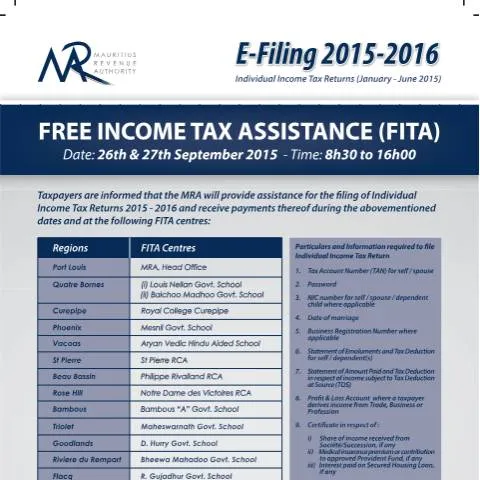
Navigating the Free Income Tax Assistance (FITA) Document: A Comprehensive Guide
The Free Income Tax Assistance (FITA) document, referenced as FITA2015, serves a pivotal role for taxpayers in Mauritius. Introduced by the Mauritius Revenue Authority (MRA) for the 2015-2016 tax period, this initiative facilitates the filing of Individual Income Tax Returns and ensures efficient processing of tax payments. Understanding the intricacies of this document is essential for a seamless tax filing experience.
Who Needs to Engage with the FITA Document?
The FITA document is targeted at a wide array of taxpayers, particularly those who may find the tax filing process overwhelming or complex. Understanding the profiles of individuals who should engage with this document can clarify its utility:
- Individuals with Limited Tax Knowledge: New taxpayers or those unfamiliar with tax regulations often benefit from the assistance provided through FITA.
- Low-Income Families: Families in lower-income brackets may require guidance to ensure compliance while maximizing potential tax benefits.
- Self-Employed Individuals: Those operating their own businesses may find the tax return process convoluted, necessitating professional assistance.
- Individuals with Unique Tax Situations: Taxpayers claiming multiple deductions or with complex income sources will benefit greatly from the structured assistance provided.
Examining Unique Situations
Within these profiles, unique situations may arise that warrant specific attention:
- Newly Married Couples: Couples who have recently married are advised to update their tax information, considering joint filings or dependent statuses.
- Dependents in Education: Taxpayers with dependents pursuing higher education should be aware of potential deductions or credits available to them.
Preparing Your Documentation: Essential Justifications
Prior to filing the FITA document, assembling the required documentation is crucial. The MRA stipulates certain necessary documents for successful tax filing:
| Document Required | Description |
|---|---|
| Tax Account Number (TAN) | Your unique tax identification number. |
| Password | Required for online submissions for enhanced security. |
| NIC Number | National Identity Card number of the taxpayer and dependents, where applicable. |
| Date of Marriage | If applicable, to claim benefits for married couples. |
| Business Registration Number | Necessary for those filing as businesses or self-employed. |
| Statement of Emoluments | Demonstrating income and deductions for dependents. |
Each of these documents plays a vital role in ensuring accurate reporting and compliance with tax laws. Taxpayers are encouraged to compile these materials well in advance of the filing deadlines.
Submitting the FITA Document: Navigating Different Channels
Taxpayers have multiple options for submitting their FITA document, each with its own advantages. The MRA offers both online and in-person filing channels:
- Online Submission: Utilizing the MRA’s digital platform via the govmu.org portal can streamline the filing process. This method is particularly beneficial for tech-savvy individuals who prefer a quick and efficient solution.
- Paper Submission: Traditional form submissions are still available. This option may be suitable for those less comfortable with technology or who prefer a physical copy of their documents.
- In-Person Assistance: The FITA centres, strategically located across various regions, provide direct support to taxpayers. Visiting these centres allows for immediate clarification on any questions regarding the filing process.
Understanding the Advantages of Each Channel
While all channels are valid, understanding their distinct advantages can help taxpayers make informed decisions:
- Efficiency: Online submissions often lead to quicker processing times.
- Assistance: In-person visits can yield real-time help and guidance from MRA representatives.
- Documentation: Paper submissions provide a tangible record of what was filed, which can be advantageous for future reference.
Misconceptions and Distinctions: FITA vs. Other Tax Documents
It is crucial to distinguish the FITA document from other tax forms that may cause confusion:
- Income Tax Return Form: The FITA document is specifically designed for assistance and is not the final tax return form itself. It functions as a guide for taxpayers during the filing process.
- Tax Deduction at Source (TDS): While related, TDS documentation serves a different purpose, focusing on preemptive tax collection rather than post-filing assistance.
Clarifying Common Confusions
The nuances of tax documentation can be perplexing. Understanding these distinctions can mitigate misunderstandings:
- The FITA document is only for assistance and not for actual return filing.
- Taxpayers should be mindful of deadlines applicable to FITA assistance, which differ from regular filing deadlines.
Addressing Issues: What If Your Submission is Rejected?
In the event of a submission issue, it is essential to know the steps to take. Taxpayers may encounter several scenarios, including rejection, missing documents, or errors:
- Rejection of Submission: If the MRA rejects your submission, you will likely receive a notification detailing the reasons for rejection, which may include missing documentation or incorrect information.
- Correcting Errors: Taxpayers should carefully review the provided feedback, rectify the issues, and resubmit as soon as possible.
- Missing Documents: If a required document was omitted, it's vital to gather the necessary paperwork before attempting to resubmit to avoid further delays.
Steps to Resolve Issues
When facing difficulties with the FITA document, follow these recommended steps:
Fill in your form directly online
No printing: type your details into the boxes of the official form, tick, then download the PDF ready to send.
- 1Type into the form boxes
- 2Tick in one click
- 3Save and download the PDF
- Check the rejection notice for specific reasons.
- Gather any missing documents or correct errors promptly.
- Contact the MRA hotline for assistance if needed.
The Historical Context: Understanding the Framework Behind FITA
The introduction of the FITA initiative is rooted in the government's broader strategy to enhance tax compliance and streamline the filing process. This approach is part of an ongoing effort to improve public service delivery in Mauritius:
- The FITA programme aims to provide clarity and support, offering taxpayers a structured pathway for fulfilling their obligations.
- As taxation laws evolve, initiatives like FITA help adapt to the needs of citizens, ensuring that everyone has access to the support they require.
A Look at Legislative Changes
Several key legislative changes have influenced the design of the FITA document:
- Updates to the PSC Act 1955 have mandated clearer guidelines for taxpayer assistance.
- Continuous feedback from taxpayers has led to the refinement of the FITA initiative over the years, ensuring it remains relevant and effective.
Your Path Forward: Making the Most of the FITA Document
Engaging with the FITA document can significantly ease the burden of tax filing for many taxpayers in Mauritius. By understanding the requirements, preparing documentation, and using the available resources, individuals can navigate the tax landscape with greater confidence:
- Stay updated with the MRA’s announcements regarding filing dates and requirements.
- Utilise the resources and guidance provided by the FITA centres to maximize the assistance available.
- Keep abreast of any changes to tax laws that may impact your filing procedures in future years.
In conclusion, the FITA document not only simplifies the tax filing process but also embodies the government’s commitment to facilitating taxpayer compliance. By leveraging this resource, taxpayers can ensure they fulfill their obligations efficiently and accurately.