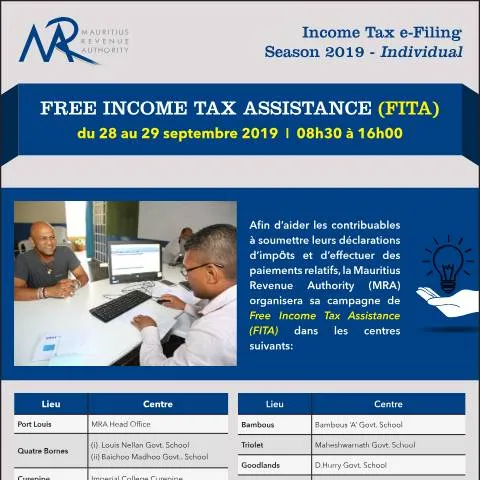
Navigating the Free Income Tax Assistance (FITA) 2019: Your Essential Guide
As the deadline for income tax submissions approaches, the Mauritius Revenue Authority (MRA) launches its Free Income Tax Assistance (FITA) campaign annually, providing vital support to taxpayers. Understanding how to leverage this initiative can significantly ease the often daunting process of tax filing, allowing you to meet your obligations efficiently.
Understanding the Role of FITA in Tax Filing
FITA serves as a crucial component in facilitating the income tax filing process for individuals. This initiative aims to assist taxpayers in accurately completing their tax returns, ensuring compliance with local tax laws. With the increasing digitalization of tax processes, FITA also offers direct support to individuals not familiar with online filing, making the tax process more accessible.
During the FITA campaign, tax assistants are available at various centres across the island, ready to guide you through the intricacies of the income tax return process. This is particularly beneficial for first-time filers or those who might have encountered difficulties in previous submissions. Utilizing FITA can help you avoid potential pitfalls that could lead to delays or penalties.
Eligibility to Access FITA Services
Any individual who needs assistance with their income tax return can benefit from FITA services. Specific groups, such as first-time taxpayers or those with complex financial situations, are particularly encouraged to attend. It's important to note that FITA is not limited to any particular income bracket; rather, it is open to all individuals looking for support in filing their taxes.
Who Should Attend FITA?
- First-time tax filers
- Individuals facing difficulties with e-filing
- Taxpayers with complex incomes, such as freelancers or those with multiple income sources
- Individuals seeking clarification on deductions and credits available to them
Preparation: Gathering the Required Documentation
Before attending a FITA session, it's essential to prepare the necessary documentation to ensure a smooth and efficient filing experience. The following documents are typically required:
- National Identity Card: This is crucial for identification purposes.
- Income Statements: Payslips, bank statements, or any other proof of income should be collected.
- Tax Identification Number (TIN): Ensure you have your TIN ready.
- Deductible Expenses: Gather receipts or documents related to deductible expenses, such as medical bills, education costs, or charitable contributions.
Depending on individual circumstances, additional documentation may be needed, especially for claims of specific allowances or credits. Being organized with these documents will facilitate a smoother process during the FITA sessions.
The Journey from Registration to Submission
Engaging with FITA services can be broken down into a clear, manageable process. Here’s what you can expect from start to finish:
- Registration: Upon arrival at a FITA centre, register your attendance, providing your identity and any preliminary information as required.
- Consultation: A tax assistant will meet with you to discuss your specific situation, reviewing your documents and guiding you through the completion of the Free Income Tax Assistance (FITA) 2019 form.
- Form Completion: With assistance, you will fill out the form, ensuring all information is accurate and complete. This is crucial as errors can lead to processing delays.
- Submission: Once the form is filled out, you will submit it either electronically or in paper form, depending on your preference and the advice given by the tax assistant.
- Confirmation: Upon submission, ensure you receive a confirmation of your filing, which acts as a safeguard against potential issues in the future.
Channels for Submitting Your FITA Form
While the FITA campaign facilitates in-person assistance, understanding the various channels available for submitting your tax return is vital. The submission of Form FITA2019 can occur through the following methods:
Comparative Overview of Submission Channels
| Submission Method | Description | Advantages | Disadvantages |
|---|---|---|---|
| In-Person at FITA Centres | Assistance provided by tax experts during the FITA campaign. | Direct support, immediate feedback, and clarification. | Limited to specific dates and locations. |
| Online Submission | Using the MRA’s e-filing platform via the government portal. | Convenient, available 24/7, and allows for quick processing. | Requires familiarity with the online system and potential technical issues. |
| Paper Submission | Filing through traditional mail or by hand to the MRA office. | Useful for those who prefer physical documentation. | Longer processing times and potential for lost documents. |
While the in-person option during the FITA campaign provides invaluable assistance, for those who prefer the convenience of online filing, it is important to ensure that you are familiar with the e-filing system available on the MRA’s website.
Deciphering the FITA2019 Form: A Step-by-Step Guide
Completing the FITA2019 form requires careful attention to detail. Here’s a breakdown of its key sections:
Personal Information
Begin by accurately entering your personal details, including:
- Name and surname
- National ID number
- Residential address
Ensure that these details match the documentation provided to avoid discrepancies.
Income Details
In this section, you must declare all sources of income, including:
- Salaries and wages
- Income from self-employment
- Rental income
It's essential to be thorough; missing income sources could lead to penalties. Tax assistants at FITA are available to help you identify every potential income stream.
Claiming Deductions and Allowances
This section allows you to detail any eligible deductions, which could significantly reduce your taxable income. Common deductions include:
- Medical expenses
- Educational expenses
- Contributions to approved pension schemes
Documentary evidence must be retained for any claims made; this is where your prior preparation will pay off.
The Implications of Filing: Rights and Responsibilities
Filing your taxes not only fulfills a legal obligation, but it also opens up rights and privileges within the tax system. Here’s what you should know:
- Rights: As a taxpayer, you have the right to privacy, the right to appeal decisions made by the MRA, and the right to seek assistance.
- Responsibilities: You are required to provide accurate information to the MRA and to keep thorough records of your finances.
Failing to file or submitting incorrect information can lead to legal repercussions, including financial penalties or interest on unpaid taxes. It is crucial to take your income tax filing seriously and make use of available resources like FITA.
What’s Next After Submitting Your FITA Form?
Once your FITA2019 form has been submitted, the MRA will process your return. It is important to keep track of your submission confirmation, as this serves as evidence that you have met the filing requirements. The processing time can vary, but you will typically receive feedback within a few weeks.
If any discrepancies are found, the MRA will reach out for clarification. Always respond promptly to any queries to avoid delays in processing your return.
Furthermore, if you are due a refund, this will typically be credited to your bank account or sent via cheque, depending on the information you provided in your form.
Fill in your form directly online
No printing: type your details into the boxes of the official form, tick, then download the PDF ready to send.
- 1Type into the form boxes
- 2Tick in one click
- 3Save and download the PDF
Contacting MRA for Additional Support
Should you have any questions regarding the FITA process or your tax return, it is advisable to contact the MRA directly. Their dedicated helpline is available at 207 6000, and you can also visit their official website for more information.
By taking advantage of the resources offered through FITA, you can feel more confident about your income tax submission. Ensure you are prepared, utilize the assistance offered, and stay informed about your rights and responsibilities as a taxpayer in Mauritius.
Understanding the Free Income Tax Assistance (FITA) Program
The Free Income Tax Assistance (FITA) program, initiated in 2019, was designed to assist Mauritian citizens in understanding their tax obligations and filing their income tax returns accurately. The Mauritius Revenue Authority (MRA) launched this initiative with the aim of promoting compliance and facilitating a smoother interaction between taxpayers and the tax administration. The FITA program specifically targets low-income earners, first-time taxpayers, and individuals who may find the tax filing process overwhelming.
Within this framework, qualified tax officers were made available at various community centers across the island. They offered guidance on tax laws, the necessary documentation required for filing, and how to navigate the MRA's e-filing platform. This proactive approach not only empowers citizens by providing them with the knowledge they need to manage their taxes but also promotes transparency and trust in the governmental process.
Eligibility Criteria for FITA Participation
To benefit from the FITA program, taxpayers must meet certain eligibility criteria set forth by the MRA. Generally, the program is aimed at individuals earning below a specified threshold, which is revised periodically to reflect changing economic conditions. For the latest figures, taxpayers should consult the MRA's official announcements or their website.
Moreover, first-time taxpayers, including young professionals entering the workforce or individuals who have recently started a business, are strongly encouraged to take advantage of this initiative. There are no specific forms required to register for the FITA assistance; however, individuals must bring their National Identity Card and any relevant documents related to their income, such as pay slips or financial statements, to the assistance sessions. This enables tax officers to provide tailored advice based on individual circumstances.
Impact of the FITA Program on Tax Compliance in Mauritius
The introduction of the FITA program has significantly influenced tax compliance rates in Mauritius. By making the tax filing process more accessible, it has encouraged a greater number of individuals to fulfill their tax obligations. Reports indicate that many participants in the FITA program have successfully filed their income tax returns for the subsequent fiscal year, showcasing a marked increase in compliance.
Furthermore, the program has fostered a culture of fiscal responsibility among citizens. As taxpayers become more informed about their rights and responsibilities, they are more likely to engage positively with the tax system. This shift is crucial in a hybrid legal framework like Mauritius, where understanding the intricacies of both French civil law and English common law can be daunting.
In addition to increasing compliance, the FITA program has also contributed to enhancing the MRA's image as a taxpayer-friendly authority. Enhanced public perception can lead to more citizens voluntarily declaring their income and paying taxes, ultimately strengthening the national economy.