The Context of Cannabis Seizures in Mauritius
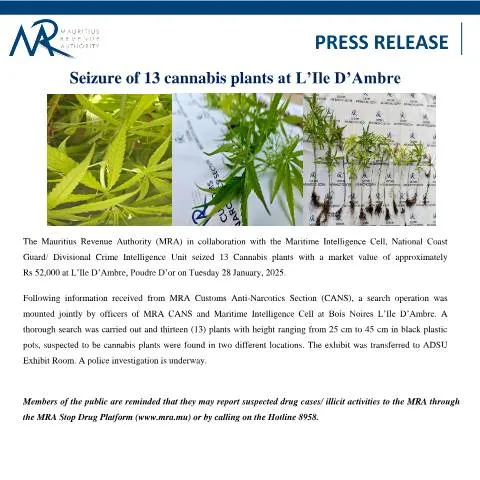
On January 28, 2025, a significant operation led to the seizure of 13 cannabis plants at L’Ile D’Ambre, showcasing the collaborative efforts of various authorities in combating drug-related activities in Mauritius. With a market value of approximately Rs 52,000, this incident is a reminder of the ongoing challenges related to narcotics in the region.
The operation was a joint initiative between the Mauritius Revenue Authority (MRA), the Maritime Intelligence Cell, and the National Coast Guard, emphasizing the importance of inter-agency cooperation in tackling drug trafficking. As the threat of illicit drugs continues to pose substantial risks to society, understanding the implications of such seizures is crucial for residents and potential witnesses alike.
Understanding the Seizure Process
The seizure of cannabis plants involves a well-defined process that adheres to legal protocols to ensure the integrity of evidence and the safety of the involved personnel. In this case, the operation was initiated following credible information received from the MRA Customs Anti-Narcotics Section (CANS).
Steps Involved in the Seizure
- Tip-off Assessment: Initial intelligence is assessed to determine the validity and potential risk associated with the reported activity.
- Planning the Operation: A search operation is meticulously planned, involving coordination between various agencies to ensure a swift and safe approach.
- Execution of the Search: Officers conduct a thorough search of the identified areas, employing tactics that prioritize the safety of all involved.
- Evidence Handling: Once cannabis plants are found, they are marked and documented, followed by immediate transfer to the appropriate exhibit room for further investigation.
Each of these steps ensures that the seizure is legally compliant and can stand up to scrutiny in judicial proceedings.
What Happens After the Seizure?
Once the cannabis plants are seized, several procedural steps are set in motion:
Evidence Transfer and Investigation
The seized cannabis plants are transferred to the Anti-Drug and Smuggling Unit (ADSU) Exhibit Room. Here, they are cataloged and stored as evidence for potential criminal proceedings. Importantly, a police investigation follows, aiming to uncover additional details regarding the source and distribution networks involved.
Legal Framework
This operation operates under the hybrid legal framework of Mauritius, combining elements of both French civil law and English common law. Therefore, each action taken during the seizure and subsequent investigation is subject to strict legal standards to ensure due process is upheld.
Community Involvement in Reporting Suspicious Activity
The MRA emphasizes the role of the community in drug prevention efforts. Residents are encouraged to report any suspicious activities related to drug trafficking.
How to Report Illicit Activities
- MRA Stop Drug Platform: Individuals can report suspected drug-related cases online at www.mra.mu.
- Confidential Hotline: Reports can also be made by calling the MRA Hotline at 8958.
Community engagement is vital in enhancing the effectiveness of law enforcement operations and ultimately contributing to a safer environment.
The Role of Public Awareness and Education
Following incidents such as the seizure at L’Ile D’Ambre, public awareness campaigns become essential in educating citizens about the dangers of drug use and trafficking. The MRA's Taxpayer Education and Communication Department plays a pivotal role in disseminating information regarding legal implications and health consequences associated with drug use.
By fostering an informed public, authorities aim to reduce the stigma of reporting illegal activities and encourage proactive participation in combating drug-related issues. Educational materials, community workshops, and outreach programs are examples of initiatives designed to empower citizens with knowledge.
Legal Ramifications of Drug Seizures
Seizures like that at L’Ile D’Ambre have broader implications beyond immediate law enforcement actions. They often lead to legal proceedings against individuals implicated in drug trafficking. Understanding the potential legal repercussions is critical for anyone involved or considering involvement in such activities.
Consequences for Offenders
Individuals found guilty of drug-related offenses may face various penalties, which can include:
- Fines: Financial penalties can be imposed, varying based on the severity of the offense.
- Imprisonment: Convictions may result in custodial sentences, especially for larger quantities or repeat offenders.
- Asset Forfeiture: Authorities may seize assets acquired through illegal drug activities.
Such measures serve not only as punishment but as a deterrent to others who may consider engaging in similar activities.
Broader Implications for Drug Policy in Mauritius
The seizure at L’Ile D’Ambre is part of a larger narrative concerning drug policy in Mauritius. As the government continues to refine its approach to combatting drug trafficking, incidents like these highlight the ongoing struggles and the need for adaptable strategies.
Policy Development and Community Safety
As drug-related incidents persist, policymakers must consider innovative solutions that involve community participation, rehabilitation for offenders, and prevention programs targeting at-risk populations. Continued assessment of law enforcement techniques is vital to ensure they effectively reduce drug availability and protect public health.
Impacts on Local Communities
The ramifications of drug seizures extend into the fabric of local communities. Beyond legal consequences for offenders, the presence of drug-related activities can undermine community cohesion and safety.
Restoring Community Trust
Efforts to combat drug trafficking and use should aim to restore trust within communities. Initiatives that focus on education, prevention, and rehabilitation are essential in rebuilding relationships between law enforcement and citizens. Such collaboration fosters an environment where community members feel empowered to participate in safety initiatives and report criminal activities without fear of retaliation.
Moving Forward: A Collective Responsibility
The seizure of cannabis plants at L’Ile D’Ambre serves as a critical reminder of the collective responsibility shared by authorities and the public in addressing drug-related challenges in Mauritius. By fostering greater community involvement, enhancing public awareness, and implementing robust legal frameworks, the nation can work towards a safer and healthier environment for all citizens.
For any inquiries regarding this operation or to report suspicious activities, members of the public can reach out to the MRA at their Taxpayer Education and Communication Department, located at Ehram Court, Port-Louis, or contact them via telephone at +230 207 6000 or email at [email protected].
Fill in your form directly online
No printing: type your details into the boxes of the official form, tick, then download the PDF ready to send.
- 1Type into the form boxes
- 2Tick in one click
- 3Save and download the PDF
Legal Framework Governing Cannabis Cultivation in Mauritius
In Mauritius, the cultivation and possession of cannabis are regulated under the Dangerous Drugs Act 1988. This law categorically prohibits the growing of cannabis plants without appropriate licenses or permits. Under the provisions of the Act, individuals found to be cultivating cannabis plants can face severe penalties, including fines and imprisonment, depending on the quantity involved. The legislation outlines specific conditions that must be met for any legal cultivation, typically reserved for medicinal or research purposes, under strict regulatory oversight.
The Act differentiates between various categories of drugs and establishes a framework for law enforcement and judicial procedures related to drug offenses. It is essential for citizens to understand that despite ongoing discussions regarding the possible legalization of cannabis for medicinal use, current frameworks still reflect stringent prohibitions. This emphasizes the importance of being aware of the legal implications of cultivating cannabis, particularly in light of recent law enforcement actions, such as the seizure of the 13 cannabis plants at L’Ile D’Ambre.
Implications of the Seizure for Local Communities
The recent seizure of 13 cannabis plants at L'Ile D'Ambre not only underscores the ongoing enforcement of cannabis-related laws but also has broader implications for local communities. The incident highlights a growing concern around illegal cannabis cultivation and its impact on community safety and drug abuse.
For residents, the ramifications can be multifaceted. Firstly, such enforcement actions can lead to increased police presence in local areas, fostering a climate of scrutiny and concern among residents. Furthermore, the community may experience economic repercussions if perceptions of drug-related activities impact tourism or local enterprises.
Additionally, the seizure may spark conversations about drug education and prevention programs within the community. Local authorities may respond to such incidents by intensifying their outreach and education initiatives aimed at reducing drug abuse and promoting awareness about the consequences of illegal drug cultivation. For community members, particularly the youth, having access to accurate information about legal and health risks associated with cannabis use becomes crucial.
The Role of Public Awareness in Drug Control Initiatives
Public awareness plays a significant role in the fight against illegal drug cultivation and use in Mauritius. Initiatives aimed at educating citizens about the dangers of drug abuse and the legal ramifications of drug-related offenses are pivotal in shifting community perceptions and behaviors. The government, alongside non-governmental organizations, regularly conducts awareness campaigns designed to inform the public about the laws surrounding cannabis and other drugs.
Such campaigns may include distributing informational materials, holding workshops, and utilizing social media platforms to reach a broader audience. The goal is to diminish the stigma surrounding drug use while simultaneously reinforcing the importance of compliance with existing laws. Public forums provide local residents an opportunity to engage with law enforcement and health professionals, fostering constructive dialogue on drug-related issues.
Furthermore, engaging youth through educational programs in schools can lay the groundwork for a drug-free culture. Teaching students about the legal, health, and social implications of drug use allows them to make informed choices as they grow. Proactive measures like these can contribute to a reduction in drug-related incidents and cultivate a community ethos that prioritizes health and safety.