Understanding the Sale of Abandoned Goods: A Pathway to Opportunity
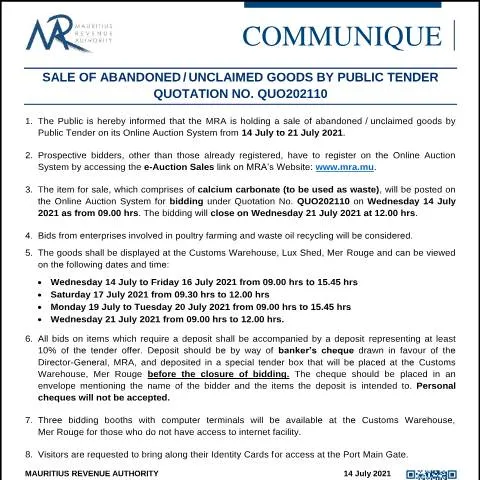
The Sale of Abandoned or Unclaimed Goods by Public Tender is not just a bureaucratic process; it’s an opportunity for various entities to acquire materials that may benefit their operations. This official sale, conducted by the Mauritius Revenue Authority (MRA), opens the doors for bidders interested in specific goods, particularly those in sectors such as poultry farming and waste oil recycling. The current tender, communicated under Quotation No. QUO202110, is a step towards efficient resource management while providing a transparent bidding process.
Initiating the Bidding Process
The commencement of the bidding process is marked by the official announcement made on 14 July 2021. The sale runs from this date until 21 July 2021, inclusive, allowing potential bidders a designated timeframe to prepare and submit their offers. The emphasis on an online auction system signifies the MRA’s commitment to digitization and enhanced accessibility for participants.
- Date of Sale: 14 July to 21 July 2021
- Goods for Sale: Calcium carbonate, categorized as waste
- Viewing Period: 14 July to 21 July 2021, specific timings apply
Registering for the Auction: A Step-by-Step Guide
Before participating in the bidding process, prospective bidders must register on the MRA’s Online Auction System. This registration is critical for those who have not participated in previous auctions. Here’s how to navigate the registration:
- Visit the MRA’s official website.
- Locate the e-Auction Sales link.
- Complete the registration form with the required details.
- Submit the application and await confirmation of registration.
Successful registration is essential to gain access to the online auction platform and submit bids for the items listed under this tender.
Viewing the Goods: Essential Details for Bidders
The bidding process allows for in-person visits to inspect the items prior to making an offer. For this particular auction, bidders can view the goods at the Customs Warehouse, Lux Shed, Mer Rouge, during specified times:
| Date | Time |
|---|---|
| 14 July to 16 July 2021 | 09:00 - 15:45 |
| 17 July 2021 | 09:30 - 12:00 |
| 19 July to 20 July 2021 | 09:00 - 15:45 |
| 21 July 2021 | 09:00 - 12:00 |
Potential bidders should plan their visits according to these timings to adequately assess the goods before placing their bids.
Financial Considerations: Bids and Deposits
Bidding on the goods requires an understanding of the financial commitments involved. Each bid must come with a deposit amounting to at least 10% of the tender offer. This deposit is critical as it demonstrates the seriousness and commitment of the bidder. Key points regarding deposits include:
- Deposits must be made via a banker’s cheque, drawn in favor of the Director-General, MRA.
- The cheque should be placed in a sealed envelope, clearly marked with the bidder's name and the item reference.
- Personal cheques are not accepted.
Bidders will need to deposit their cheque in a specially designated tender box located at the Customs Warehouse before the bidding closes.
Navigating the Bidding Environment: Access and Assistance
For those without internet access, the MRA has provided alternative means to participate. Visitors can utilize the three bidding booths installed at the Customs Warehouse, equipped with computer terminals to facilitate participation in the auction. This consideration ensures that all interested bidders have a fair opportunity to engage in the process.
Furthermore, it is advisable for bidders to carry their Identity Cards for entry at the Port Main Gate, ensuring that the bidding environment is secure and accessible.
After the Bidding: What Comes Next?
Once the bidding period concludes on 21 July 2021 at 12:00 hrs, the MRA will evaluate all bids received. Successful bidders will be notified accordingly, leading to the finalization of the sale. Important aspects of the follow-up process include:
- Notification of successful bids will be communicated directly to bidders.
- Payment terms and collection details will be provided for the acquired goods.
- Unsuccessful bidders may receive feedback or be invited to participate in future auctions.
It is paramount for bidders to adhere to the stipulated timelines and requirements to ensure a smooth transition from bidding to ownership.
Conclusion: Embracing Opportunities through Public Tender
The sale of abandoned and unclaimed goods through public tender serves as a vital mechanism for resource redistribution and economic engagement. By understanding the nuances of the process—from registration and viewing to bidding and follow-up—participants can effectively navigate this auction. The continuous move towards digital platforms further enhances accessibility, allowing more stakeholders to benefit from the resources available. As the bidding period draws near, engaging with the MRA and preparing adequately can lead to fruitful outcomes for businesses and individuals alike.
Understanding the Process of Public Tender for Abandoned Goods
In Mauritius, the sale of abandoned or unclaimed goods is primarily conducted through public tenders. This process is governed by specific guidelines aimed at ensuring transparency and fairness. When items are deemed abandoned, local authorities initiate a declaration process, which includes a public notice announcing the intent to auction such goods. This notice is crucial as it provides an opportunity for the rightful owners to reclaim their possessions.
It is pertinent to note that the period for claiming these items is typically stipulated in the public notice and may vary depending on the type of goods and the issuing authority. After the expiration of this period, unclaimed goods are prepared for auction. Interested bidders must be aware of the terms and conditions outlined in the tender documents, which often include details about the inspection of goods, bid submission deadlines, and payment methods.
The public tender process not only allows the government to dispose of unclaimed items but also creates a venue for generating revenue. Bidders must register, often requiring the completion of the relevant application forms, such as PSC Form 7 or LGSC Form 7a, and pay any required fees. Once the bidding process concludes, the highest bidder is awarded the item, and they must adhere to the payment and collection procedures as stated in the tender agreement.
Legal Implications and Responsibilities for Bidders
Participants in public tenders for abandoned goods in Mauritius must be aware of the legal implications surrounding such transactions. Bidders are expected to conduct due diligence prior to the auction to understand the condition and value of the goods. There might be cases where items are sold "as is," meaning that no warranties are provided regarding their condition or usability. It is advisable for potential bidders to inspect the items during the designated viewing days, which are usually outlined in the tender announcement.
Furthermore, bidders should familiarize themselves with the legal framework surrounding abandoned goods. The relevant laws dictate that misrepresentation or fraud during the bidding process can lead to disqualification and potential legal action. Bidders should ensure that they are in good standing with the local authorities and have fulfilled any tax obligations, as this could impact their eligibility to participate in public tenders.
Once a bid is successful, the winner is legally obligated to fulfill payment terms. Failure to do so could result in the forfeiture of the bid and the possibility of barring future participation in public tenders. Therefore, it is crucial for bidders to have a clear understanding of their responsibilities and the associated legal liabilities.
Environmental Considerations in the Auction of Abandoned Goods
As Mauritius continues to strive towards sustainable development, environmental considerations have become integral to the auctioning of abandoned goods. When goods are deemed unclaimed, local authorities are required to assess the environmental impact of their disposal. This ensures that hazardous materials are handled appropriately and that items which could cause environmental harm are not simply sold off without consideration.
For instance, electronic waste and old vehicles often contain materials that can be harmful if not disposed of correctly. The public tender process includes guidelines for the disposal of these goods, and interested bidders should inquire about the environmental measures in place. In some cases, bidders may be required to provide proof of proper disposal methods post-purchase, especially if the items fall under categories deemed environmentally sensitive.
Additionally, there is a growing emphasis on promoting recycling and reusing items sold through public tender. Authorities may encourage bidders to consider refurbishing or repurposing unclaimed goods rather than outright disposal. This aligns with national initiatives aimed at reducing waste and promoting sustainable practices.
In summary, understanding the complexities of the public tender process for abandoned goods in Mauritius requires consideration of legal, economic, and environmental factors. By being informed and prepared, bidders can navigate the auction landscape effectively, ensuring compliance with local regulations and contributing positively to sustainability efforts.