Unlocking Opportunities: Navigating the Sale of Unclaimed Goods
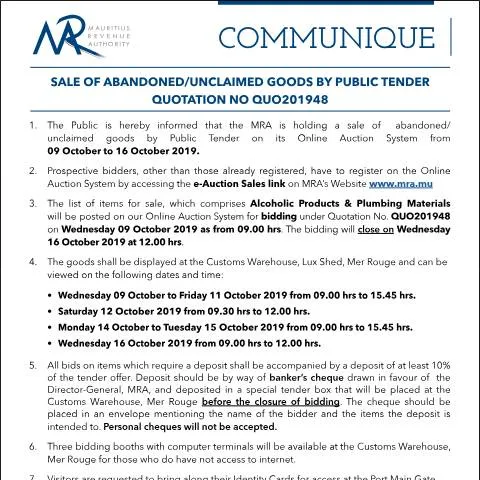
In a unique blend of opportunity and value, the Mauritius Revenue Authority (MRA) periodically conducts sales of abandoned or unclaimed goods through public tender. This process not only allows the government to clear out goods that have not been claimed but also presents a chance for individuals and businesses to acquire these items at competitive prices. Engaging in this process requires familiarity with the official document titled Sale of Abandoned / Unclaimed Goods by Public Tender, referenced as Communique 48 of 2019, which outlines the steps, conditions, and legal framework governing the sale.
The Framework Behind the Sale of Unclaimed Goods
The legal foundation for the sale of abandoned goods in Mauritius is rooted in the MRA’s commitment to efficiently managing unclaimed items. Governed by MRA regulations, this process reflects a blend of local laws and public service efforts aimed at transparency and fairness. The Public Tender mechanism was introduced to ensure that bids are received from credible participants, maintaining integrity in the sale process. The Communique 48 of 2019 specifically provides guidelines for the public auction of these items.
How the Public Tender Process Works
The Sale of Abandoned/Unclaimed Goods is structured around a clearly defined timeline and procedure. The MRA sets a specific auction period during which prospective bidders can place their offers. The critical dates for the public tender are:
- Start of Bidding: 09 October 2019 at 09:00 hrs
- End of Bidding: 16 October 2019 at 12:00 hrs
During this window, bidders must remain vigilant and engage actively to secure their desired items.
Essential Steps for Participation
To participate in the public tender, interested individuals must follow specific steps, all of which are critical for a successful bidding experience:
- Registration: Prospective bidders are required to register on the MRA's Online Auction System. This is a crucial first step, as registration allows bidders to access the auction platform. The registration must be completed prior to placing any bids.
- Viewing the Goods: The items up for auction can be inspected at the Customs Warehouse, Lux Shed, Mer Rouge. It's advisable to view these goods between 09 October and 16 October 2019 to make informed bidding decisions.
- Placing Bids: Once registered, bidders can place their bids online or at designated bidding booths located at the Customs Warehouse for those without internet access.
Understanding the Bid Requirements
When bidding, it is essential to comprehend the financial obligations associated with each offer. Specifically:
- Bids for items requiring a deposit must include a minimum deposit of 10% of the tender offer.
- The deposit must be in the form of a banker’s cheque made out to the Director-General, MRA. Personal cheques are not accepted.
- Bidders should submit their deposits in a special tender box at the Customs Warehouse, clearly indicating their name and the items being bid on.
What to Expect After Bidding
Upon the conclusion of the bidding process, successful bidders will receive notifications regarding the outcome of their bids. The MRA typically follows a structured approach in communicating these results, ensuring that all participants are informed promptly.
For those who win their bids, the next steps involve:
- Finalizing payment for the purchased items, which must be completed within a specified timeframe.
- Arranging for the collection of the goods from the Customs Warehouse, which may have specific operational hours for pick-up.
Special Considerations for Bidders
While the process is designed to be accessible, certain profiles may face unique challenges or requirements. It is vital for potential bidders to understand these nuances:
- Foreign Bidders: Non-residents or foreign entities interested in bidding must ensure compliance with specific regulations set forth by the MRA, including any tax implications arising from their bids.
- Minors: Individuals under the legal age may require a parent or guardian to place bids on their behalf, as they are not legally able to engage in contracts.
- Complex Situations: Bidders facing special circumstances—such as having a limited understanding of the auction process—may want to seek assistance from knowledgeable parties to navigate the bidding effectively.
Demystifying Similar Forms and Procedures
It’s critical for bidders to distinguish the Communique 48 of 2019 from other similar forms related to government auctions or sales. For example, the process for public tenders for government contracts is governed by separate regulations. Understanding these differences is crucial for ensuring compliance and maximizing opportunities:
| Criteria | Sale of Abandoned Goods | Public Tender for Government Contracts |
|---|---|---|
| Regulating Authority | MRA | Various Government Departments |
| Registration Requirement | Mandatory on MRA’s Auction System | Depending on the nature of the tender |
| Nature of Items | Abandoned/Unclaimed Goods | Services/Procurement Items |
| Deposit Requirement | 10% of Tender Offer | Variable |
Maximizing Your Bidding Experience
To enhance your chances of successfully acquiring items during the MRA's public tender, prospective bidders should:
- Research: Familiarize yourself with the types of goods typically available, paying attention to market values to avoid overbidding.
- Plan Ahead: Ensure all documentation is in order before the bidding period starts, particularly your banker’s cheque for the deposit.
- Engage with Others: Whether sharing insights with seasoned bidders or seeking advice from MRA representatives, leveraging community knowledge can provide valuable insights.
Final Thoughts on the Auction Process
The public tender for the sale of abandoned or unclaimed goods provides a unique platform for individuals to bid on various items that may otherwise remain unutilized. By understanding the nuances of the Communique 48 of 2019, including the registration process, bidding requirements, and subsequent actions, participants can navigate this auction landscape with greater confidence and success.
In a world where every opportunity counts, taking part in the MRA's public tender can lead to unexpected gains, not only for individual bidders but also for the community as a whole by ensuring that valuable resources are put back into use.
Understanding the Process of Public Tender for Abandoned Goods
The sale of abandoned or unclaimed goods in Mauritius is governed by a well-defined process, primarily structured to ensure transparency and fairness. When public authorities come into possession of goods that remain unclaimed, they must follow specific protocols as outlined in the relevant regulations.
Initially, it is crucial for the authority in charge to establish a clear inventory of the goods that will be put up for sale. This inventory should be documented thoroughly, specifying the condition, type, and estimated value of each item. Public notices must be published to inform potential bidders about the impending sale, detailing the date, time, and location of the tender.
Prospective bidders should be aware that only those who submit valid bids in accordance with the tender requirements will be eligible for consideration. The evaluation of bids usually takes into account not only the price offered but also the bidder's compliance with the tender specifications and the overall potential impact on the community regarding the sale of such goods.
Fill in your form directly online
No printing: type your details into the boxes of the official form, tick, then download the PDF ready to send.
- 1Type into the form boxes
- 2Tick in one click
- 3Save and download the PDF
Legal Framework Surrounding Abandoned Goods
The legal framework regulating the sale of abandoned or unclaimed goods in Mauritius is largely rooted in the provisions laid out in the Public Procurement Act and the specific regulations established by the respective governmental bodies. The process is designed to serve both legal and economic purposes—ensuring that abandoned goods do not contribute to public clutter while also providing a revenue stream for the government.
When unclaimed goods are declared for sale, it is typically following a statutory period during which the original owners are given notice and an opportunity to reclaim their possessions. This notice period is critical, as it protects the rights of ownership and ensures that the sale process is equitable. The laws dictate the methods of notification, often necessitating public advertisements in local newspapers and announcements through official channels.
Furthermore, it is important to note that certain categories of goods may be subject to additional regulations. For example, items that may pose health risks or are classified as hazardous materials require stringent assessment and must pass through a more rigorous tendering process. Understanding these legal nuances can significantly impact the success of tendering bids and the overall handling of abandoned goods.
Post-Tender Procedures and Responsibilities of Successful Bidders
After the tender process concludes and bids have been evaluated, successful bidders are required to complete several key steps. First and foremost, payment for the goods must be made promptly. Typically, the tender documents will outline acceptable payment methods and timelines to ensure a smooth transaction.
Once payment has been confirmed, the successful bidders must arrange for the collection of their acquired goods within a specified timeframe as indicated in the tender agreement. It is advisable to conduct a thorough inspection of the goods upon collection to verify that they meet the descriptions provided during the bidding phase. Any discrepancies should be reported immediately to the tendering authority.
Additionally, it is the responsibility of the successful bidder to ensure that they are compliant with all relevant regulations regarding the use, resale, or disposal of the acquired goods. Failure to adhere to these regulations could result in legal repercussions or the revocation of the sale agreement.
These post-tender responsibilities underscore the importance of diligence and responsibility on the part of the bidders, ensuring that the entire process of handling abandoned goods remains transparent and legally compliant.