Unlocking Opportunities: The Sale of Abandoned or Unclaimed Goods
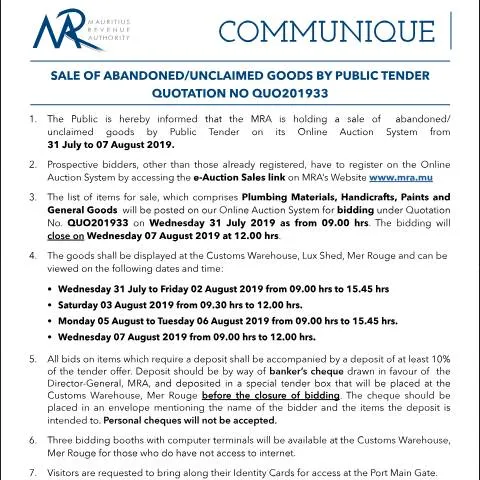
Imagine stumbling upon a hidden treasure trove in the form of abandoned or unclaimed goods available for auction. The Mauritius Revenue Authority (MRA) facilitates this very opportunity through their formalized process known as the Sale of Abandoned/Unclaimed Goods by Public Tender. Through this initiative, residents of Mauritius can engage in public tenders and potentially acquire valuable items that have gone unclaimed for various reasons.
A Background Check: Why This Sale Matters
This auction process is grounded in the premise of maintaining order and accountability within the realm of public assets. Items that remain unclaimed or abandoned typically end up in customs warehouses, and the MRA must ensure these goods are disposed of in a manner that benefits the public. The Communique 33 of 2019 provides the framework for these sales, outlining the legal basis and procedural requirements for auctioning these goods. This underscores the MRA's role in handling public property responsibly and ethically.
Historical Context of Abandoned Goods Sales
The legal framework guiding the auctioning of abandoned or unclaimed goods can be traced back to the administrative regulations established under the Public Service Commission and the customs regulations in Mauritius. The practice is not just a random decision but is supported by a strong legal structure intended to protect the integrity of public service and ensure transparency.
The Impetus for Regulation
Regulations surrounding the auction of unclaimed items serve a dual purpose: they not only help in minimizing clutter within government storages but also reintegrate these goods into the economy. This process can be traced back to the MRA's commitment to fiscal responsibility and efficient resource allocation. Thus, each auction promotes accountability within administrative procedures while providing citizens access to goods they can utilize.
Understanding the Auction Timeline
Timing is a crucial element in the auction process. From the announcement to the closure of bidding, a series of dates and events are laid out to guide prospective bidders:
- Announcement Date: The auction was officially announced on 31 July 2019.
- Bidding Period: The public could start placing bids from 31 July until 07 August 2019.
- Viewing Days: Interested bidders had the opportunity to view the goods from 31 July to 07 August on specified dates.
- Closing Time for Bids: Bidding closed precisely at 12:00 hrs on 07 August 2019.
Such a timeline grants potential bidders ample opportunity to prepare their bids and take a closer look at the items being auctioned.
The Practical Steps for Participation
Engaging in this auction process requires a well-defined approach. Here’s a step-by-step guide to navigate this public tender successfully:
- Registration: Prospective bidders who are not already registered need to access the MRA's Online Auction System via the MRA website. This registration is crucial for participation.
- Reviewing Auction Items: Starting 31 July 2019, the list of items categorized under Quotation No. QUO201933 will be made available.
- Viewing the Goods: Prior to bidding, individuals are highly encouraged to visit the Customs Warehouse to inspect the items. This step is essential to ensure bidders know what they are bidding on.
- Deposits: Bids on certain items require a deposit of at least 10% of the tender offer via a banker’s cheque, which must be submitted in advance.
- Bidding: Bidders can either participate online or at designated bidding booths equipped with computer terminals for those lacking internet access.
Deposit Requirements for Bids
Each bid that requires a deposit must adhere to specific guidelines. The deposit is a demonstration of the bidder's commitment and is critical to the auction process. Here’s a precise breakdown of how to manage this requirement:
| Item | Deposit Requirement | Method of Payment |
|---|---|---|
| Goods Requiring Bids | Minimum 10% of the bid offer | Banker's cheque in favor of Director-General, MRA |
| Items Displayed | Same deposit rule applies | Cheque to be placed in an envelope with bidder details |
This formal procession helps ensure that the bidders are serious about their offers and allows the MRA to manage the auction efficiently.
Accessibility Around the Auction Process
For those who may not have internet access, the MRA has taken steps to ensure accessibility. Three bidding booths are available at the Customs Warehouse, Mer Rouge, outfitted with computer terminals for bidders. This inclusivity ensures that everyone, regardless of their technological access, has a chance to participate in the auction.
Preparation Required for Entry
Potential bidders must also consider the logistical aspects of attending the auction, particularly in regard to identity verification. Visitors are required to bring their Identity Cards to gain access at the Port Main Gate, ensuring that only registered bidders participate.
What Happens After Bidding: The Essential Follow-Up
Once the bidding period closes on 07 August 2019, the process doesn’t simply end there. Successful bidders must adhere to several follow-up actions:
- Notification of Success: The MRA will notify successful bidders and provide further instructions.
- Payment Finalization: Bidders must settle the remaining amount owed for their purchased items as prescribed by the MRA.
- Goods Collection: Once payment is confirmed, successful bidders can arrange to collect their items from the Customs Warehouse.
This continuation of the process reinforces the importance of structured follow-up actions, ensuring that the auction yields a satisfactory outcome for all parties involved.
Addressing Potential Issues: What If Things Go Wrong?
The auction process is well-structured, but there may be instances where bidders encounter issues such as errors on their bids, missing documents, or even potential refusals. It’s crucial to be aware of how to navigate through these challenges seamlessly:
- In the Event of a Refusal: If a bid is rejected for any reason, bidders should consult the MRA for clarification on the grounds of rejection. Understanding the rationale can help in future bidding processes.
- Correcting Errors: In case of any errors made during bidding or submission of documents, promptly contact the MRA to rectify the situation before the bidding closes.
- Managing Document Issues: Ensure that all documentation, particularly the banker’s cheque, is in order to avoid unnecessary delays or disqualifications.
Proactive communication with the MRA can potentially resolve many issues before they escalate into more significant problems.
Navigating Through Complexity: Distinguishing Between Various Forms
While the Sale of Abandoned/Unclaimed Goods by Public Tender form has its specificities, it is essential to differentiate this process from other related forms available through the MRA. This awareness helps bidders avoid confusion and navigate the administrative landscape more effectively:
- Customs Declaration Forms: These forms are typically for declaring goods brought into the country and differ significantly from auction processes.
- Goods Transfer Forms: Used when transferring ownership of items from one party to another; not associated with public tenders.
The Broader Context: Contributing to Public Welfare
Engaging in the public tender for the sale of unclaimed goods not only benefits individual bidders but also contributes to the wider public welfare. By allowing unclaimed items to re-enter the economy, the MRA aids in:
- Promoting Sustainable Practices: Recycling goods instead of letting them clutter warehouses aligns with environmental sustainability goals.
- Enhancing Community Access: Providing citizens an opportunity to purchase goods at potentially lower rates than market prices can uplift local economies.
Ultimately, the auction of abandoned or unclaimed goods by the MRA exemplifies a well-governed and responsible approach to managing public assets, opening doors for Mauritians to make beneficial acquisitions while promoting community engagement.
Understanding the Process of Public Tender for Unclaimed Goods
The sale of abandoned or unclaimed goods in Mauritius is conducted through a rigorous public tender process, which is not only aimed at generating revenue but also at ensuring transparency and fairness in the disposal of state assets. The procedure involves several key steps that prospective bidders must closely follow to participate effectively.
Initially, the relevant government authority, often the Ministry of Finance or a designated agency, identifies items that have been deemed abandoned or unclaimed. These goods may range from personal effects to larger assets, all of which have met the requisite holding period as stipulated by local regulations. Following this identification, a public notice is published, informing the public of the impending tender. This notice typically outlines essential details including the nature of the goods, their location, and the terms of sale.
Fill in your form directly online
No printing: type your details into the boxes of the official form, tick, then download the PDF ready to send.
- 1Type into the form boxes
- 2Tick in one click
- 3Save and download the PDF
Prospective bidders must then register their interest by submitting an application form typically referred to as the 'Tender Application Form' (specific form numbers may vary). It is crucial for applicants to provide comprehensive information, including identification details and a clear understanding of their bidding strategy. All submissions must comply with the stipulated deadlines, which are prominently displayed in the public notice.
After the submission period closes, a public opening of the tenders is conducted. This event is crucial as it not only fosters transparency but also allows bidders to understand the competitive landscape. Bidders then have the opportunity to negotiate their offers based on the interest shown by others. It is important to note that the highest bid does not automatically guarantee success; all offers are subject to further review by the authorities for compliance with the terms set forth in the tender documentation.
The Role of Transparency and Fairness in Public Tenders
One of the cornerstones of the public tender process for abandoned and unclaimed goods is the commitment to transparency and fairness. The Government of Mauritius has established a framework that not only encourages participation from diverse segments of the community but also minimizes the risk of corruption and favoritism.
To achieve this, several measures are enforced. For example, all tenderers must declare any potential conflicts of interest prior to submitting their bids. This ensures that all parties are held to account, fostering a culture of integrity. Additionally, the evaluation committee responsible for assessing bids is comprised of members from various backgrounds, ensuring a balanced and impartial review process. Minutes from the tender opening and evaluation meetings are often made available publicly, allowing for auditing and community oversight.
The emphasis on fairness extends to the selection criteria, which are usually clearly defined in the tender documentation. Factors such as bid price, financial capability, and past performance may be evaluated. This structured approach not only aids in maintaining public trust but also enhances the overall quality of bids received. Bidders are encouraged to conduct thorough due diligence before participating in tenders, assessing their capacity to meet the requirements and understanding the implications of their bids.
Dispute Resolution Mechanisms in Tender Processes
Despite the well-structured nature of public tenders for unclaimed goods, disputes may occasionally arise. It is imperative for bidders to be aware of the mechanisms in place to address grievances effectively. The Government of Mauritius has put in place a dispute resolution framework aimed at facilitating the fair handling of conflicts that may arise during the tendering process.
Initially, bidders are encouraged to seek an amicable resolution through direct communication with the tendering authority. This may involve requesting clarification on the evaluation process or addressing any concerns related to the tender documentation. If a satisfactory resolution is not reached, bidders have the right to formally lodge a complaint. This can typically be done through a 'Tender Appeal Form' (specific form numbers may vary), where they articulate the nature of the dispute and provide any supporting documentation. Filing this appeal must be completed within a specified time frame following the tender results announcement.
Once an appeal is lodged, it is reviewed by an independent committee that may include legal experts and representatives from civil society. This committee evaluates the merits of the complaint and may conduct hearings where both the bidder and the tendering authority present their cases. The outcome of this process is communicated to all involved parties, and if the appeal is upheld, appropriate remedial actions are taken, which may include re-evaluation of bids or further consultations.
Understanding these dispute resolution mechanisms is vital for bidders, as it instills confidence in the process and reassures them that their concerns will be addressed fairly and promptly.