Navigating the Sale of Abandoned/Unclaimed Goods: An In-Depth Exploration
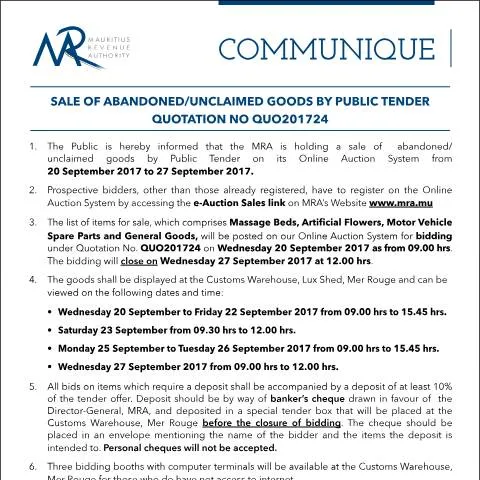
The process of acquiring abandoned or unclaimed goods through public tender can seem daunting, particularly for those who are unfamiliar with the nuances involved. This comprehensive guide focuses on the Sale of Abandoned/Unclaimed Goods by Public Tender as outlined in the official Communique Q24 of 2017, highlighting its significance, the necessary steps for participation, and the essential details to ensure smooth operation throughout the process.
Understanding the Framework: The Role of MRA in Public Tender Sales
At the center of this process is the Mauritius Revenue Authority (MRA), which oversees the sale of abandoned and unclaimed goods. These items typically originate from various sources, such as seized goods or items left unclaimed at customs. The MRA conducts these sales through a structured approach, enabling individuals to bid on items via their Online Auction System.
The initiative not only provides a method for the MRA to recover funds from unclaimed items but also allows the public to make a purchase that can potentially lead to significant savings. Understanding the intricacies of the bidding process is vital for anyone wishing to participate.
The Timeline of the Tender Process
For prospective bidders, timing is crucial. The following key dates outline the timeline for the tender process:
- Start Date: Bidding opens on 20 September 2017 at 09:00 hrs.
- End Date: Bidding closes on 27 September 2017 at 12:00 hrs.
- Viewing Period: Items can be viewed from 20 to 27 September, with specific hours listed below:
| Date | Time |
|---|---|
| 20-22 September 2017 | 09:00 - 15:45 hrs |
| 23 September 2017 | 09:30 - 12:00 hrs |
| 25-26 September 2017 | 09:00 - 15:45 hrs |
| 27 September 2017 | 09:00 - 12:00 hrs |
Adhering to these specific dates is essential for participating in the bidding process.
The Bidding Process: Step-by-Step
Engaging in the bidding process involves several crucial steps that ensure compliance with the MRA’s guidelines. Understanding these steps can demystify the process for new bidders:
Registration on the Online Auction System
Before placing any bids, prospective bidders must register on the MRA's Online Auction System. This registration is essential for individuals who are not already registered. Here are the steps:
- Visit the official MRA website.
- Access the e-Auction Sales link.
- Complete the registration form with accurate information.
This step grants access to the public tender, allowing bidders to participate actively.
Making a Bid
Once registered, bidders can begin placing offers on items of interest. Each bid must comply with the following rules:
- All bids requiring a deposit must be accompanied by a minimum deposit of 10% of the bid offer.
- The deposit must be made through a banker’s cheque made out to the Director-General, MRA.
- The cheque should be submitted in a special tender box located at the Customs Warehouse, Mer Rouge, before bidding closure.
Individuals are advised to place the cheque in an envelope clearly marked with their name and the items associated with the deposit.
Using Bidding Booths
For those who may lack internet access, the MRA provides three bidding booths equipped with computer terminals at the Customs Warehouse. This ensures inclusivity and accessibility for all interested bidders. However, it remains essential to arrive at the venue well ahead of the bidding end time.
What to Expect Post-Bid: Evaluation and Feedback
Following the conclusion of the bidding process, bidders may wonder about the subsequent steps. Once bids are submitted and the auction closes, the MRA undertakes a thorough evaluation of all submissions. Here’s what this entails:
Notification of Results
Bidders will be notified of the outcome of their bids shortly after the closing of the auction. Successful bidders will receive instructions regarding payment and collection of their acquired items. If unsuccessful, bidders may also receive a notification outlining the unsuccessful status of their bid.
Payment and Collection
For those who win bids, payment processes must be completed in a timely manner to facilitate the release of goods. Bidders should prepare for the following:
- Complete any outstanding payments as per the MRA’s instructions.
- Follow the guidelines provided for the collection of won items.
Special Circumstances and Considerations
While the standard bidding process is straightforward for many, there are special circumstances that bidders need to be aware of. These can affect registration, bidding, and post-bid procedures:
Participating as a Minor or Foreign National
Bidding as a minor or a foreign national introduces additional complexities:
- Minors may require parental or guardian consent to participate in the bidding process.
- Foreign nationals should ensure they have the necessary documentation, such as a valid passport, to register and bid.
Those in unique situations should consult with the MRA directly to clarify any requirements pertinent to their status.
Handling Errors or Missing Documentation
Occasionally, bidders may encounter issues related to errors in submitted information or missing documents. In such cases:
- Immediately contact the MRA’s customer service for guidance.
- Ensure any outstanding issues are rectified as per the MRA's directions.
The Importance of Vigilance: Tracking the Processes
Tracking the status of your bid and understanding the post-bid processes can significantly enhance your experience. Bidders are encouraged to remain vigilant:
Follow-Up Mechanisms
After the bidding process concludes, bidders can follow up by:
- Checking the MRA's website for updates or announcements related to the auction.
- Contacting the MRA directly via phone or email for any clarifications regarding their specific bids.
By staying informed, bidders can ensure they do not miss crucial information about their bids.
Concluding Thoughts on the Tender Process
The Sale of Abandoned/Unclaimed Goods by Public Tender is an excellent opportunity for potential buyers to acquire goods at competitive prices while providing the MRA a means to manage unclaimed items effectively. By understanding the entire process—from registration to bid tracking—participants can navigate this tender smoothly and successfully.
Prospective bidders are encouraged to approach the process with preparation and diligence, ensuring that all required steps are followed for a hassle-free experience.
Understanding the Process of Public Tender for Unclaimed Goods
The sale of abandoned or unclaimed goods by public tender in Mauritius is governed by specific regulations aimed at ensuring transparency and fairness in the disposal of such items. This process serves multiple purposes: it helps declutter storage spaces, provides opportunities for buyers, and ensures that any potential proceeds can be utilized for public benefit. Understanding the procedures involved is crucial for both authorities conducting the sale and individuals looking to participate.
Fill in your form directly online
No printing: type your details into the boxes of the official form, tick, then download the PDF ready to send.
- 1Type into the form boxes
- 2Tick in one click
- 3Save and download the PDF
Initially, the relevant government department must identify items that have been unclaimed for a certain period, typically defined by local regulations. Before proceeding with the sale, these items need to be thoroughly documented. This includes detailed descriptions, photographs, and any available history of ownership. The documentation serves both to inform potential buyers and to protect the authority in case of disputes arising post-sale.
Once the items have been catalogued, the authority will prepare a public tender notice, which is published in local newspapers and on the official government portal. This notice should include essential information such as:
- A list of the items up for sale, including their condition.
- The date, time, and location of the tender opening.
- Instructions on how to submit bids, including any required forms, like the official Form 12 for bid submission.
- The rules governing the tender process, including payment methods, conditions for pick-up, and responsibilities of the buyer post-purchase.
Participants should pay close attention to the bidding guidelines. Submissions are typically accepted through digital platforms connected to the MauPass system, allowing a secure and efficient application process. Bidder registration may be required to ensure all participants are eligible and to maintain the integrity of the tendering process.
Legal Framework and Responsibilities of Bidders
Engaging in the public tender process for unclaimed goods involves understanding the legal obligations set forth in the relevant statutes. The framework governing these sales can be complex, involving both civil and common law principles that dictate how abandoned property is handled.
According to the PSC Act 1955 and other local regulations, individuals participating in the tender must ensure compliance with all statutory requirements. This includes providing accurate information during the bidding process and adhering to payment deadlines. Failure to comply may result in disqualification from the tender process or even legal ramifications should issues arise post-auction.
Moreover, bidders must also be aware of their responsibilities after winning the bid. Typically, successful bidders are required to claim their goods within a specified timeframe and may need to complete additional documentation to finalize the sale. This may include the submission of PSC Form 8, which confirms acceptance of the tender terms and details the transfer of ownership. Buyers are also encouraged to physically inspect the goods before placing bids to fully understand their condition and potential value.
Aside from legal responsibilities, bidders should consider the ethical implications of purchasing unclaimed items. Transparency in bidding practices fosters trust within the community and ensures a fair process for all participants. It is also advisable for bidders to seek clarification from the authority if any doubts arise regarding the condition of the goods or the bidding process itself.
Post-Tender Process: What Happens After the Sale?
The conclusion of a public tender involves several important steps that both the selling authority and the successful bidders must undertake. After the tender has closed and bids have been evaluated, the authority will announce the winning bids, typically through the same channels used for the public announcement of the tender.
Following announcement, successful bidders are contacted to finalize the sale. This process may involve:
- Payment of the bid amount, which often requires a deposit followed by full payment within a set timeframe. Payment methods may include bank transfers or other government-approved electronic payment systems.
- Completion of necessary forms, such as the relevant transfer of ownership documentation, which typically involves presenting a copy of the winning bid confirmation and identification documents.
- Arranging for the collection of the goods, which should be done in compliance with the timelines stipulated by the authority. Failure to collect within the specified period may result in forfeiture of the goods and the bid amount.
It is crucial for successful bidders to maintain communication with the responsible authority to ensure smooth processing of all post-tender activities. Additionally, bidders should keep records of all transactions and correspondence related to the sale for future reference, as this may be necessary for warranty claims or dispute resolution should any issues arise regarding the condition of the goods.
In summary, while the sale of abandoned or unclaimed goods offers an avenue for individuals to acquire unique items at potentially low prices, it requires a thorough understanding of the entire process, from the initial tender announcement to post-sale responsibilities. Engaging in this process with diligence not only protects individual interests but also upholds the integrity of the public tender system.