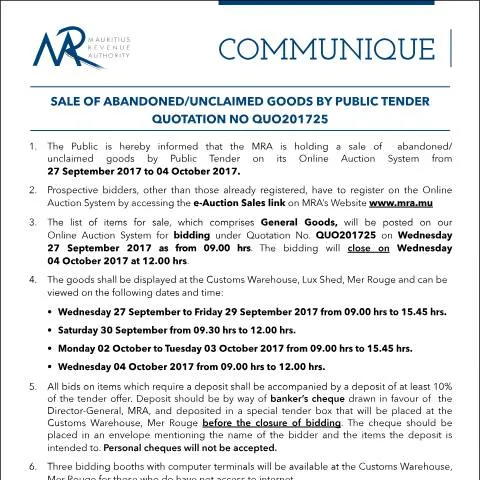
Navigating the Sale of Abandoned and Unclaimed Goods: Insights for Bidders
The opportunity to bid on abandoned or unclaimed goods can be an intriguing prospect for many, potentially unlocking treasures at a fraction of their value. The Mauritius Revenue Authority (MRA) has laid out a structured process for this through Public Tender. Understanding this process is crucial for both seasoned auction participants and first-time bidders alike.
The Framework of the Sale: Historical Context and Regulatory Basis
The sale of abandoned and unclaimed goods by public tender is governed under the auspices of the Mauritius Revenue Authority, established to manage such sales transparently and equitably. This specific procedure stems from the broader regulatory framework that includes the Customs Act and related legislation, with initiatives designed to optimize the use of unclaimed goods while ensuring adherence to legal standards. The announcement made via Communique Q25 of 2017 marks a significant milestone in this ongoing framework.
This practice not only fosters public engagement but also addresses the issue of unclaimed items that may otherwise clutter storage facilities, providing a win-win for both the state and potential bidders.
Eligibility and Participation: Who Can Bid?
Participation in the tender is open to a variety of bidders, but certain conditions must be met:
- General Public: Individuals aged 18 and over can participate in the bidding process.
- Business Entities: Companies and businesses may also enter bids, provided they meet the registration requirements.
- Foreign Bidders: Non-Mauritian residents may participate, although they must adhere to specific regulations about international bidding.
It’s imperative for all prospective bidders to ensure they register adequately on the MRA's Online Auction System, particularly if they are not previously registered. The necessity of registration prior to bidding signifies the importance of having a verified identity and contact information.
Specific Scenarios: Considerations for Minors and Non-Residents
While the general eligibility criteria are straightforward, there are specific considerations for particular categories:
- Minors: Individuals under the age of 18 must have a guardian or parent submit the bid on their behalf, providing supporting documentation to verify the relationship.
- Foreign Bidders: Must provide proof of identity and may need to account for taxes or fees related to their bids.
Key Dates and Timeline: Essential Scheduling Information
The auction process has a well-defined timeline that participants must adhere to:
- Registration Deadline: Interested bidders should register on the Online Auction System by 26 September 2017.
- Bidding Period: The auction will commence on 27 September 2017 at 09:00 and conclude on 04 October 2017 at 12:00.
- Viewing of Goods: Goods will be available for public viewing on specified dates from 27 September to 04 October 2017.
Being aware of these dates is crucial for bidders to maximize their opportunities and avoid missing out on desired items.
What Happens After the Bidding Closes?
Upon the closing of bids, successful bidders will be notified and required to complete the purchase process. The MRA will establish a timeframe within which payments must be made, alongside any additional requirements for item collection.
Preparation and Submission: Completing Your Bid
Completing a bid involves several steps, which must be meticulously followed to ensure your submission is successful:
- Registration: Access the MRA’s Online Auction System and ensure your details are accurate.
- Deposit Requirement: For items requiring a deposit, prepare a banker’s cheque of at least 10% of your tender offer.
- Bid Submission: Place your bid through the Online Auction System or visit one of the three bidding booths located at the Customs Warehouse.
All cheques must be made out to the Director-General, MRA, placed in an envelope with your name and bid details. Personal cheques will not be accepted.
In-Person Bidding: Utilizing Bidding Booths
For individuals without internet access, the MRA provides three bidding booths equipped with computer terminals at the Customs Warehouse. Participants must bring an identity card for entry.
Understanding the Goods: What is Up for Grabs?
The items for sale typically consist of general goods, which may include a wide range of products that have been abandoned or are otherwise unclaimed. The detailed list will be made accessible on the Online Auction System on 27 September 2017.
While the specific contents vary with each auction, bidders should anticipate a diverse assortment of potential items, from household goods to more specialized equipment.
Viewing the Items: Critical for Informed Bidding
Prospective bidders are encouraged to view the items during the designated viewing times. This allows participants to assess the condition of goods and make informed bidding decisions.
| Date | Time |
|---|---|
| 27 September 2017 | 09:00 – 15:45 |
| 28 September 2017 | 09:00 – 15:45 |
| 29 September 2017 | 09:00 – 15:45 |
| 30 September 2017 | 09:30 – 12:00 |
| 02 October 2017 | 09:00 – 15:45 |
| 03 October 2017 | 09:00 – 15:45 |
| 04 October 2017 | 09:00 – 12:00 |
Addressing Potential Issues: What to Do in Case of Problems
As with any bidding process, participants may encounter issues such as bid rejections, missing pieces of documentation, or discrepancies in bid amounts. Here’s how to navigate these situations:
- Bid Rejection: If your bid is rejected, you may contact the MRA for clarification. Ensure you have all necessary documentation and information readily available.
- Missing Documents: Participants should keep a checklist of all required documents before submission. In case something is missing, ensure you rectify this promptly to maintain eligibility.
- Errors in Bid Amounts: Double-check all figures before submission to avoid misunderstandings. If an error is noticed post-submission, reach out immediately to correct it.
Appealing a Decision: Your Rights as a Bidder
Bidders have the right to appeal actions taken by the MRA related to their bids. This would typically involve formal communication through the channels established by the MRA. Document all correspondence and maintain records to support your appeal.
Final Thoughts: Engaging with the Tender Process
Participating in the sale of abandoned and unclaimed goods via public tender is not just an opportunity to acquire unique items; it is also a process that embodies transparency and fairness. As bidders navigate through the steps outlined, it is crucial to stay informed, prepared, and proactive throughout the entire bidding journey.
Being well-versed in the guidelines, timelines, and procedural nuances will significantly enhance your chances of a successful bid. Whether you are a seasoned bidder or a newcomer, the keys to success lie in diligence and attention to detail.
Understanding the Process of Public Tender for Unclaimed Goods
The sale of abandoned or unclaimed goods by public tender in Mauritius follows a structured and transparent process governed by the laws and regulations set forth by the government. This process is critical not only for clearing out unclaimed property but also for ensuring that the sale is conducted fairly and equitably. The relevant authorities involved in this process include the Mauritius Revenue Authority (MRA) and the Public Service Commission (PSC), which play key roles in the administration of these sales.
Public tenders for unclaimed goods typically begin with a notice that is published in local newspapers and on government portals. This notice provides essential details regarding the items up for sale, auction dates, location, and terms of the tender. It is vital for potential bidders to pay close attention to these announcements, as they outline the eligibility criteria, required documentation, and the process of submitting bids.
Once the tender is announced, interested parties must prepare their bids carefully. Bidders are usually required to submit their offers along with a tender deposit, which acts as a commitment fee. The tender deposit is generally a small percentage of the estimated value of the goods. Failing to submit this deposit may result in disqualification from the bidding process.
Fill in your form directly online
No printing: type your details into the boxes of the official form, tick, then download the PDF ready to send.
- 1Type into the form boxes
- 2Tick in one click
- 3Save and download the PDF
During the tender opening, bids are publicly opened, and the results are often announced the same day. Transparency is paramount in this process to maintain public trust. Successful bidders are notified formally, and arrangements are made for payment and collection of the items. It is critical for bidders to understand that all sales are final, and they must ensure that they have thoroughly inspected the goods prior to bidding, as there are usually no returns or refunds after the sale.
Legal Framework and Compliance for Tender Sales
The legal framework governing the sale of abandoned or unclaimed goods through public tender in Mauritius is derived from the combination of French civil law and English common law, as stipulated in the Constitution of 1968 and the Public Service Commission Act of 1955. Understanding this hybrid legal framework is essential for both the authorities conducting the sale and the bidders participating in the tender process.
Compliance with the established legal protocols is critical to ensure the validity of the tender process. For instance, the items intended for sale must be properly classified as abandoned or unclaimed, meaning they have met the necessary criteria over a specified period. This is typically a period defined by law or policy, ensuring that goods that may still be of use to their owners are not prematurely sold.
The MRA, as the regulatory body overseeing taxation and revenue collection, plays an integral role in ensuring that all sales are reported accurately for tax purposes. This includes requiring successful bidders to comply with tax provisions related to the purchase. Buyers should be aware of their obligations to report any income derived from reselling the goods and to pay any applicable taxes. Failure to comply with tax laws can result in penalties.
Additionally, the legal framework emphasizes the importance of transparency and fairness in the bidding process. Local government service recruitment bodies, such as the LGSC, may be involved in setting the guidelines for these sales, ensuring that all tenders are conducted in accordance with established norms and standards. This helps to protect the rights of potential bidders and uphold the integrity of the public tender process.
Tips for Successful Bidding in Public Tenders
Participating in public tenders for unclaimed goods can be a robust opportunity for both individuals and businesses. However, to maximize the chances of success, bidders should consider several best practices when preparing their submissions.
Firstly, it is paramount to conduct thorough research on the type of goods being auctioned. This includes understanding the market value of similar items, which can help bidders determine a competitive yet reasonable bid amount. Knowledge of the specific condition and potential resale value of the items being tendered can significantly enhance bidding strategy.
Secondly, potential bidders should ensure that they are familiar with the submission requirements of the tender. This typically includes understanding the documentation needed, such as identification, proof of address, and the required tender deposit. Bidders should also verify that they have provided all necessary information on their bid forms to avoid disqualification due to administrative errors.
Additionally, bidders should attend any preview days or inspections offered prior to the tender date. These opportunities allow bidders to inspect the goods firsthand, giving them better insight into what they are bidding on. It is often advisable to take notes and photographs during these inspections to aid in the decision-making process.
Lastly, developing a bidding strategy is crucial. Bidders should establish a maximum bid amount before the auction and avoid the temptation to exceed this limit in the heat of the moment. Having a clear plan helps maintain focus and ensures responsible financial decision-making throughout the tender process.