The Context of Dangerous Drug Seizures in Mauritius
The recent incident at Sir Seewoosagur Ramgoolam International Airport, which saw the seizure of dangerous drugs valued at approximately Rs 15.5 million, underscores the ongoing battle against drug trafficking in Mauritius. This operation, executed by the Mauritius Revenue Authority (MRA), highlights the crucial role of customs in safeguarding national security and public health. The seized drugs, found concealed within a passenger's luggage, prompt a detailed examination of the legal processes and documentation involved in such cases.
Understanding the Press Release Code: PressRelease15M160524
The specific press release, coded as PressRelease15M160524, serves multiple purposes. It not only informs the public about the seizure but also reinforces the commitment of the MRA to combat illicit drug activities. Moreover, it acts as a documentation tool for tracking the progress of investigations relating to drug trafficking. This document becomes essential for various stakeholders, including law enforcement, legal professionals, and the public, who wish to stay informed about drug-related issues in the country.
Details of the Incident
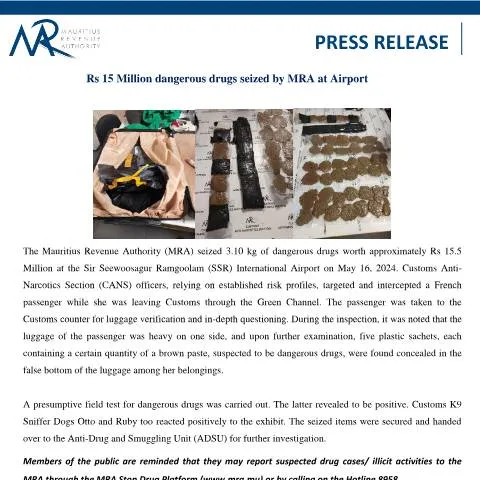
On May 16, 2024, officers from the Customs Anti-Narcotics Section (CANS) utilized established risk profiles to intercept a French passenger at the Green Channel of the airport. Upon suspicion, the passenger's luggage was subjected to verification, leading to the discovery of five plastic sachets containing a brown paste, suspected to be dangerous drugs. The presence of these drugs was confirmed by a presumptive field test and positive reactions from the MRA's K9 sniffer dogs.
Who Files the Report and When
Typically, the MRA is responsible for documenting such seizures through a press release to communicate essential information to the public. This report is usually filed immediately following significant operations as part of the agency's accountability and transparency initiatives. Additionally, public notifications and updates may be issued to encourage community engagement in reporting suspected drug-related activities.
Categories of Individuals Concerned
This press release affects various categories of individuals:
- Law Enforcement Agencies: They rely on such releases for actionable intelligence and to coordinate efforts against drug trafficking.
- Legal Experts: Attorneys and legal professionals utilize this information to prepare for potential cases relating to drug offenses.
- Citizens: Residents are encouraged to stay alert and report suspicious activities, thereby playing an active role in community safety.
- Government Officials: Officials at various levels are informed about the operations to further support policy-making and resource allocation.
The Implications of Drug Seizures
The consequences of drug seizures extend beyond the immediate legal ramifications for the individuals involved. These events can significantly impact public perception of safety in Mauritius. When the MRA successfully intercepts illegal substances, it instills confidence in the government’s capabilities to manage national security risks.
Legal Ramifications for Offenders
Individuals caught in possession of illegal drugs can face severe consequences, including:
- Criminal Charges: Depending on the quantity and type of drugs seized, offenders may face charges ranging from misdemeanors to serious felonies.
- Fines: Financial penalties can be substantial, including court costs and restitution to the state.
- Imprisonment: Convictions may result in lengthy prison sentences, particularly for serious drug offenses.
Public Awareness and Reporting Mechanisms
The MRA encourages community involvement in combating drug trafficking. Members of the public can report suspected drug activities to the MRA through multiple channels:
- Visit the MRA Stop Drug Platform at www.mra.mu
- Call the MRA Hotline at 8958
This proactive approach seeks to enhance community vigilance and contribute to the effectiveness of law enforcement efforts.
Special Considerations for Foreign Nationals
For foreign nationals involved in drug smuggling incidents, there are additional layers of complexity in legal proceedings. When a foreign citizen is apprehended, diplomatic channels may also come into play, potentially leading to consular support or international legal assistance. Such individuals must also navigate Mauritian laws, which may differ significantly from their home countries.
Rights and Protections for Foreign Nationals
Foreign nationals have specific rights under Mauritian law, including:
- Right to Legal Representation: Individuals are entitled to legal counsel, which is critical for navigating the local legal system.
- Consular Access: They may request assistance from their embassy or consulate, which can provide additional legal support and advice.
- Language Support: If language barriers exist, provisions may be made for translation services during interviews and legal proceedings.
Following Up on Seized Items and Ongoing Investigations
Once a seizure occurs, the items are typically handed over to the Anti-Drug and Smuggling Unit (ADSU) for further examination. For individuals or stakeholders interested in the progress of a case, there are formal channels to inquire:
- Contacting the MRA: Individuals are encouraged to reach out directly to the MRA for updates on ongoing investigations.
- Documentation Requests: In some cases, parties may formally request access to documentation relating to the seizure, subject to legal requirements and privacy laws.
Understanding the Administrative Process
The administrative processes following a drug seizure can involve several stages:
- Initial Investigation: Officers collect evidence and interview involved parties.
- Case Development: Legal authorities build a case based on collected evidence.
- Prosecution: If sufficient evidence is gathered, prosecution will commence in accordance with Mauritian law.
It is vital for concerned parties to stay updated throughout these stages to ensure their rights are protected and to understand the ramifications of the ongoing investigation.
Comparing Similar Official Documents
This press release is part of a broader category of official communications issued by the MRA. To understand its unique features, it’s important to contrast it with other types of documents:
| Document Type | Purpose | Key Features |
|---|---|---|
| Press Release | Inform the public of significant events | Timeliness, transparency, community engagement |
| Official Report | Detailed account of investigations | In-depth analysis, statistical data, findings |
| Public Advisory | Provide warnings and safety tips | Focused on prevention, actionable advice |
The Importance of Continuous Public Engagement
The issuance of the press release regarding the seizure of dangerous drugs not only serves an informational purpose but also acts as a vital tool for public education and engagement. The MRA’s consistent communication efforts aim to keep citizens informed and involved in the ongoing fight against drug trafficking. Awareness campaigns may follow such incidents to educate the public about the dangers of drug abuse and the importance of reporting suspicious activities.
Future Steps for the MRA
In light of this incident, the MRA will likely continue to enhance its strategies for combating drug trafficking, including:
- Training Programs: Regular training for customs officers to improve detection techniques.
- Community Outreach: Increased efforts to engage and educate the public about drug-related issues.
- Technological Advancements: Adoption of new technologies for better surveillance and detection at ports and airports.
Through these efforts, the MRA reinforces its commitment to a safer Mauritius, where the dangers of drug trafficking are met with vigilance and resilience.
Impact on Local Drug Trafficking Trends
The seizure of dangerous drugs valued at Rs 15 million by the Mauritius Revenue Authority (MRA) at the airport on May 16, 2024, has significant implications for local drug trafficking trends. This operation highlights the persistent challenges faced by law enforcement in curbing the influx of illegal substances into Mauritius. Observers note that such large-scale seizures typically correlate with an increase in the sophistication and audacity of trafficking operations.
Fill in your form directly online
No printing: type your details into the boxes of the official form, tick, then download the PDF ready to send.
- 1Type into the form boxes
- 2Tick in one click
- 3Save and download the PDF
Recent analyses suggest that drug cartels are adopting new methods to evade detection, including the use of advanced technologies and routing drugs through less monitored channels. The MRA's successful interception may serve as a catalyst for further investigations into trafficking networks, prompting the need for enhanced collaboration between the MRA, local police, and international agencies involved in drug enforcement.
This incident may also lead to heightened scrutiny of airport security protocols and customs procedures. Stakeholders may call for reforms to improve the detection of narcotics, including the implementation of more rigorous scanning technologies and training for customs officers. As the MRA strengthens its operational capabilities, it may also seek to develop intelligence-sharing partnerships with countries that experience similar challenges, thereby creating a more coordinated response to drug trafficking.
Community Awareness and Prevention Strategies
In the wake of the MRA's substantial drug seizure, there is an urgent need for community engagement and awareness regarding the dangers of drug abuse and trafficking. Local NGOs and community organizations can play a pivotal role in disseminating information about the risks associated with drug use and the signs of trafficking within neighborhoods.
Targeted outreach programs could be organized in schools and community centers to educate the youth about the implications of drug involvement. Workshops led by law enforcement and health professionals can effectively communicate the health risks associated with drug use, as well as the legal ramifications of trafficking.
Furthermore, community members should be encouraged to report suspicious activities or potential trafficking incidents to the relevant authorities anonymously. The establishment of a hotline or a web portal can facilitate this kind of reporting, ensuring that citizens feel safe and empowered to act against drug-related crimes in their communities.
Future Legislation and Policy Implications
Following the significant drug seizure, discussions surrounding potential legislative reforms to strengthen drug laws in Mauritius are likely to gain momentum. Policymakers may consider reviewing existing drug-related legislation to ensure it adequately addresses contemporary challenges posed by trafficking and usage patterns.
Proposals for stricter penalties for trafficking offenses could be introduced, alongside efforts to decriminalize certain low-level possession offenses that disproportionately affect vulnerable populations. Such measures could facilitate a more balanced approach that focuses not only on enforcement but also on rehabilitation and support for individuals affected by substance abuse.
Moreover, future policies may advocate for enhanced resources dedicated to drug education and rehabilitation programs, recognizing that prevention and recovery are crucial components of a comprehensive strategy against drug-related issues. Engaging with healthcare providers, educators, and social workers will be essential in crafting effective policies that resonate with the needs of the community while addressing the pressing issue of drug trafficking in Mauritius.