Unlocking Opportunities: The Sale of Abandoned/Unclaimed Goods by Public Tender
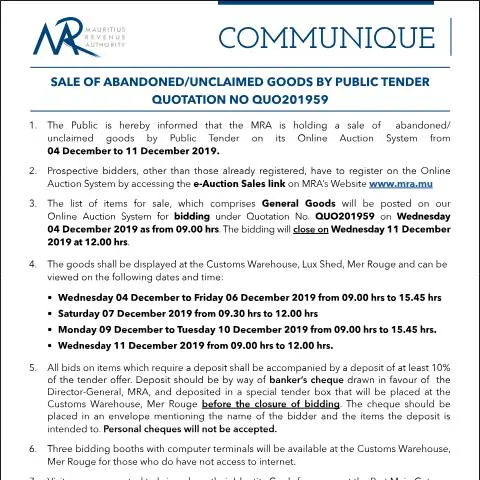
The Sale of Abandoned/Unclaimed Goods by Public Tender, announced by the Mauritius Revenue Authority (MRA) under Communique59of2019, serves as a vital mechanism through which surplus goods are auctioned through a public bidding process. This formal engagement not only allows the MRA to liquidate goods that have remained unclaimed but also creates an opportunity for members of the public to acquire items at potentially attractive prices.
Understanding the Bidding Process: Key Aspects to Consider
The bidding process for the sale of abandoned goods is structured and time-sensitive, requiring potential bidders to navigate a series of steps effectively. The critical dates and requirements are as follows:
- Online Auction Timing: The auction runs from December 4 to December 11, 2019, with a strict closing time at 12:00 hrs on the final day.
- Registration: Only those who are not already registered must register on the MRA's Online Auction System.
- Viewing of Goods: Prospective bidders are encouraged to visit the Customs Warehouse from December 4 to December 11 to inspect the goods prior to bidding.
Registering for the Online Auction System
Registration on the MRA's Online Auction System is a prerequisite for participation in the auction. This involves accessing the e-Auction Sales link on the MRA website. For prospective bidders, this step is not merely administrative; it is the gateway to accessing a diverse range of general goods that include electronics, furniture, and other abandoned items.
Specifics of Goods Auctioned: What to Expect
The auction features an array of general goods that can vary widely in category and condition. Being aware of what is on offer can aid bidders significantly:
- Inspection Dates: Goods will be available for viewing during specific hours, providing an essential chance to assess quality and value.
- Listing of Items: A comprehensive list of all items available for auction will be posted at the commencement of the bid period.
Understanding the Types of Goods Available
Items auctioned can encompass anything from household appliances to vehicles, each varying in condition and market value. Familiarizing oneself with the specifics of these items can drastically influence bidding decisions.
Financial Commitments: The Role of Deposits in Bidding
One significant aspect of the bidding process is the requirement for a deposit. Bidders should understand the implications and procedure associated with this step:
- Deposit Amount: A minimum of 10% of the tender offer must accompany bids on items that require a deposit.
- Payment Method: This deposit should be made via a banker’s cheque addressed to the Director-General, MRA, with instructions to place it in a designated tender box at the Customs Warehouse.
Importance of Proper Documentation
All deposits must be clearly identified. Placing the cheque in an envelope labeled with the bidder's name and the intended items is essential to ensure proper processing. Bidders must note that personal cheques are not accepted, reinforcing the importance of adhering to these requirements.
Alternatives for Non-Internet Users: Bidding Booths at Customs Warehouse
For individuals lacking internet access, the MRA has established provisions to facilitate participation. Three bidding booths equipped with computer terminals will be available at the Customs Warehouse, Mer Rouge. This initiative ensures inclusivity, allowing those without online access to participate in the auction.
Preparing for the Auction: Mandatory Documentation and Identification
As the auction date approaches, participants need to ensure they have the necessary identification:
- Identification Requirements: Bidders must present valid Identity Cards for entry at the Port Main Gate on auction days.
- Documentation Preparedness: Ensuring all paperwork, including the banker’s cheque and registration confirmation, is in order will facilitate smooth participation.
Post-Auction Process: What Happens Next?
Upon the completion of the auction, successful bidders will be notified regarding the next steps:
- Payment Confirmation: Remaining payment details will be communicated, emphasizing that the balance must be settled promptly to secure the purchase.
- Item Collection: Instructions on how and when to collect the purchased items will also be provided.
Understanding the Conditions of Sale
Bidders must familiarize themselves with the terms and conditions that govern the sale, as these can impact the fulfillment of the transaction. Conditions may include restrictions on item returns or liability disclaimers from MRA.
Distinguishing This Form from Other Similar Documents
The Sale of Abandoned/Unclaimed Goods form is distinct from other forms related to public tenders or auctions in Mauritius, primarily due to its focus on items abandoned and unclaimed by their previous owners. Understanding these distinctions can help avoid confusion:
| Form Type | Purpose | Key Features |
|---|---|---|
| Public Tender Form for Government Contracts | Sourcing suppliers for government projects | Complex evaluations; often involves service contracts |
| Sale of Abandoned/Unclaimed Goods Form | Auctioning unclaimed assets | Public auction; simpler bidding process |
Strategic Considerations: Maximizing Bidding Success
To enhance the chances of a successful bid, participants should consider several strategic approaches:
- Research and Preparation: Familiarizing oneself with the auction items and setting a budget can lead to more informed bidding decisions.
- Networking: Engaging with other bidders may provide insights into the auction process and strategies for success.
- Time Management: Allocating sufficient time for both viewing of goods and for the bidding process itself is critical.
Understanding Market Value
Researching similar goods and understanding their market value can drastically alter bidding strategy, allowing participants to develop realistic expectations when making bids.
Conclusion: Embracing Opportunities with Informed Participation
Participating in the Sale of Abandoned/Unclaimed Goods by Public Tender offers a unique opportunity for individuals and businesses alike to acquire valuable items. However, complete engagement with the process, from understanding the bidding requirements to adhering to the necessary documentation, is essential for a successful outcome. With thorough preparation and informed participation, bidders can navigate this significant public auction with confidence.
Understanding the Legal Framework for Sale of Abandoned Goods
The sale of abandoned or unclaimed goods in Mauritius is governed by a combination of local laws and regulations aimed at ensuring transparency and fairness in the disposal process. The relevant legal framework primarily stems from the principles established in the Civil Code of Mauritius, alongside regulations set forth by the Ministry of Finance and Economic Development. This process is commonly invoked when property goes unclaimed for a specified period, typically defined under the specific regulations applicable to the goods' nature.
Before goods can be sold via public tender, they must first be officially classified as unclaimed or abandoned. This is generally initiated by a formal notification process where the owner of the goods is given ample time to retrieve their items. The notification period typically spans at least three months, during which the property must be adequately advertised to ensure potential claimants are informed. Following this notification, if the goods remain unclaimed, they may then be auctioned off through a public tender process.
It is essential for potential bidders to understand that the public tender process involves specific criteria and terms that must be adhered to. These terms can include deposit requirements, bidding increments, and deadlines for submission. Additionally, the tender documents typically detail the condition of the goods, which may be sold "as is," indicating that the buyer assumes all risks associated with the purchase. Participants in the tender must ensure that they are well-informed regarding the nature and state of the items, as there is generally no recourse available post-purchase.
Process of Public Tender for Abandoned Goods
The public tender process for the sale of abandoned goods in Mauritius is systematic and often conducted with an aim to maximize the recoverable value for the government or the local authority managing the goods. The first step usually involves an inventory of the abandoned items, meticulously cataloged and assessed for value. This inventory is crucial as it serves as the basis for the tender documentation.
The tender itself is published in various media channels, including newspapers and online platforms affiliated with the government, to ensure maximum visibility. Interested parties are invited to submit their bids within a specified timeframe. Typically, the tender will include essential information such as:
- A detailed description of the goods, including quantities and conditions.
- Instructions on the submission of bids, including formats and deadlines.
- Any reserve price (minimum acceptable bid) that might apply.
- Information on any security deposits required to participate in the tender.
In addition to the basic tender documents, potential bidders may also be required to submit supporting documents demonstrating their qualification to engage in the tender process. This might include proof of identity, business registration details, and any other documentation deemed necessary by the local authority handling the sale.
Once the bidding period concludes, a designated evaluation committee reviews the bids. Awarding the tender is based on various factors, not solely price; compliance with the tender specifications, the bidder’s reliability, and past dealings may all influence the decision. Successful bidders are then required to complete the transaction formalities, including payment and the collection of the purchased goods.
Environmental and Social Considerations
A critical aspect of the sale of abandoned goods is the environmental and social implications of the process. Authorities in Mauritius are increasingly aware of the need for sustainable practices when disposing of such goods. Before a sale takes place, an assessment of the items for any potential environmental hazards is typically conducted. This is crucial, especially for electronics, chemicals, or items that could have adverse effects if not disposed of properly.
Upon identifying hazardous materials, local governments may need to engage with specialized waste management services to ensure these items are handled according to environmental regulations. This step is vital to mitigate any risks associated with pollution or harm to public health.
Moreover, the sale process can also serve a social purpose by redistributing goods that still possess value to underprivileged communities. Where feasible, authorities may consider donating unclaimed goods to charitable organizations or community programs before resorting to public tender sales. This approach not only helps those in need but also promotes a culture of reuse and recycling, which aligns with global sustainability goals.
Furthermore, the tender process itself should be inclusive, allowing participation from a diverse array of bidders and ensuring that local businesses have fair access to purchasing these goods. Authorities are encouraged to advocate for local economic participation, thus fostering an environment where small businesses can thrive through such opportunities.
As Mauritius continues to evolve in its administrative practices regarding the sale of abandoned goods, these environmental and social considerations will play an integral role in shaping future policies. Authorities are tasked not only with the efficient disposal of goods but also with ensuring that the process aligns with broader societal values and ecological responsibilities.