Understanding Document 207: The Comp Payment of Fees
The 207_The Comp _Payment of Fees form plays a crucial role in the administrative landscape of Mauritius, specifically within the context of corporate compliance and fee payments. It is designed for businesses that need to fulfill their obligations under the Companies Act, particularly concerning the payment of fees to the Registrar of Companies. Understanding the nuances of this document is essential for ensuring your business remains compliant and avoids any potential penalties.
Navigating the Timeline: Important Dates and What Follows
For individuals and companies preparing to submit Document 207, it is vital to be aware of the pertinent timelines associated with its submission. The process generally begins at the start of the fiscal year, which runs from 1 July to 30 June. However, specific deadlines may depend on the nature of the fees being paid, as illustrated in the table below:
| Type of Fee | Payment Due Date | Consequences of Late Payment |
|---|---|---|
| Annual Return | Within 28 days of the anniversary of incorporation | Penalty fees apply |
| Late Filing | As specified by the Registrar | Potential additional charges |
| Special Licenses | As per the license conditions | Loss of license, operational halts |
It is important to note that failure to comply with these timelines can result in penalties and complications with your company's standing. Therefore, keeping track of these dates is essential for all stakeholders involved.
Essential Documents: Preparing for Submission
Filling out the 207_The Comp _Payment of Fees requires several accompanying documents, which vary based on your specific situation. Preparations should start by gathering these essential documents:
- Company Registration Certificate: Proof of the company's legal existence.
- Tax Clearance Certificate: To confirm that all tax obligations have been met.
- Annual Financial Statements: These must be up-to-date and accurately reflect the company's financial status.
- Proof of Address: Recent utility bills or official correspondence may suffice.
Each document serves a significant purpose in validating the information provided in the form and ensuring the Registrar has all necessary details to process the payment of fees effectively.
The Role of Document 207: A Crucial Step in Compliance
Document 207 is not merely a formality; it represents a significant step in maintaining compliance with the Companies Act. This form enables businesses to formalize their payment obligations to the Registrar, ensuring their operations are legitimate and recognized under Mauritian law. Submitting this form is essential for:
- Obtaining necessary licenses and permits.
- Maintaining good standing with the Registrar of Companies.
- Facilitating smooth operations without interruptions due to administrative penalties.
By understanding the implications of this document, companies can better appreciate the importance of timely and accurate submissions, thus safeguarding their interests.
Special Cases: Unique Considerations for Various Profiles
Individuals and companies in Mauritius may encounter unique circumstances that could necessitate special considerations when submitting Document 207. Here are some profiles that might experience variations:
- Foreign Companies: Foreign entities registered in Mauritius may need to provide additional documentation, such as proof of registration in their home country and a designated local representative.
- Minors: Businesses operated by minors may require parental consent or a legal guardian's signature on the submission documents.
- Urgent Situations: In unexpected situations, such as a pending court case, companies may expedite their submissions by consulting with the Registrar for guidance on handling unique requirements.
All entities should be proactive in identifying their specific needs and aligning them with the submission guidelines of Document 207.
Understanding the Form: Breakdown of Key Sections
A detailed examination of Document 207 reveals several sections that require careful attention when filling out the form. Each section is designed to capture specific information relevant to the company's fee payment, with potential pitfalls to avoid:
- Company Details: Ensure that the company name matches exactly as registered; discrepancies can lead to processing delays.
- Fee Breakdown: Clearly outline the specific fees being paid. Double-check calculations to avoid underpayment or overpayment.
- Authorized Signatory: The individual signing the document should have legal authority to do so. Including incorrect signatories may invalidate your submission.
Taking the time to meticulously complete these sections can prevent unnecessary complications and expedite the processing of your payment.
The Regulatory Background: A Framework for Document 207
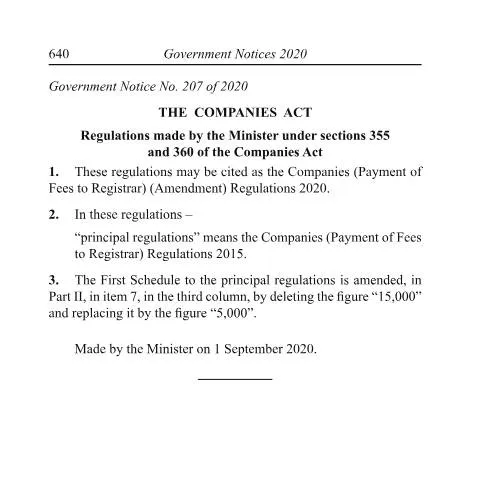
Understanding the historical and regulatory context of Document 207 is essential for grasping its significance. Introduced under the Companies Act and amended in 2020, this document reflects changes made to ensure that the fee structure remains relevant and aligned with current economic conditions. The specific amendments involved:
- Adjusting fees for certain categories, illustrated by the reduction of a figure from 15,000 to 5,000 in the principal regulations.
- Enhancing the clarity of payment processes and obligations for companies.
By situating Document 207 within this broader regulatory framework, stakeholders can better appreciate its importance as a tool for corporate governance and accountability.
Consequences of Non-compliance: What’s at Stake
Failure to submit Document 207 or inaccurate submissions can lead to severe repercussions for your business. The potential outcomes include:
- Penalties: Late fees and penalties can accumulate quickly, impacting the financial health of your company.
- Legal Actions: Persistent non-compliance could trigger legal actions from the Registrar of Companies.
- Reputation Damage: A history of administrative issues can deter potential investors or partners.
Recognizing these stakes can motivate companies to prioritize their compliance efforts and ensure that Document 207 is submitted accurately and on time.
Streamlining the Process: Tips for Effective Submission
To maximize the efficiency of the submission process for Document 207, businesses can take the following steps:
- Use Online Services: Leverage the government’s e-filing services where possible to expedite submissions.
- Double-Check Requirements: Before submission, confirm all requirements and fees relevant to your company profile to avoid surprises.
- Maintain Records: Keep copies of submitted documents and receipts for future reference and to assist with any queries.
By adhering to these strategies, companies can navigate the complexities of the administrative landscape in Mauritius more effectively.
Understanding the Fee Structure for Public Services in Mauritius
In Mauritius, the fee structure for public services is determined by various governmental bodies, including but not limited to the Public Service Commission (PSC) and the Local Government Service Commission (LGSC). Each authority has its own defined fees based on the type of service rendered. For instance, applications for public service positions may incur different fees compared to those for local government roles. It's vital to understand these fees as they can vary annually, with adjustments reflecting economic conditions and administrative costs.
Most fee schedules are published on the respective websites of these commissions. For example, the PSC provides a comprehensive overview of its fee structure under the PSC Act 1955. Fee payments are typically processed through the MauPass system, ensuring a streamlined payment experience linked to the National ID Card, enhancing accountability and tracking.
Moreover, depending on the category of service, certain exemptions or reductions may apply, especially for vulnerable groups or during specified promotional periods. Always check the latest announcements from the relevant commission before making a payment to ensure you are aware of any changes or special provisions that may affect your application.
Impact of Digital Transformation on Fee Payment Processes
The digital transformation initiatives undertaken by the Mauritian government have significantly enhanced the efficiency and accessibility of fee payment processes for public services. With the introduction of e-services via the government portal (govmu.org), citizens can now pay their fees online from the comfort of their homes, eliminating the need for physical visits to government offices.
This transition to digital platforms has not only streamlined payment procedures but also minimized the risks associated with cash transactions, such as theft or loss of money. Citizens can now receive immediate confirmations and electronic receipts upon successful transaction completion, which are useful for record-keeping and potential audits.
However, this digital shift does come with its set of challenges. Citizens who are not tech-savvy or lack access to reliable internet services may find it difficult to navigate these online systems. Therefore, the government has established support services to assist these individuals. It is advisable to contact local government offices or utilize community assistance programs aimed at helping residents acclimatize to these new digital processes.
Monitoring and Accountability in Fee Collection
The accountability of fee collection in Mauritius is governed by stringent regulations to ensure that all fees are properly accounted for and that the funds are utilized effectively for public service improvements. The Ministry of Finance and Economic Development conducts regular audits and evaluations of the revenue collected through various public fees to assess compliance with national fiscal policies.
Furthermore, the introduction of the National Integrated Financial Management Information System (IFMIS) has been pivotal in enhancing transparency in fee management. This system allows for real-time monitoring of the fees collected and their subsequent allocation, helping to prevent misappropriation of public funds.
Additionally, citizens are encouraged to report any discrepancies or irregularities they observe in fee collections through established channels. This feedback mechanism is crucial in promoting transparency and accountability, as it empowers citizens to play an active role in governance and public accountability.
As part of the broader governance framework, the government of Mauritius is committed to ensuring that all administrative processes, including fee collection, operate in a manner that adheres to the principles of good governance, ensuring fairness, transparency, and responsiveness.