Navigating the Online Registration of Importers and Exporters in Mauritius
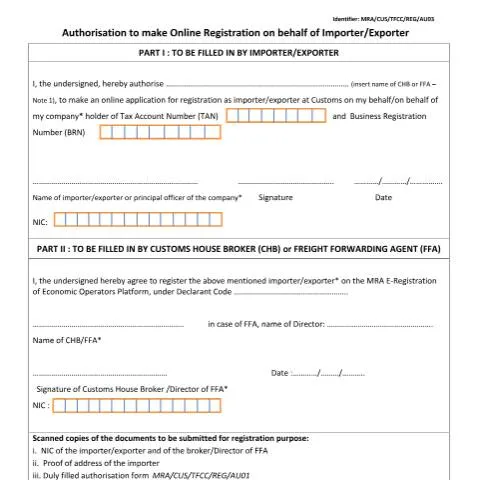
Entering the world of international trade is a significant undertaking that requires meticulous attention to administrative details. For those looking to engage in the import or export of goods in Mauritius, the Online Registration of Importers/Exporters at MRA Customs, referenced under MRA-CUS-TFCC-REG-AU03, is an essential step. Not only does this registration serve as a legal prerequisite, but it also streamlines the process of compliance with customs regulations.
Understanding the Importance of Registration
Registration as an importer or exporter is not merely a bureaucratic hurdle; it is a gateway to ensuring your business operates legally within the Mauritian economy. The Online Registration Form allows individuals and companies to declare their intention to import/export goods. This declaration is crucial because it helps the Mauritius Revenue Authority (MRA) monitor trade activities and collect necessary duties and taxes.
Failure to complete this registration can lead to significant penalties, hindering business operations and adversely affecting financial standing. Consequently, understanding how to accurately complete and submit the MRA-CUS-TFCC-REG-AU03 form is vital for anyone looking to navigate the complexities of international trade.
Who Takes Charge? The Role of the Importer/Exporter
Whether you are an individual entrepreneur or a company looking to broaden your market reach, the responsibility for filling out the Online Registration Form lies with the importer/exporter. Here’s how the process unfolds:
- Designation: Identify yourself as either an individual or a company. If you are representing a business, ensure you have the appropriate authorization to act on its behalf.
- Documentation: Prepare all necessary documents, including the Tax Account Number (TAN) and Business Registration Number (BRN), which are pivotal in verifying your business status.
- Completing the Form: Fill in the form accurately. Mistakes can lead to processing delays or outright rejection of your application.
- Submission: Once completed, the form must be submitted electronically on the MRA’s platform.
Details that Matter: Breaking Down the Registration Form
Each section of the MRA-CUS-TFCC-REG-AU03 form has specific requirements that must be adhered to. Let’s explore the critical segments of the registration form and the common pitfalls to avoid:
Section A: Personal and Business Information
- Tax Account Number (TAN): Ensure this number is accurate as it links to your tax profile.
- Business Registration Number (BRN): Verify that the BRN corresponds to your business to avoid complications.
- National Identity Card (NIC): For Mauritian citizens, this is a mandatory field. Non-citizens must provide their passport number.
Section B: Authorisation of the Customs Broker
If you are using a Customs House Broker (CHB) or a Freight Forwarding Agent (FFA), ensure that you fill in their details accurately, including the Director’s name if applicable. This section allows delegation of task, but the responsibility for accuracy remains with the importer/exporter.
Preparation of Supporting Documents
Completing the form is just one part of the process; supporting documents are equally crucial. Below is a checklist of commonly required documents:
| Document | Details |
|---|---|
| NIC of Importer/Exporter | Must be current and valid. |
| Proof of Address | A recent utility bill or lease agreement is acceptable. |
| Authorisation Form MRA/CUS/TFCC/REG/AU01 | This must be duly filled and signed. |
| Special Cases |
|
Choosing Your Submission Method: Digital vs. Physical
The MRA actively encourages the use of digital platforms for submissions, aligning with Mauritius's commitment to enhancing e-services. The online registration process is designed for efficiency and speed. However, it’s crucial to understand the implications of each submission method:
Online Submission
- Speed: Immediate processing upon submission.
- Convenience: Accessible from anywhere with an internet connection.
- Tracking: Allows for tracking your application status through the portal.
Physical Submission
- Limited Hours: Submissions are restricted to MRA office hours.
- Longer Processing Times: Expect delays due to manual processing.
- Less Transparency: Difficulty in tracking application status without an online component.
While both methods are viable, opting for the online submission is advisable for efficiency and expediency.
What Comes Next? Timelines and Expectations
Once the form and all required documents have been submitted, it’s crucial to understand what happens next. Typically, the processing time for applications can vary based on several factors:
- Standard Processing Time: Generally, applications are processed within 14 business days.
- Additional Review: Complexity or discrepancies in submitted documents may lead to extended review times.
- Notification: Applicants will receive notifications regarding their application status via email.
Handling Challenges: Refusals and Missing Documents
It’s not uncommon for applicants to encounter challenges during the registration process. Understanding how to proactively address these issues can make a significant difference. Here are some steps to follow:
In Case of Refusal
- Review Reasons: Carefully read the rejection notice to understand the grounds for refusal.
- Rectify Errors: Correct any inaccuracies in the application or documentation.
- Resubmit: Follow the provided guidelines for resubmission, ensuring that all previous issues have been addressed.
Dealing with Missing Documents
If specific documents were not included in the initial submission, promptly gather the required paperwork:
- Contact the relevant parties to obtain necessary documents.
- Submit the additional documents through the appropriate channel, specifying the initial application reference number to aid in processing.
Special Considerations: Unique Cases that Need Attention
Several scenarios may require additional attention during the registration process:
Foreign Nationals
For individuals who are not citizens of Mauritius, special provisions apply. Submission of a passport number is mandatory, and certain restrictions may come into play regarding the types of goods that can be imported.
Minors and Guardianship Issues
If a minor intends to engage in trade, the legal guardian must sign the registration form. This process may involve additional documentation to verify the relationship and legal authority of the guardian.
Final Thoughts: Preparing for a Successful Registration Journey
Successfully registering as an importer or exporter in Mauritius is foundational to conducting trade. It requires diligence, attention to detail, and a proactive approach to managing potential obstacles.
By meticulously preparing all necessary documents and understanding the nuances of the MRA-CUS-TFCC-REG-AU03 form, applicants can navigate this essential process with confidence. Staying informed about the requirements, timelines, and potential challenges will facilitate a smoother registration experience, ultimately paving the way for successful trade endeavors in Mauritius.
Understanding the Online Registration Process for Importers and Exporters at MRA
The registration process for importers and exporters at the Mauritius Revenue Authority (MRA) Customs is a crucial step for businesses looking to engage in international trade. This online registration aims to simplify trade processes, promote transparency, and ensure compliance with local laws and international standards. For a successful application, applicants need to follow a series of systematic steps outlined by the MRA.
The first stage involves navigating to the MRA's official website, specifically the Customs section, where the online registration portal is located. Users must create an account using their National ID Number, which is linked to the MauPass single-sign-on system. It is essential to have all necessary documents prepared before starting the registration, including:
- Certificate of Incorporation or Business Registration Certificate
- Tax Account Number (TAN)
- Business Plan demonstrating the intent to import or export
- Bank details and financial statements
Once the account is created, applicants will fill out the relevant online form—typically MRA Form 1—providing detailed information about their business operations. This includes the nature of the goods to be imported or exported, expected volume, and trade partners. After submission, the application will undergo a verification process, which may involve follow-up requests for additional documentation or clarification from MRA officials.
Fill in your form directly online
No printing: type your details into the boxes of the official form, tick, then download the PDF ready to send.
- 1Type into the form boxes
- 2Tick in one click
- 3Save and download the PDF
Upon successful registration, importers and exporters will receive a unique registration number, which they must use in all subsequent transactions and communications with MRA. It is vital to keep this number confidential and safe, as it plays a central role in all import/export operations. Regular updates and compliance checks are essential to maintain good standing with the MRA, ensuring that all trades are conducted in accordance with the prevailing laws and regulations.
Key Requirements for Compliance in Import/Export Operations
Once registered, importers and exporters must adhere to regulatory compliance to avoid penalties and ensure smooth operations. MRA has established a range of compliance guidelines that businesses must follow. Understanding these requirements is essential for anyone looking to engage in international trade.
Firstly, it is mandatory to maintain accurate records of all transactions, including invoices, shipping documents, and customs declarations. This documentation serves as proof of compliance and is crucial during audits. MRA may conduct routine checks to ascertain that the documents align with the declared imports or exports. Therefore, keeping meticulous records will facilitate smoother operations and prevent potential discrepancies.
Moreover, businesses must stay updated on the changes in customs regulations and tariffs, which can vary from year to year. The fiscal year in Mauritius runs from July 1 to June 30, and businesses are encouraged to review any adjustments in rates or guidelines at the beginning of each fiscal period. Penalties for non-compliance can include fines, delays in shipments, or even the revocation of registration.
Importers and exporters should also be aware of the specific goods that may be prohibited or restricted. Certain items require special permits or licenses before they can be imported or exported. It is advisable to consult the MRA’s website for the latest updates on restricted items and necessary documentation. Understanding these nuances can save time and resources in the long run.
Utilizing MRA e-Services for Efficient Import/Export Management
The Mauritius Revenue Authority offers a range of e-services designed to streamline the processes related to customs and trade. For registered importers and exporters, taking full advantage of these digital services can enhance operational efficiency and ensure compliance.
One of the key e-services provided by MRA is the electronic submission of customs declarations. This online platform allows businesses to submit their import/export declarations directly to MRA, reducing the time spent on paperwork and minimizing human error. By utilizing this service, businesses can receive immediate feedback and updates on the status of their declarations. Furthermore, MRA's e-services include a tracking system that allows users to monitor the progress of their shipments in real-time.
Additionally, the MRA portal enables users to access detailed reports and analytics on their trade activities. This feature is particularly beneficial for businesses looking to analyze their import/export patterns, assess profitability, and make informed decisions regarding inventory management and pricing strategies. Having access to structured data can provide a significant advantage in a competitive marketplace.
Lastly, MRA's online platform also supports communication with customs officers for queries and clarifications regarding regulations and compliance. This direct line of communication helps resolve issues swiftly, thereby reducing delays in trade operations. Importers and exporters are strongly encouraged to familiarize themselves with these e-services to ensure a seamless trading experience.