Understanding the IS7: A Critical Document in Insolvency Procedure
The Notice of Appointment of Insolvency Practitioner (IS7) holds a pivotal role within the framework of insolvency management in Mauritius, delineating the formal process through which insolvency practitioners secure their authority to act on behalf of financially distressed entities. This document is not merely administrative; it is a cornerstone of the legal and procedural landscape governing insolvency in the nation, underscoring the significance of compliance, transparency, and due process.
Key Components of the IS7 Notice
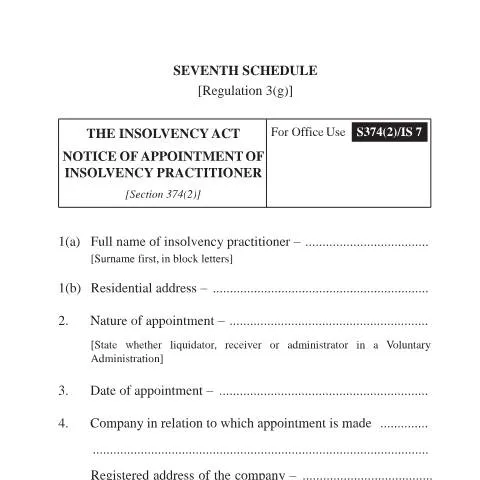
The IS7 document encompasses several essential fields that must be accurately completed to ensure the legitimacy of the appointment. Here are the main sections of the IS7 that one must pay close attention to:
- Full Name of the Insolvency Practitioner: This section should include the surname first, written in block letters, ensuring that there is no ambiguity regarding the practitioner's identity.
- Residential Address: Providing a current residential address is crucial, as it serves as the primary location for formal correspondence.
- Nature of the Appointment: The document necessitates a clear indication of whether the practitioner is acting as a liquidator, receiver, or administrator in a voluntary administration context.
- Date of Appointment: Specifying the date is imperative for legal purposes, as it marks the commencement of the insolvency process.
- Company Details: Details regarding the company to which the appointment pertains, including its registered address and contact details, are required.
- Contact Information: Multiple avenues for communication must be provided, including both postal and physical addresses, telephone numbers, mobile contact, facsimile number, and email address.
- Business Registration Number: This number must be included, linking the document to specific corporate entities.
How IS7 Integrates into the Wider Insolvency Framework
The IS7 does not exist in isolation. It is intrinsically linked to other regulatory documents and forms within the insolvency process, ensuring coherence and clarity in the procedural journey. Understanding how the IS7 works in conjunction with these documents is essential for practitioners and stakeholders alike.
- Other Relevant Forms: Depending on the nature of the insolvency, other forms may be required alongside the IS7. For instance, the Notice of Intention to Appoint an Insolvency Practitioner serves as a precursor to the IS7, allowing for preliminary notifications.
- Filing Requirements: Submission of the IS7 may be mandated by various authorities, including the Director of the Insolvency Service. The timing and manner of submission can influence the efficacy of the insolvency process.
- Legal Framework: The document operates within the ambit of the Insolvency Act, specifically under Section 374(2). Familiarity with this legal backdrop is paramount for practitioners.
Essential Terminology to Navigate the IS7
To effectively utilize the IS7, practitioners should be well-versed in specific terminology associated with insolvency. Here are some key terms that are vital to understanding the document's context:
Insolvency Practitioner: A qualified individual authorized to act on behalf of a company or individual in financial distress. Liquidator: An insolvency practitioner responsible for winding up a company’s affairs, selling assets to pay creditors. Administrator: A practitioner appointed to manage the affairs of a company in financial difficulties, aiming to rescue it as a going concern.Step-by-Step Guide to Using the IS7 in Practice
Understanding the procedural steps to utilize the IS7 effectively is crucial for insolvency practitioners. Below is a comprehensive guide to navigating this process:
- Preparation of Documentation: Collect all necessary company information and personal details required to complete the IS7 accurately.
- Completion of the IS7: Ensure all sections are filled out thoroughly. Pay attention to the details to avoid any omissions that could lead to delays in processing.
- Submission to the Director of the Insolvency Service: The completed IS7 must be filed with the appropriate authority. It is advisable to retain a copy for your records.
- Await Confirmation: After submission, await acknowledgment of receipt from the Director’s office. This step is critical to ensure that the appointment is recognized officially.
- Notification of Stakeholders: Inform relevant stakeholders, including creditors and company directors, about the appointment, ensuring transparency.
The Importance of Compliance and Accuracy in the IS7
Adherence to compliance standards when utilizing the IS7 is non-negotiable. Any inaccuracies or omissions in the document can result in legal complications, potential delays in the insolvency process, or even rejection of the appointment. Practitioners must establish a dedicated process for:
- Verification: Before filing, all information included in the IS7 should be double-checked for accuracy and completeness.
- Legal Consultation: Engaging with legal experts can provide additional assurance that the document adheres to all relevant statutory requirements.
- Timely Submission: Observing deadlines in submission is vital, as they can affect the validity of the appointment and overall insolvency proceedings.
Common Scenarios Encountered with the IS7
Practitioners may encounter various situations when utilizing the IS7 document. Understanding these scenarios can help in better preparation and strategic planning:
- Joint Appointments: In cases where multiple insolvency practitioners are appointed, each practitioner must submit an IS7 with their particulars. It is essential to indicate the elected address for service clearly to avoid confusion.
- Change of Contact Details: If there are any changes to the contact details after the appointment, it is imperative to update the Director’s office to ensure all communications are received promptly.
- Insolvency Proceedings Across Jurisdictions: Practitioners must be cognizant of how the IS7 interacts with similar documents in other jurisdictions if a company operates internationally.
Final Considerations for Practitioners
Utilizing the Notice of Appointment of Insolvency Practitioner (IS7) is a critical responsibility that requires meticulous attention to detail and a thorough understanding of insolvency law. Practitioners are encouraged to:
- Stay Updated: Regularly review updates to the Insolvency Act and related regulations to ensure compliance with any amendments affecting the IS7.
- Engage in Continuous Learning: Attend workshops and training sessions focused on insolvency practice to enhance knowledge and skills in handling such documents.
- Network with Peers: Building relationships with other insolvency practitioners can provide insights and shared experiences that enhance practical understanding of the IS7.
Understanding the Role of an Insolvency Practitioner in Mauritius
The appointment of an Insolvency Practitioner (IP) is a critical process in managing cases of insolvency in Mauritius. An IP is a licensed professional who acts as a middleman between creditors and debtors. Their role involves the assessment of the financial position of the debtor, the management of assets, and ensuring that creditors receive what they are owed to the fullest extent possible. This section will provide an in-depth look into the qualifications, responsibilities, and the necessary steps involved in becoming an IP in Mauritius.
To qualify as an Insolvency Practitioner, you must meet specific educational and professional criteria. Generally, candidates should possess a degree in accounting, finance, or law, alongside relevant professional qualifications such as ACCA, CPA, or a legal practising certificate. Furthermore, substantial experience in financial management, auditing, or legal practice is invaluable. For potential IPs, the Ministry of Finance and Economic Development provides guidelines outlining these qualifications.
Upon appointment, the IP's primary responsibilities include preparing a Statement of Affairs, managing the estate of the debtor, and making recommendations to creditors regarding the repayment process. They must also conduct meetings with creditors and provide transparency throughout the insolvency process. An essential part of their role is to maintain compliance with the Insolvency Act of 2009, ensuring all actions are legally sound and in the best interest of all parties involved.
The Process of Filing a Notice of Appointment for an Insolvency Practitioner
Filing a Notice of Appointment for an Insolvency Practitioner – IS7 is a procedural requirement under the Insolvency Act of 2009. The process involves several steps that must be meticulously followed to ensure both legal compliance and the protection of stakeholders involved. Here, we will delve into the systematic approach to filing the IS7 notice, including the necessary documentation and potential pitfalls to avoid.
The process begins with the debtor or creditor identifying the need for insolvency proceedings. The appointed practitioner must first ensure that they hold a valid license to operate in Mauritius, which involves being registered with the Registrar of Companies. Once this is confirmed, the IP needs to complete the IS7 form accurately, detailing the reason for the appointment and providing essential information on the company’s financial standing.
Next, once the IS7 form is completed, it should be submitted to the Registrar of Companies alongside supporting documents, including the debtor's financial statements, a list of creditors, and any other relevant documentation that substantiates the claims made in the notice. It's critical to ensure that all documents are correctly signed and dated, as any discrepancies can lead to delays or rejection of the application.
The submission can be done either in-person or via the online portal available at govmu.org. Once submitted, the Registrar will review the application for compliance with the necessary legal requirements. If acceptable, a notice will be published in the Government Gazette, thereby officially notifying all stakeholders and creditors about the appointment of the Insolvency Practitioner.
Common Challenges Faced During the Insolvency Process
The insolvency process in Mauritius, while structured, presents several challenges that both debtors and Insolvency Practitioners must navigate. Understanding these potential hurdles can help prepare all parties involved to address them proactively. This section explores common obstacles, their implications, and strategies to mitigate these challenges effectively.
One of the most significant challenges is navigating the complexities of creditor negotiations. Creditors may have competing interests, and reaching a consensus on repayment plans can be difficult. The IP must employ strong negotiation skills and maintain open lines of communication to facilitate discussions between the debtor and creditors. Moreover, staying transparent about the debtor’s financial status can alleviate mistrust and promote cooperative engagement.
Another common issue arises from inadequate documentation. It is imperative for the IP to have clear and comprehensive records of the debtor’s financial situation, including assets and liabilities. Missing or incomplete information can lead to misunderstandings, disputes among creditors, and potential legal ramifications for the IP. Therefore, implementing rigorous documentation practices and utilizing digital tools for record-keeping can enhance the efficiency and accuracy of the insolvency process.
Additionally, regulatory compliance poses a constant challenge. The insolvency landscape in Mauritius is governed by a mix of local laws and international standards. Practitioners must stay updated on changes in legislation and ensure compliance with all regulatory requirements to avoid penalties. Regular training and participation in professional development can be beneficial for IPs to remain adept in their field.
Ultimately, while the insolvency process is fraught with complexities, a clear understanding of the challenges and proactive measures can lead to successful outcomes for all parties involved. Effective communication, thorough documentation, and continuous education are key elements in navigating the intricate landscape of insolvency in Mauritius.