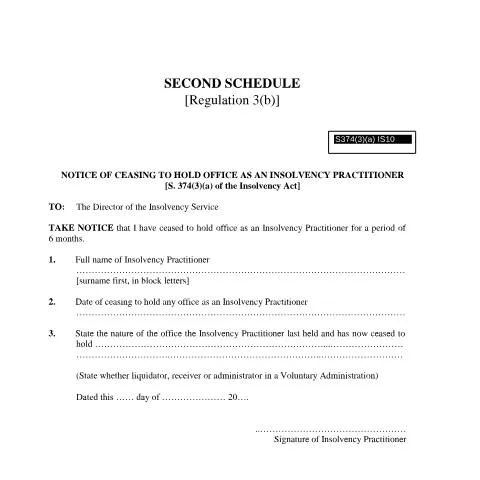
Understanding the Notice of Ceasing to Hold Office as an Insolvency Practitioner _IS10
The Notice of Ceasing to Hold Office as an Insolvency Practitioner (_IS10) is a vital document for professionals navigating the landscape of insolvency in Mauritius. This notice serves as an official declaration to the relevant authorities, particularly the Director of the Insolvency Service, indicating that an insolvency practitioner has ceased to hold their designated office. Understanding the nuances of this document is crucial for compliance and ensures clarity in the insolvency process.
Target Audience and Situations Requiring this Notice
This notice is specifically aimed at individuals who have occupied the role of an insolvency practitioner, including but not limited to liquidators, receivers, and administrators. The necessity for this document arises in various scenarios:
- Voluntary Cessation: An insolvency practitioner may voluntarily decide to cease their duties, whether due to personal reasons or a shift in career focus.
- Completion of Duties: Once all responsibilities associated with a case are fully executed, the practitioner would need to formally notify the authorities.
- Disqualification or Loss of Qualification: In cases where an individual is disqualified or loses their ability to perform as an insolvency practitioner, this notice becomes essential.
- Change of Employment: Transitioning to a different role that does not involve insolvency work also necessitates filing this notice.
Key Elements Covered in the _IS10 Notice
The _IS10 notice encompasses several crucial components that must be accurately filled out by the insolvency practitioner. Understanding these elements is vital for ensuring the document's validity:
- Full Name: The practitioner is required to provide their surname first in block letters. This ensures clarity and prevents any misidentification.
- Date of Cessation: Specifying the exact date on which the practitioner ceased their office is a legal requirement that marks the official end of their duties.
- Nature of Office: The individual must clearly state their last held position, distinguishing whether they were acting as a liquidator, receiver, or administrator during voluntary administration. This detail is crucial for the records of the Insolvency Service.
The Process of Filing the _IS10 Notice
To effectively utilize the _IS10 notice, practitioners must follow a structured process:
- Preparation: Gather all necessary information, including full name, cessation date, and role description.
- Completion: Accurately fill in the notice as per the guidelines provided. Ensure that all sections are completed to avoid delays.
- Submission: The completed notice should be submitted to the Director of the Insolvency Service. It is advisable to check the specific submission protocols to ensure compliance with local regulations.
- Retention of Copies: After submission, retain a copy of the notice for personal records. This can be crucial in case of any future inquiries or disputes.
Understanding Key Terminology in the _IS10 Context
A few critical terms associated with the _IS10 notice should be clearly understood to avoid confusion:
- Insolvency Practitioner: This refers to a licensed professional who manages insolvency proceedings, protecting the interests of creditors and ensuring compliance with legal frameworks.
- Cessation of Office: This term indicates the formal termination of duties associated with the role of an insolvency practitioner, which is recognized legally upon notification.
- Voluntary Administration: A process where an insolvent company aims to maximize the return to creditors through a structured administration, requiring precise management by an appointed practitioner.
Common Misinterpretations Surrounding the _IS10 Notice
There are several misunderstandings that can arise when dealing with the _IS10 notice. Clarifying these misconceptions can save practitioners from potential complications:
- Assuming Automatic Notification: Many practitioners erroneously believe that once they cease their duties, the relevant authorities will automatically be notified. However, the responsibility lies with the practitioner to formally submit the _IS10 notice.
- Incorrect Role Description: Practitioners sometimes misstate their previous office role, which can lead to complications. It is essential to accurately describe the last held position to ensure proper documentation.
- Omitting Details: Providing incomplete information on the notice can result in delays or the rejection of the submission. Every part of the document must be filled out clearly and correctly.
Interconnections with Other Insolvency Documents
The _IS10 notice does not operate in isolation and has significant interconnections with other documents within the insolvency framework. Understanding these relationships can facilitate smoother processes:
| Document | Relation to _IS10 |
|---|---|
| Insolvency Act | The _IS10 notice is a requirement as per the Insolvency Act, which outlines the legal framework for insolvency proceedings in Mauritius. |
| Notice of Appointment of an Insolvency Practitioner | This notice must correspond with the cessation notice, ensuring that all transitions are officially recorded and acknowledged by the authorities. |
| Reports to Creditors | Practitioners need to ensure that creditors are adequately informed of changes in office, which the _IS10 notice facilitates. |
Frequently Encountered Procedural Queries
While navigating the submission of the _IS10 notice, practitioners may have various procedural questions. Here are a few that commonly arise:
- What if I forget to file the _IS10 notice? Failing to submit the notice may lead to complications in your professional standing and could potentially invoke penalties. Timely submission is crucial.
- Can I submit the notice electronically? Given the strong push for e-services in Mauritius, check with the Insolvency Service's guidelines to determine if electronic submission is permissible.
- What happens after submission? Once submitted, the notice will be recorded by the Insolvency Service, and you should receive confirmation of your cessation of office. This may take some time, so patience is advised.
Additional Practical Insights for Practitioners
Ensuring compliance with the _IS10 notice is not just a bureaucratic formality; it is a critical step in the professional lifecycle of an insolvency practitioner. Here are some practical insights:
- Timeliness is Key: Aim to submit the _IS10 notice immediately after ceasing your duties. This proactive approach minimizes disruptions in your professional standing.
- Stay Informed: Regulations and procedures can change. Regularly check the Insolvency Service website or newsletters for any updates regarding the submission process or related legal amendments.
- Seek Professional Advice: If uncertain about any aspect of the _IS10 notice or its implications, consulting with a legal professional or a more experienced insolvency practitioner can provide clarity and guidance.
The Notice of Ceasing to Hold Office as an Insolvency Practitioner (_IS10) is a foundational document in the realm of insolvency management in Mauritius. Proper understanding and execution of this notice facilitate compliance with legal requirements and maintain the integrity of the insolvency process. As practitioners navigate the complexities of their roles, the _IS10 notice stands as a critical tool for ensuring transparency and accountability in their professional activities.
Understanding the Role of an Insolvency Practitioner in Mauritius
Insolvency practitioners play a pivotal role in the financial landscape of Mauritius, especially when it comes to the management of distressed companies. Their responsibilities include the orderly winding up of the affairs of insolvent entities, providing advice to creditors, and assisting with the restructuring of companies in financial trouble. These professionals ensure that the liquidation or reorganization process adheres to the legal framework stipulated by the Insolvency Act 2009, and they must stay compliant with guidelines issued by the Financial Services Commission (FSC).
One of the key aspects of being an insolvency practitioner in Mauritius is maintaining a valid license issued by the FSC. This license must be renewed periodically, which requires practitioners to demonstrate continual professional development (CPD) and adherence to ethical standards. A separate notice, IS10, specifically addresses instances when an insolvency practitioner ceases to hold their office, ensuring transparency and proper notification to all stakeholders involved. The legal implications of such a notice can have significant ramifications for both creditors and debtors alike.
The Process of Filing a Notice of Ceasing to Hold Office
When an insolvency practitioner decides to cease their office, whether voluntarily or due to circumstances beyond their control, several steps must be followed to ensure compliance with the law. The practitioner must prepare and submit IS10 form to the relevant authorities, which includes providing detailed reasons for the cessation of their duties. This form must be submitted within 14 days of the cessation occurring, and it must be accompanied by necessary documentation to substantiate the claims made.
The filing process involves logging into the e-filing system via the government portal govmu.org, where you will require a secure login using your MauPass credentials linked to your National ID. It’s essential to ensure that all details are accurately filled out, including the practitioner’s license number and the date of cessation. Once submitted, the relevant authorities will review the application, and failure to comply with these requirements may result in penalties or an extension of the practitioner's obligations.
Consequences of Failing to Submit IS10 in a Timely Manner
The importance of submitting IS10 cannot be overstated. Failure to file this notice within the specified timeframe can lead to serious consequences for the insolvency practitioner. Not only does this reflect poorly on the practitioner’s professional standing, but it can also result in legal repercussions such as fines or even the revocation of their license to practice.
Additionally, if the notice is not filed, the creditors and other affected parties may remain unaware of the change in the insolvency practitioner’s status, leading to confusion and potential legal disputes. This lack of communication can further complicate the process of debt recovery and may result in a loss of trust from the business community. It’s advisable for practitioners to maintain open lines of communication with stakeholders and ensure timely updates regarding their professional status to mitigate these risks.