The Significance of the MRA Press Release No1
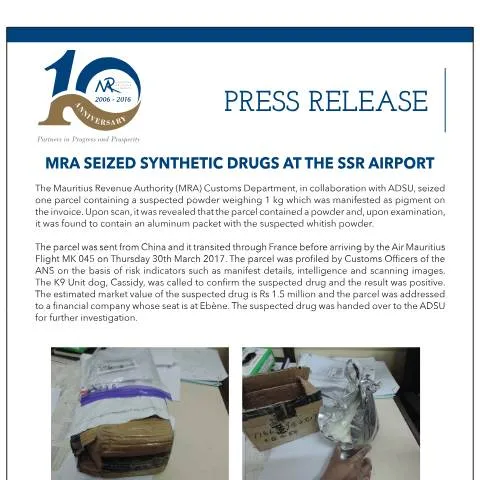
The Mauritius Revenue Authority (MRA) has a crucial role in the nation’s fight against drug trafficking, and its Press Release No1 dated April 7, 2017, serves as a vital document in this ongoing battle. The press release details a significant incident where customs officers seized 1 kg of suspected synthetic drugs at the SSR Airport on March 30, 2017. This event underscores the importance of vigilance in customs operations and the effective collaboration between the MRA and the Anti-Drug and Smuggling Unit (ADSU).
Understanding the Context: A Dangerous Parcel
The parcel in question was initially declared as a pigment on an invoice but was found to contain a whitish powder upon further examination. This situation illustrates the intricacies involved in drug trafficking, with traffickers often using misleading descriptions to evade detection. The involvement of the K9 Unit, which confirmed the presence of drugs, highlights how crucial these specialized units are in the customs process. Understanding the context behind the MRA's actions can provide insights into the challenges faced by law enforcement in Mauritius.
The Role of Customs Officers in Drug Detection
Customs officers operate using a blend of intelligence, experience, and technology to identify suspicious shipments. In this case, the parcel's profiling was based on various risk indicators, including:
- Manifest details
- Intelligence received regarding drug trafficking activities
- Scanning images from customs' advanced systems
This multi-layered approach is essential for maintaining the integrity of the borders and ensuring that illicit substances do not enter the country.
Filing and Processing Procedures of the MRA
When incidents like this occur, there is a standard operating procedure that the MRA follows. This process is integral for maintaining a clear record of drug seizures and ensuring appropriate legal actions are taken. The initial seizure leads to a comprehensive investigation, where the evidence collected is carefully documented and transferred to the ADSU for further analysis.
Tracking Your Report: Follow-Up Procedures
If you have reported a suspected drug activity or are involved in the investigation of a seizure, it is crucial to know how to follow up on your report. The MRA allows citizens to track the progress of their reports through official channels:
- Contacting the MRA directly via telephone at +230 202 0500
- Sending an email to [email protected]
- Utilizing the MRA website for updates
Ensuring you have all relevant details at hand when inquiring can help facilitate the process.
Mechanisms for Public Involvement
The MRA not only acts in enforcement but also encourages citizen participation in reporting suspected drug activities. The public is invited to report any suspicious behavior through the MRA website or by calling their dedicated hotline at 8958. This collaborative effort is essential in combatting drug trafficking and ensuring community safety.
Public Awareness Campaigns
To strengthen its efforts, the MRA conducts public awareness campaigns focused on educating citizens about the dangers of drug trafficking and how to spot suspicious activities. These campaigns often leverage various platforms, including:
- Social media
- Community engagement sessions
- Collaborations with local organizations
By fostering a well-informed public, the MRA aims to create a united front against drug-related crimes.
Channeling Reports: Online vs. Offline Submission
Understanding the difference between various submission channels is vital for efficient communication with the MRA. There are primarily two channels for submitting reports regarding drug trafficking:
| Channel | Advantages | Disadvantages |
|---|---|---|
| Online Submission via MRA Website |
|
|
| Telephone Reporting |
|
|
Unique Cases: Navigating Special Circumstances
Some cases require special consideration when interacting with the MRA, particularly involving minors or foreigners. For instance, non-residents may face additional documentation requirements, such as proof of identity and address. Minors, on the other hand, must have a guardian present for any reporting or procedural actions.
Emergency Situations: An Escalated Approach
In urgent cases where immediate action is required, such as a potential threat to public safety, citizens are encouraged to contact the MRA directly or seek local law enforcement assistance. Prompt reporting can help mitigate risks and allow authorities to respond swiftly to any emerging threats.
The Aftermath: Steps Following a Seizure Notification
Upon the seizure of suspected drugs, clear follow-up steps are initiated under the jurisdiction of the MRA and ADSU. The parcel's contents are subjected to rigorous testing to confirm the substance, and a legal framework is set in motion for prosecuting involved parties. The public may remain unaware of all the behind-the-scenes work that takes place, but these steps are essential in ensuring that justice is served and that drug trafficking is disrupted.
Legal Proceedings and Community Impact
As cases progress to court, the MRA actively participates in legal proceedings to provide evidence regarding the seizure and the context surrounding it. This not only holds offenders accountable but also sends a strong message to the community regarding the consequences of drug trafficking. Furthermore, successful prosecutions help foster public trust in law enforcement agencies, encouraging more people to report suspicious activities.
The Future of Drug Enforcement in Mauritius
The MRA's proactive actions, as highlighted in this press release, mark an ongoing commitment to safeguarding the nation against the drug threat. Continuous improvement in customs processes and community engagement initiatives ensures that Mauritius is better equipped to handle drug-related challenges in the future. With increasing collaboration with both local and international entities, the fight against drug trafficking will remain robust.
The importance of public engagement cannot be overstated. As citizens of Mauritius, it is our collective responsibility to stay vigilant and report any suspicious activities. By doing so, we contribute to creating a safer environment for ourselves and future generations.
Understanding the Legal Framework Surrounding Drug Seizures in Mauritius
The seizure of synthetic drugs at SSR International Airport highlights the complex legal landscape governing drug trafficking in Mauritius. Under the Dangerous Drugs Act 1988, authorities have extensive powers to combat the illegal drug trade, allowing for the arrest and prosecution of individuals found in possession of prohibited substances. The act categorizes drugs into various classes, each carrying specific penalties.
Fill in your form directly online
No printing: type your details into the boxes of the official form, tick, then download the PDF ready to send.
- 1Type into the form boxes
- 2Tick in one click
- 3Save and download the PDF
In cases like the one on March 30, 2017, law enforcement agencies such as the Police and the MRA work in collaboration to ensure that any substances identified during inspections are promptly processed according to the legal stipulations. Following the seizure, drug samples are typically sent to the Forensic Science Laboratory for analysis, which serves as critical evidence in court proceedings.
Moreover, the procedural aspects of investigations are also vital. Investigators must adhere strictly to protocols to ensure that the evidence gathered is admissible in court. This includes maintaining a clear chain of custody and ensuring that any search operations are conducted lawfully, which can often be a point of contention in the defense’s strategy during trials.
The Role of International Cooperation in Drug Trafficking Cases
The fight against drug trafficking in Mauritius is not conducted in isolation; it involves significant international cooperation. Given Mauritius' strategic location in the Indian Ocean, it serves as a potential transit point for synthetic drugs coming from various parts of the world. Agencies such as the National Drug Analysis Laboratory often collaborate with international organizations and law enforcement bodies, including Interpol and the United Nations Office on Drugs and Crime (UNODC).
Through shared intelligence and joint operations, Mauritius can enhance its capabilities in combating drug trafficking. For instance, Mauritius has participated in regional initiatives that aim to strengthen border control measures and improve investigative techniques. This cooperation is crucial, as drug trafficking networks are often transnational, requiring a unified response from multiple countries to disrupt and dismantle these operations effectively.
Furthermore, training programs are frequently conducted in partnership with international entities to equip local law enforcement with the necessary skills and knowledge to tackle emerging drug trends. These programs focus on the latest methodologies in drug detection and forensic analysis, ensuring that Mauritius remains at the forefront of combating drug-related crimes.
Impact of Drug Seizures on Public Health and Safety in Mauritius
The seizure of synthetic drugs has significant implications for public health and safety in Mauritius. The rise in availability and consumption of synthetic drugs poses serious risks, including addiction, mental health issues, and an increase in drug-related crimes. The government's response to drug trafficking incidents like the one at SSR International Airport is critical not only for law enforcement but also for public health management.
Following significant drug seizures, it is essential for government bodies and health organizations to implement effective awareness campaigns targeting the youth and vulnerable populations. These campaigns aim to educate the public about the dangers of drug use, the signs of addiction, and available support services. The Ministry of Health and Quality of Life plays a vital role in coordinating these efforts, ensuring that comprehensive addiction treatment and rehabilitation services are available.
Moreover, community-based initiatives are increasingly prioritized to foster a drug-free environment. These programs engage local communities in prevention strategies and promote healthier lifestyle choices, which are essential in mitigating the growing drug problem. The effectiveness of these initiatives is often assessed through public surveys and health statistics, guiding future policy development and resource allocation.