The Context Behind the Drug Interception: An Overview
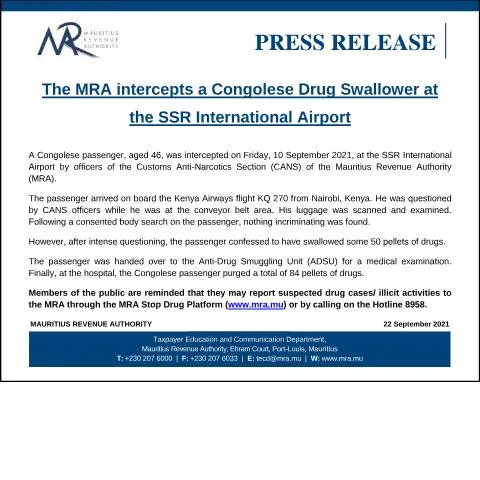
On the 10th of September 2021, a significant incident unfolded at the SSR International Airport, where officers from the Customs Anti-Narcotics Section (CANS) of the Mauritius Revenue Authority (MRA) intercepted a 46-year-old Congolese passenger. This situation highlights not just the vigilance of the authorities but also the broader implications of drug trafficking that concerns public safety and health.
This article aims to delve deeply into the official document PressRelease220921, detailing the processes involved in such an interception, the responsibilities of the authorities, and the immediate actions taken following the incident.
Understanding the Role of the MRA in Drug Interceptions
The Mauritius Revenue Authority plays a pivotal role in combating drug trafficking within the country. The Customs Anti-Narcotics Section operates under strict regulations to prevent drug smuggling and safeguard the public. When incidents like the one involving the Congolese passenger occur, several protocols are initiated:
- Initial Interrogation: Upon arrival, passengers may be questioned based on behavioral cues or intelligence reports.
- Luggage Inspection: All luggage undergoes scanning; suspicious items prompt further investigation.
- Body Search: Should there be any indication of concealed substances, an authorized body search may be performed.
Consequences of Drug Smuggling
The repercussions of drug smuggling extend beyond legal penalties; they affect the health and safety of the general population. Individuals caught engaging in such activities face severe legal consequences, including imprisonment, fines, and a permanent criminal record.
The MRA's commitment to intercepting drug traffickers ensures that Mauritius remains a safe destination for tourists and a secure home for its citizens. This proactive approach emphasizes the importance of reporting suspicious activities, reinforcing community vigilance.
Dive into the Details: What Happened on that Day
The incident that transpired on September 10, 2021, is a prime example of how authorities effectively respond to drug trafficking attempts. Following the arrival of a Kenya Airways flight, the passenger was subjected to rigorous questioning. Despite an initial search yielding no incriminating evidence, the thoroughness of the interrogation led to a startling confession about the swallowed pellets of drugs.
Here, the MRA showcases its commitment to rigorous enforcement of law and order:
- Passenger Arrival: The individual arrived from Nairobi, raising immediate alerts due to the flight’s origin.
- Initial Search: A standard procedure was followed, where luggage and personal belongings were examined.
- Confession and Medical Evaluation: After extensive questioning, a confession prompted immediate medical intervention to assess the risk posed by the ingested drugs.
The Official Documentation: PressRelease220921
The document titled "PressRelease220921" encapsulates the entire event, emphasizing the MRA's actions and the subsequent handling of the case. Here is a breakdown of the key components of this official statement:
| Component | Description |
|---|---|
| Date of Incident | 10 September 2021 |
| Location | SSR International Airport |
| Passenger Profile | 46-year-old Congolese |
| Method of Transport | Kenya Airways flight KQ 270 |
| Quantity of Drugs | 84 pellets swallowed |
| Reporting Mechanism | MRA Stop Drug Platform and Hotline 8958 |
Processes Following Interception
Upon the confession of the drug swallowing, the passenger was immediately handed over to the Anti-Drug Smuggling Unit (ADSU) for further medical examination. This process is crucial to ensure that any ingested substances are safely extracted under medical supervision.
The journey from interception to recovery is fraught with critical decisions and actions:
- Medical Evaluation: Assessing the health risks associated with the drugs.
- Legal Proceedings: Initiating the legal processes against the individual, which may include charges of drug trafficking.
The Importance of Reporting Mechanisms
This incident reinforces the vital role of public involvement in combating drug-related crimes. The MRA encourages citizens to report suspected illicit activities through their dedicated platforms. The ease of access to these services promotes community engagement in law enforcement.
To report a suspicious case, individuals can:
- Access the MRA Stop Drug Platform online.
- Call the MRA Hotline at 8958 to speak directly to a representative.
Community Vigilance: A Collective Responsibility
The responsibility of drug trafficking prevention lies not only in the hands of the authorities but also with the general populace. Awareness campaigns and educational initiatives spearheaded by the MRA aim to inform citizens about the dangers of drug trafficking and how they can contribute to the fight against it.
Legal Framework: Understanding the Policies Behind Enforcement
The interception of the Congolese passenger at the SSR International Airport is guided by a robust legal framework that outlines the procedures for handling drug trafficking cases. The Mauritius Revenue Authority operates under laws established to protect public health and security, which include:
- Customs Act 1988: Governs customs operations and gives authorities the right to search and seize.
- Drug and Prevention of Drug Abuse Act: Establishes penalties for drug trafficking and abuse.
- Anti-Narcotics Law: Provides a legal basis for the establishment of the CANS.
Procedural Specifics
Adhering to the outlined legal procedures is essential for ensuring justice and maintaining public trust. Each step taken by the MRA during an interception is documented meticulously, allowing for transparency and accountability in their operations.
Raising Awareness: The Role of Public Education
The MRA’s efforts extend into the realm of public education about drug trafficking. By raising awareness about the signs of drug smuggling and offering resources for reporting suspicious behavior, the MRA empowers citizens to take an active role in enhancing community safety.
Workshops, seminars, and informational materials detailing the repercussions of drug trafficking provide the public with valuable insights, thereby fostering a collective effort against such illegal activities.
Engagement Strategies
Several strategies are employed by the MRA to engage the public effectively:
- Social Media Campaigns: Utilizing platforms to disseminate information about drug trafficking and prevention strategies.
- School Programs: Educating the youth about the dangers of drug abuse and trafficking.
- Community Workshops: Hosting events to discuss the impacts of drug-related crimes and how to report them.
Conclusion: A Continuous Commitment to Vigilance
The incident involving the Congolese drug swallowers serves as a stark reminder of the ongoing battle against drug trafficking in Mauritius. Through the diligent actions of the MRA, coupled with public cooperation and awareness, the country continues to strive for a drug-free environment.
Citizens are encouraged to remain vigilant and proactive in reporting suspicious activities, fostering a united front against this pressing issue. Each report matters as it contributes to the larger fight against drug smuggling and reinforces the commitment of the MRA to protect public safety.
Fill in your form directly online
No printing: type your details into the boxes of the official form, tick, then download the PDF ready to send.
- 1Type into the form boxes
- 2Tick in one click
- 3Save and download the PDF
Understanding the Legal Framework Surrounding Drug Trafficking in Mauritius
The interception of individuals attempting to smuggle drugs into Mauritius is governed by stringent laws under the Dangerous Drugs Act 1988. This legislation outlines the definitions, penalties, and enforcement protocols that govern drug-related offenses. The act categorizes various substances and stipulates the legal repercussions for possession, trafficking, and distribution, which can include heavy fines and lengthy prison sentences. Furthermore, those apprehended while attempting to smuggle drugs, like the Congolese drug swallower recently intercepted at SSR International Airport, face severe legal consequences, which could involve a minimum of 5 years of imprisonment for trafficking offences.
In cases involving drug couriers, the authorities often work closely with various entities, including the National Drug Control Master Plan (NDCMP) and the Central Drug Authority (CDA), to combat the increasing sophistication of drug trafficking networks. The collaboration among these bodies strengthens the enforcement mechanisms and enhances monitoring systems at key entry points, such as airports and seaports. It’s important for individuals to be aware of the legal implications should they find themselves in similar situations, especially regarding the evidentiary requirements that the prosecution must meet to secure a conviction. For those arrested, access to legal representation is crucial, and detainees must be informed of their rights, including the right to consult with a lawyer as stated in the Mauritian Constitution.
Customs Processes and Procedures for Intercepted Drug Traffickers
When a drug trafficker is intercepted at the SSR International Airport, several customs processes are initiated. The Mauritius Revenue Authority (MRA), through its Customs Department, follows a systematic approach, beginning with the initial detention of the suspect. The officers conduct a thorough investigation, which includes searching the individual, examining their luggage, and reviewing any electronic devices that may contain pertinent information related to the trafficking operation.
Upon confirmation of illegal substances, the individual is formally arrested, and a report is compiled detailing the circumstances surrounding the interception. This report is crucial for subsequent legal proceedings. The Drug Enforcement Unit (DEU) of the MRA plays a key role in these investigations, often coordinating with other law enforcement agencies such as the National Police Force. This collaboration is essential for gathering intelligence and understanding broader trafficking networks that could extend beyond Mauritian borders.
Additionally, the MRA has established clear protocols for handling evidence, which must be preserved to ensure its admissibility in court. Drug samples are sent to the Forensic Science Laboratory (FSL) for testing to confirm the presence and type of narcotics involved. The chain of custody is stringently maintained throughout the process to prevent any tampering or loss of evidence. Following the completion of all necessary processes, the case is then forwarded to the Attorney General’s Office for prosecution, where the legal ramifications will be pursued rigorously in accordance with Mauritian law.
The Role of International Cooperation in Combating Drug Smuggling
The interception of drug mules, like the Congolese individual at SSR International Airport, underscores the significance of international cooperation in the fight against drug trafficking. Mauritius, while being a small island nation, is strategically located in the Indian Ocean and has become a focal point for various trafficking routes. This necessitates robust collaboration with international agencies such as INTERPOL and the World Customs Organization (WCO).
Through partnerships with these organizations, Mauritius gains access to intelligence sharing, training programs, and resources that enhance its enforcement capabilities. For example, the MRA engages in joint operations and training exercises with regional partners to strengthen border security and improve detection methods. This also involves capacity building for personnel who manage customs inspections and drug enforcement operations.
Furthermore, Mauritius has engaged in bilateral agreements with countries known for high levels of drug trafficking. Such agreements facilitate the sharing of intelligence on smuggling tactics and profiles of known offenders, which can aid in preemptive actions at airports and seaports. By participating in global initiatives aimed at combating drug trafficking, Mauritius is not only protecting its borders but also contributing to a larger framework of international effort against organized crime.