Understanding the Official Form: A Critical Tool for Gender-Based Business Analysis
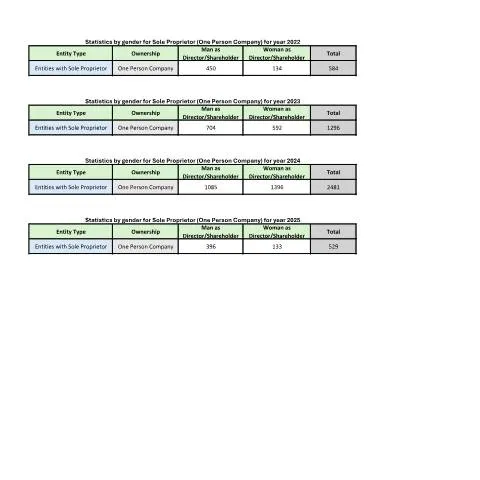
The official document titled Statistics by Gender for Sole Proprietor (One Person Company) for the year 2022-2025 plays a pivotal role in understanding the distribution of gender in the realm of sole proprietorships in Mauritius. This range of statistics serves not only as a means of compliance but also as a vital resource for policy-making, economic development, and gender equality initiatives.
The Application Process: Who Should Submit and When?
Completion and submission of the Statistics by Gender form is primarily mandated for all registered sole proprietors under the Business Registration Act. This encompasses individuals operating as one-person companies who must report their business demographics accurately.
The form is particularly crucial for those who wish to be part of government initiatives aimed at promoting gender equality in business ownership. The data collected contributes to national statistics used in evaluating economic performance, understanding labor market trends, and shaping policies. It’s essential for companies to understand the deadlines for submission, which are typically in line with the fiscal year, from 1 July to 30 June.
Who is Responsible for Submission?
- All sole proprietors registered within the stipulated time frame.
- Individuals representing sole proprietor companies who have undergone any structural changes in ownership or operational status.
Navigating the Submission Channels: Online vs. Paper Formats
Submitting the Statistics by Gender form can be done through various channels, each with its own advantages and procedures.
Online Submission
The preferred method is through the MauPass portal, which integrates your National ID and allows for streamlined processing. Online submissions are encouraged due to their efficiency and the ability to track progress through the system.
Paper Submission
For those unable to use digital methods, the form can also be submitted in paper format at designated offices of the Registrar of Companies. It's advisable to check the latest updates from the Ministry of Technology, Communication, and Innovation regarding opening hours and document requirements.
Here’s a quick comparison:
| Submission Type | Advantages | Disadvantages |
|---|---|---|
| Online | Fast processing, real-time tracking, environmentally friendly | Requires internet access and familiarity with the portal |
| Paper | Accessible for all, no tech required | Longer processing times, potential for lost documents |
Decoding the Form: Key Sections and Common Pitfalls
Completing the Statistics by Gender form requires careful attention to detail. Each section is designed to capture critical information that will inform statistical outputs and government initiatives.
Section Breakdown
- Entity Information: This includes the name and registration number of the sole proprietor. Ensure accuracy here, as discrepancies can lead to delays.
- Gender Distribution: Report the gender of the owner and any employees accurately. This section is vital for gender statistics and potential funding opportunities.
- Operational Data: Include revenue and employee counts. This data helps assess business growth and gender participation in entrepreneurship.
Common pitfalls include:
- Inaccurate gender categorization—ensure the correct classification.
- Missing operational data—double-check that all sections are completed.
The Regulatory Framework Justifying the Form
The Statistics by Gender form is anchored in several legislative frameworks aimed at promoting gender equality and economic growth. The rationale stems from the Constitution of Mauritius 1968 and the subsequent PSC Act 1955, which emphasize transparency and accountability in business practices.
The data collected from this form influences national policy, tailoring support for entrepreneurs based on identified needs and gaps within the market. Furthermore, it contributes to international commitments on gender equality and economic development.
After Submission: What to Expect and How to Follow Up
Once the Statistics by Gender form is submitted, it enters a processing phase within the governmental framework. It is essential to understand how this process works and what steps to take next.
Processing Timeline
Typically, you can expect confirmation of receipt within a few business days. Processing the data can take several weeks, depending on the volume of submissions.
Tracking Your Submission
For online submissions, use your unique reference number to track the status through the MauPass portal. For paper submissions, keep a copy and consider sending it via registered mail to ensure delivery.
Responding to Challenges: Dealing with Errors and Missing Information
In the event of a submission error or if you realize a piece of information is missing, prompt action is crucial. Here’s a structured approach:
- Review Your Submission: Identify the specific areas that may need amendment.
- Contact Authorities: Reach out to the Registrar of Companies via their official contact methods for guidance on correction procedures.
- Resubmit Corrected Information: Ensure that all amendments are documented correctly, and resubmit them as instructed.
Using Gender Statistics for Business Planning and Development
Understanding the statistics generated from the Statistics by Gender form can provide substantial insights for sole proprietors and policymakers alike. This data can aid in pinpointing trends and disparities in business ownership and performance across genders.
Business owners may leverage these insights to:
- Identify potential funding sources aimed at supporting women entrepreneurs.
- Engage in workshops and training that address gender-specific barriers in business.
Conclusion: The Importance of Accurate Reporting
Engaging with the Statistics by Gender form is not merely a bureaucratic task but an opportunity for sole proprietors to participate in the broader narrative of economic and gender equality in Mauritius. By ensuring accurate and timely submissions, business owners contribute to a comprehensive understanding of the entrepreneurial landscape, fostering an environment of inclusivity and growth.
As the landscape of business evolves, the significance of such forms will only increase, necessitating diligent and mindful engagement from all stakeholders involved.
Gender Distribution Among Sole Proprietors in Mauritius: An Analysis of 2022-2025
The landscape of entrepreneurship in Mauritius is evolving, with a clear shift towards the establishment of Sole Proprietorships, often referred to as One Person Companies (OPCs). This section delves into the gender distribution among sole proprietors from 2022 to 2025, providing nuanced insights into how gender dynamics shape entrepreneurial activities in the country.
Statistics from the Registrar of Companies indicate a gradual increase in the number of sole proprietors, with particular attention paid to gender. In 2022, approximately 60% of sole proprietors were male, while around 40% were female. This gender gap presents an opportunity for targeted interventions to support female entrepreneurs in overcoming systemic barriers to starting and sustaining businesses.
By 2023, preliminary figures show a remarkable increase in the number of female sole proprietors, attributed to various initiatives aimed at empowering women in business. Programs facilitated by local NGOs and government bodies, such as training workshops and financial assistance schemes, have enabled more women to engage in entrepreneurship. For example, by early 2023, the gender distribution had shifted to 55% male and 45% female.
Fill in your form directly online
No printing: type your details into the boxes of the official form, tick, then download the PDF ready to send.
- 1Type into the form boxes
- 2Tick in one click
- 3Save and download the PDF
The trend appears to continue positively into 2024, as governmental policies favoring inclusivity and support for women in business gain traction. Furthermore, the introduction of digital platforms has simplified the registration process for sole proprietorships, potentially attracting more women who may have previously felt deterred by bureaucratic hurdles. As a result, the expected statistics for 2024 suggest an even closer gender balance, projecting a distribution of 52% male and 48% female sole proprietors.
Looking forward to 2025, projections indicate that if current trends continue, the number of female sole proprietors could surpass 50% for the first time. This shift would not only represent a significant milestone for gender equality in entrepreneurship but also signify a transformative change in the socio-economic fabric of Mauritius, fostering a more diverse and robust entrepreneurial ecosystem.
The Impact of Policy Changes on Gender and Sole Proprietorships
In analyzing the statistics of sole proprietorships by gender in Mauritius, it is essential to consider the role of policy changes from 2022 to 2025. Over this period, the Mauritian government has implemented various policies aimed at fostering a more inclusive business environment. These policies are particularly relevant to the gender dynamics within the realm of sole proprietorships.
Key among these initiatives is the introduction of tax incentives for small businesses, which has been instrumental in lowering the financial barriers to entry for aspiring sole proprietors. The Mauritius Revenue Authority (MRA) has established guidelines that specifically target both male and female entrepreneurs, ensuring that women are equally positioned to benefit from these incentives. Additionally, campaigns designed to raise awareness of these benefits have played a crucial role in encouraging more women to register as sole proprietors.
Furthermore, the Mauritius business ecosystem is witnessing a gradual shift towards mentorship programs, specifically designed to support female entrepreneurs. These programs often pair women with experienced business owners who can provide guidance on navigating the complexities of running a business. As a result, the data indicates that mentorship is not only fostering confidence but also contributing to the increase in female sole proprietorship registrations. This mentorship initiative, combined with supportive legislation, has led to a diversification of sectors where women are starting their businesses, ranging from technology to agriculture.
Challenges Faced by Female Sole Proprietors and Strategic Solutions
While the growth of female sole proprietors in Mauritius is encouraging, it is imperative to address the persistent challenges they face. Various studies and surveys conducted among women entrepreneurs reveal that access to capital remains a significant hurdle. Many female entrepreneurs report difficulties securing financing due to traditional lending practices that often favor male entrepreneurs. This systemic issue calls for more innovative financing solutions tailored to the unique needs of women business owners.
To combat this challenge, several financial institutions have begun rolling out specific funding programs aimed at female entrepreneurs. These programs include lower interest rates and more flexible repayment terms, making it easier for women to obtain the necessary capital to launch or expand their sole proprietorships. Additionally, the promotion of microfinance initiatives has provided female sole proprietors with vital funding options that bypass conventional banking routes, thus increasing their chances of success.
Another challenge highlighted by female entrepreneurs is the lack of comprehensive support networks. Many women feel isolated in their entrepreneurial journeys, lacking access to communities that provide emotional and practical support. To mitigate this, local government bodies and business associations are encouraged to create more networking opportunities, workshops, and forums that specifically cater to female sole proprietors. These initiatives can foster collaboration, knowledge sharing, and resource pooling among women entrepreneurs.
Effective strategies must also focus on addressing societal perceptions and biases that may hinder women's entrepreneurial aspirations. Public awareness campaigns that celebrate the success of female sole proprietors can help shift cultural narratives, inspiring more women to participate in entrepreneurship. By fostering a supportive environment, Mauritius can work towards achieving equitable gender representation in business ownership.