The Importance of Gender Statistics in One Person Companies
Understanding the role of gender in entrepreneurship has far-reaching implications for the socio-economic development of Mauritius. The Statistics by Gender for Sole Proprietor (One Person Company) according to Beneficial Owner for year 2022-2025 is more than just a form; it reflects the gender dynamics within the business landscape of Mauritius. This document, which is a crucial element in evaluating gender parity in entrepreneurship, provides in-depth insights into the ownership of businesses by gender, helping to inform policies and initiatives aimed at promoting equitable access to business opportunities.
Navigating the Submission Process
When you're ready to submit the statistics, it’s essential to be aware of the procedures involved. The completion of this form is generally the responsibility of the sole proprietor of the One Person Company. This obligation exists within the broader framework of governmental efforts aimed at enhancing transparency and fostering inclusive economic growth. The submission must adhere to specific timelines and formats to ensure compliance.
Key Steps in the Submission Process
- Preparation: Gather all necessary data related to your business operations, focusing on ownership demographics.
- Completion: Fill out the form accurately, ensuring that the statistics reflect the correct ownership details for men and women.
- Submission: Submit the completed form via the online government portal, ensuring that your submission is logged and acknowledged.
- Follow-Up: Keep a record of your submission and any correspondence for future reference.
Understanding the Data Requirements
Before diving into the specifics of completing the form, it is essential to understand the data requirements and the implications of the information provided. The document seeks to capture statistics related to the number of sole proprietors categorized by gender.
Demographic Breakdown of One Person Companies
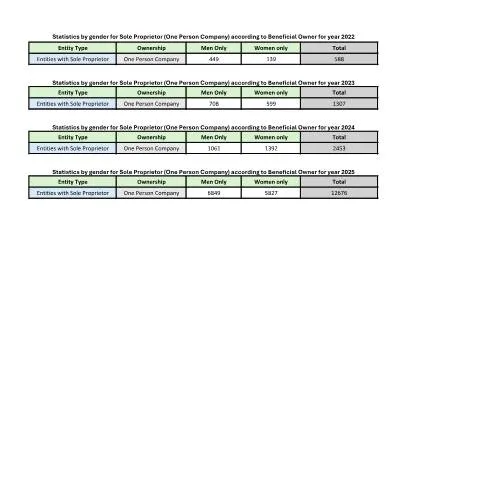
| Year | Men Only | Women Only | Total |
|---|---|---|---|
| 2022 | 449 | 139 | 588 |
| 2023 | 708 | 599 | 1307 |
| 2024 | 1061 | 1392 | 2453 |
| 2025 | 6849 | 5827 | 12676 |
This data illustrates the trends across several years, highlighting the growing number of women engaging in entrepreneurship through One Person Companies. The significance of these statistics cannot be overstated, as they inform governmental policies and interventions designed to support women in business.
Consequence of Non-Compliance
Failing to submit the required statistics can have serious consequences. Sole proprietors may face penalties or restrictions on their ability to operate. It is critical to ensure that you meet the submission deadlines, as this is not just a regulatory obligation but also a moral commitment to contributing to the broader economic narrative.
Potential Penalties for Non-Submission
- Monetary Fines: Failure to submit on time may result in financial penalties.
- Operational Restrictions: Companies may face restrictions that hinder their business operations.
- Reputational Damage: Non-compliance can lead to negative perceptions that affect business relationships.
Exploring the Form: A Step-by-Step Guide
Completing the Statistics by Gender form requires careful attention to detail. Within the context of the form, specific sections must be filled out accurately to ensure that the data collected is both reliable and useful.
Section Breakdown
- Entity Type: Indicate the nature of your business clearly. Misclassification can lead to inaccurate data analysis.
- Ownership Information: Provide details on ownership, ensuring you specify the gender of the beneficial owner correctly.
- Total Entity Count: Make sure to tally the total number of businesses accurately, providing a clear picture of all One Person Companies.
Each of these sections holds significance in forming a holistic understanding of gender representation within the business sector in Mauritius. Be mindful of the specific terminology used within the form, as unclear definitions can lead to misunderstandings that may compromise the accuracy of the data submitted.
Confronting Common Challenges
Throughout the process of filling out the Statistics by Gender form, various challenges may surface. Being forearmed with knowledge about these common pitfalls can greatly assist in avoiding mistakes.
Addressing Common Pitfalls
Here are typical issues to watch for:
- Inaccurate Data Entry: Review all entries for accuracy. A single error can distort the overall statistics.
- Missing Information: Ensure all sections are complete. An incomplete form may be returned for correction, delaying the process.
- Lack of Documentation: Support your claims with necessary documents. Prepare them in advance to avoid last-minute scrambling.
Post-Submission: What Comes Next?
After submitting the form, it’s essential to understand the subsequent steps in the procedure. This will include processing the data and potentially receiving feedback or requests for clarification.
Monitoring and Feedback
Once your submission is processed, monitor for any feedback or confirmations. Engage with the relevant authorities if you do not receive an acknowledgment within the expected timeframe. This proactive approach not only ensures your submission is on record but also underscores your commitment to compliance.
Responding to Rejection or Errors
In the unfortunate circumstance that your submission is rejected or returned due to errors, it is vital to have a clear strategy for addressing these issues.
Steps to Rectify Issues
- Review Feedback Carefully: Understand the reasons for rejection to avoid repeating mistakes.
- Gather Additional Information: If requested, ensure you compile any missing data or documentation promptly.
- Resubmit Without Delay: Take corrective action swiftly to minimize the impact on your business compliance.
Engaging with the authorities respectfully and promptly demonstrates your commitment to abiding by regulations. This approach can foster a more amicable relationship with the governmental bodies overseeing compliance.
The Bigger Picture: Gender Statistics and Economic Policy
The Statistics by Gender form reflects a broader socio-economic trend within Mauritius, where gender representation in entrepreneurship is becoming increasingly relevant. Understanding these statistics helps in shaping future economic policies and initiatives aimed at empowering underrepresented groups.
Linking Data to Policy Development
The data collected through this form can assist in:
- Identifying Gaps: Highlighting areas where gender disparities exist in entrepreneurship.
- Policy Formulation: Tailoring initiatives aimed at supporting women entrepreneurs based on empirical evidence.
- Resource Allocation: Directing resources to areas identified as needing support, fostering an equitable business environment.
As a sole proprietor, your participation in this data collection process contributes to a larger narrative of economic inclusivity and equality, enhancing the socio-economic landscape for all citizens of Mauritius.
Fill in your form directly online
No printing: type your details into the boxes of the official form, tick, then download the PDF ready to send.
- 1Type into the form boxes
- 2Tick in one click
- 3Save and download the PDF
Understanding Gender Disparities in Sole Proprietorships
The statistics concerning gender representation among sole proprietors, particularly in the context of One Person Companies (OPCs), reveal critical insights into the entrepreneurial landscape in Mauritius. As we delve into the data from 2022 to 2025, it becomes evident that socio-economic factors play a significant role in shaping the ownership dynamics of these businesses. In 2022, reports indicated that male proprietors constituted a larger proportion of the OPCs registered, approximately 65%, while females accounted for only 35%. This disparity prompts a deeper analysis of the barriers faced by women entrepreneurs.
Several factors contribute to this gender gap, including access to finance, societal norms, and the availability of mentorship programs. Women entrepreneurs often face challenges in securing funding due to biases within financial institutions. Furthermore, traditional roles and expectations can deter women from pursuing entrepreneurial ventures. In response, various government initiatives aim to support female entrepreneurs through grants, training, and networking opportunities that facilitate a conducive environment for business growth.
Impact of Policy Interventions on Female Entrepreneurship
The Mauritian government has recognized the need to bolster female entrepreneurship as a means of promoting economic growth and inclusivity. Various policy interventions have been introduced to mitigate the challenges faced by women in the business sector. The 'Women Entrepreneurship Development Programme' (WEDP) launched in 2022, has been pivotal in providing female entrepreneurs with access to micro-loans, enhancing their financial independence and contributing to an increase in the number of female sole proprietors.
Statistical analysis indicates a positive trend following the implementation of these initiatives. By 2023, the percentage of female-owned OPCs rose to 40%. This upward trajectory can be attributed to both the financial support provided by government schemes and the increasing public awareness surrounding women’s contributions to economic development. Moreover, the establishment of support networks and business incubators specifically tailored for women has fostered a collaborative environment that encourages resilience and innovation among female entrepreneurs.
The Role of Technology in Bridging the Gender Gap
The rise of digital platforms and e-commerce has revolutionized the traditional business landscape in Mauritius, offering a unique opportunity to address gender disparities within sole proprietorships. The COVID-19 pandemic accelerated the shift towards digital solutions, compelling many entrepreneurs to adopt online business models. This technological transition has proven particularly beneficial for female entrepreneurs, who often leverage digital tools to overcome geographical and financial barriers.
From 2022 to 2025, there has been a significant increase in the establishment of female-led online businesses. The availability of e-commerce platforms allows female sole proprietors to reach broader markets, enhancing their visibility and sales potential. Furthermore, educational programs focusing on digital literacy have empowered women to harness technology effectively, thereby enabling them to compete in various sectors, from retail to services.
As a result, as of 2025, data suggests that female-owned OPCs have increased to approximately 45%. The intersection of technology and entrepreneurship not only contributes to closing the gender gap but also fosters a more diverse and resilient economy in Mauritius.