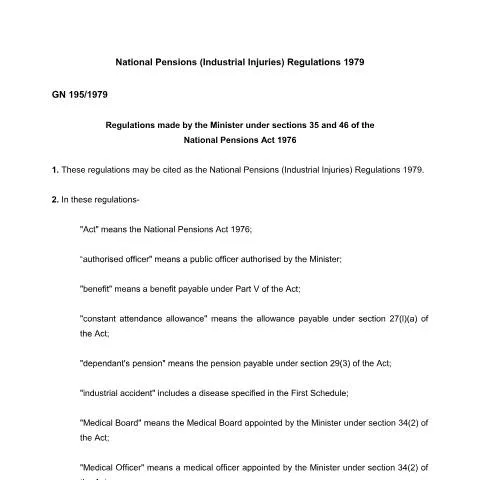
Understanding the National Pensions (Industrial Injuries) Regulations No. 195 of 1979
The National Pensions (Industrial Injuries) Regulations No. 195 of 1979 are a key legal framework established under the authority of the Minister in Mauritius to govern the provision of benefits to employees suffering from injuries or diseases resulting from industrial accidents. These regulations detail the procedures, eligibility criteria, and administrative processes for managing claims related to industrial injuries, ensuring a structured and fair approach to occupational health and safety compensation.
Scope and Application of the Regulations
The regulations apply to all employees who sustain injuries or illnesses directly related to their work activities within Mauritius. They cover a broad spectrum of industrial accidents, including specific diseases listed in the First Schedule of the Act, and set out the responsibilities of employers, employees, and designated officials in managing such incidents. The framework aims to facilitate timely reporting, medical assessment, and benefit disbursement to affected workers, fostering a safe and accountable working environment.
Key Provisions and Procedures
Reporting and Record-Keeping
- Employees or their representatives must notify their employer of any industrial injury as soon as practicable, providing details of the incident and circumstances involved.
- Employers are required to maintain an accident register, recording specific details of each incident, and retain these records for a minimum of three years from the last entry.
- Within three weeks of an injury, employers must submit a report to the Minister, including the particulars specified in the Second Schedule of the regulations.
- Employers must also cooperate with authorized officers by providing information and documentation necessary to assess claims and benefits eligibility.
Eligibility and Payment of Benefits
The regulations specify that only employees who meet certain criteria are eligible for industrial injury allowances. These allowances are payable after the initial fourteen days of incapacity, which are generally not covered unless the employee's work schedule or injury circumstances warrant otherwise.
The benefit amount is calculated based on a daily rate equivalent to eighty percent of the employee’s annual earnings, divided by 365 days. This ensures a fair compensation proportionate to the worker’s usual income, supporting them during recovery or disability periods.
Medical Assessment and Certification
- A Medical Board, appointed by the Minister, is responsible for evaluating the extent of disablement resulting from the injury or disease.
- The assessment considers the degree of disablement compared to a healthy individual of the same age and sex, and it determines the corresponding pension or benefit entitlement.
- Medical certification is mandatory for establishing incapacity, and the Medical Board may recommend further examinations if necessary.
Disability Evaluation and Compensation
The regulations include detailed provisions for assessing the degree of disablement, which influences the level of pension payable. Injuries are classified according to the Schedule, with specific degrees of disablement assigned to various conditions. The assessment process ensures that compensation reflects the severity and impact of the injury on the employee’s capacity to work.
Implications for Employees and Employers
These regulations provide a clear legal pathway for injured workers to claim benefits, emphasizing the importance of prompt reporting, proper medical evaluation, and adherence to administrative procedures. Employers are obligated to maintain accurate records, facilitate medical assessments, and ensure that injured employees receive necessary medical treatment. Meanwhile, employees benefit from structured compensation schemes that recognize the impact of industrial injuries on their livelihood.
Fill in your form directly online
No printing: type your details into the boxes of the official form, tick, then download the PDF ready to send.
- 1Type into the form boxes
- 2Tick in one click
- 3Save and download the PDF
Conclusion
The National Pensions (Industrial Injuries) Regulations No. 195 of 1979 serve as a vital legal instrument to safeguard workers' rights and promote occupational health and safety in Mauritius. By establishing systematic procedures for reporting, assessment, and benefit disbursement, these regulations aim to balance the interests of employees and employers, fostering a safer working environment and ensuring fair compensation for industrial injuries.