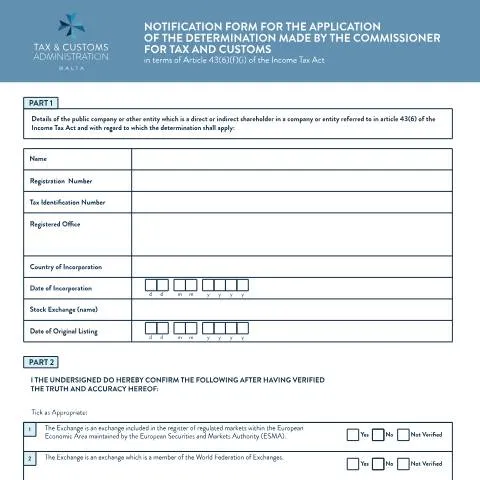
Navigating the poc_notification_form_art43(6)(f): A Vital Tool for Publicly Owned Companies
In the complex landscape of corporate taxation in Malta, the poc_notification_form_art43(6)(f) holds significant importance for publicly owned companies. This document is not merely a formality; it plays a crucial role in ensuring compliance with taxation regulations and subsequent reporting obligations. For companies operating in the public sector, understanding the nuances of this form can be the difference between smooth operations and bureaucratic challenges.
Understanding the Context: When and Why Is This Form Required?
Timing is pivotal when it comes to submitting the poc_notification_form_art43(6)(f). It is typically required during specific financial reporting periods as dictated by the Corporate Tax Office. The requirement often aligns with the company's financial year-end, and timely submission is essential to avoid penalties. Therefore, companies must keep a keen eye on their financial calendars.
Key Timelines to Watch
- Annual Reporting Period: Usually coincides with the end of the fiscal year.
- Submission Deadline: Companies are expected to submit this notification form within a stipulated timeframe post the closing of their fiscal year.
- Feedback Timeline: After submission, companies should anticipate receiving confirmation or requests for additional information from the Corporate Tax Office within a designated period.
What Happens After Submission? Unpacking the Process
Once the poc_notification_form_art43(6)(f) is submitted, a series of steps unfold that can significantly impact the company. The Corporate Tax Office reviews the submission, and this is where attention to detail in completing the form can lead to different outcomes.
Post-Submission Scenarios
- Review and Confirmation: If all details are correct, the office will confirm the receipt and acceptance of the form.
- Request for Clarification: If any information is ambiguous or missing, the office may reach out for further clarification, which can delay the processing of corporate taxes.
- Rejection of Submission: If the form is significantly flawed, it may be rejected outright, requiring resubmission.
Completing the Form: A Step-by-Step Approach
Filling out the poc_notification_form_art43(6)(f) can be intricate; thus, understanding its sections is crucial to ensure accuracy and completeness. A meticulous approach to filling out each segment will reduce the likelihood of errors that could lead to unnecessary delays.
Detailed Breakdown of the Form’s Sections
| Section | Description | Common Pitfalls |
|---|---|---|
| Company Information | Includes name, registration number, and contact details. | Omitting the correct registration number can lead to processing delays. |
| Financial Year | Indicate the financial period being reported. | Incorrect dates may lead to rejection of the form. |
| Tax Obligations | Detail corporate tax liabilities and projections. | Inconsistency with prior submissions could raise red flags. |
| Signatures | Authorized signatures from company officials. | Missing signatures can result in automatic rejection. |
Submission Channels: Online vs. Paper vs. In-Person
The manner in which the poc_notification_form_art43(6)(f) is submitted can influence the processing speed and efficiency. Companies have the option to submit the form through different channels, each with its own advantages and considerations.
Comparative Analysis of Submission Methods
- Online Submission: Utilizing the e-ID for online submissions is often the most efficient route. This method allows for instant confirmation of receipt.
- Paper Submission: Submitting a physical copy may be necessary in certain circumstances, but it often results in longer processing times.
- In-Person Submission: For urgent cases, visiting the Corporate Tax Office may expedite matters, albeit with the risk of long wait times.
Profiles of Stakeholders: Who Needs to be Involved?
The poc_notification_form_art43(6)(f) is particularly pertinent for various stakeholders within publicly owned companies. Identifying key players and understanding their roles can streamline the completion and submission process.
Key Stakeholders and Their Responsibilities
- Chief Financial Officer (CFO): Oversees the financial reporting and ensures that the notification is accurate and timely.
- Compliance Officer: Responsible for ensuring that all regulatory requirements are met regarding the form.
- Company Secretary: Facilitates communication between the board and the Corporate Tax Office.
Handling Issues: What If There Are Errors or Missing Information?
Despite the best efforts, issues may arise during the completion or submission of the poc_notification_form_art43(6)(f). Understanding how to manage these challenges effectively is crucial to maintaining compliance and avoiding penalties.
Strategies for Addressing Common Issues
- Identifying Errors: Regular checks with the finance team can help catch inaccuracies before submission.
- Seeking Clarification: If unsure about certain sections, consulting with the Corporate Tax Office can provide clarity and guidance.
- Re-Submission Protocol: In the event of rejection, companies must follow clear protocols to amend and re-submit the form promptly.
Complex Situations: Considerations for Foreign Entities and Unique Cases
For foreign companies operating in Malta or those with unique circumstances, special attention must be paid when dealing with the poc_notification_form_art43(6)(f). Tailored strategies can help navigate these complexities effectively.
Addressing Unique Scenarios
- Foreign Companies: They may require additional documentation to verify their status and tax obligations in Malta.
- Minor Shareholders: Specific considerations may apply if minors are involved in the ownership structure.
- Emergency Situations: For urgent matters, it may be necessary to engage directly with the Corporate Tax Office for expedited handling.
Ultimately, the poc_notification_form_art43(6)(f) form is more than an administrative requirement; it is a crucial instrument for ensuring compliance within Malta’s corporate tax framework. By understanding its role, navigating its complexities, and preparing adequately for its submission, companies can significantly reduce the risk of complications and streamline their corporate tax obligations.
Understanding Public Owned Companies in Malta
Public owned companies in Malta, commonly referred to as government-owned enterprises, play a vital role in the national economy. These entities are established by the government to provide essential services or operate in sectors deemed critical for public welfare. The governance and operational framework of these companies are guided by specific legislation, including the Public Administration Act (Cap. 595 of the Laws of Malta). The rationale behind establishing public owned companies is to ensure that essential services such as utilities, transportation, and healthcare are provided efficiently and effectively, while also safeguarding public interest.
One of the primary characteristics of these companies is their accountability to the government and, by extension, to the taxpayers. They are typically overseen by a board of directors appointed by the government, ensuring alignment with national policies and objectives. Additionally, these companies must adhere to strict transparency and reporting requirements, making their operations accessible for scrutiny by both governmental bodies and the public. This creates a framework where performance can be monitored, and necessary interventions can be made to improve efficiency and service delivery.
Notification Procedures for Changes in Public Owned Companies
The notification process regarding changes within public owned companies, particularly as it pertains to Article 43(6)(f) of the Public Administration Act, is a critical aspect of ensuring compliance and transparency. This provision stipulates that any significant changes within the structure or operations of these companies must be communicated to relevant authorities to avoid any governance issues.
In practical terms, companies must fill out the poc_notification_form_art43(6)(f).pdf, which serves as a formal notification pathway. This form is used to report various changes, including board member appointments, alterations in the company's purpose, or shifts in operational strategies. Filling out this form requires a detailed understanding of the changes being implemented, as well as the implications they may have on the company's governance structure.
Upon submission, the relevant authorities, such as the Ministry for Finance or the Department of Contracts, will review the notifications to ensure compliance with legal, regulatory, and operational standards. Delays or failures in notifying these changes can lead to significant penalties, including fines or restrictions on company operations, thus emphasizing the importance of this procedural requirement.
Best Practices for Compliance with Public Owned Company Regulations
For stakeholders involved in the management of public owned companies, adhering to the regulations is paramount. Compliance not only ensures the smooth functioning of the entity but also builds public trust in government operations. Here are some best practices that can facilitate adherence to the regulatory framework:
- Regular Training and Updates: It's essential for board members and key personnel to participate in regular training sessions regarding the legal obligations and responsibilities associated with the management of public owned companies. This ensures that everyone is knowledgeable about the latest legislative changes and compliance requirements.
- Establish Clear Communication Channels: Effective communication within the company and with external stakeholders is crucial. Establishing formal channels ensures that any changes or updates are promptly communicated and recorded, thereby minimizing the risk of oversight during the notification process.
- Utilize Technology for Documentation: Given the move towards digitalization, adopting e-forms and electronic communication can streamline the notification process. Utilizing platforms like servizz.gov.mt for submissions can enhance efficiency and track compliance in real-time.
- Engage with Legal Experts: Regular consultations with legal experts or compliance officers specializing in public administration can provide insights into navigating complex regulatory landscapes. Their expertise can be invaluable in ensuring that all required documentation is completed accurately and submitted in a timely manner.