The CES Training Application Form: An In-Depth Guide
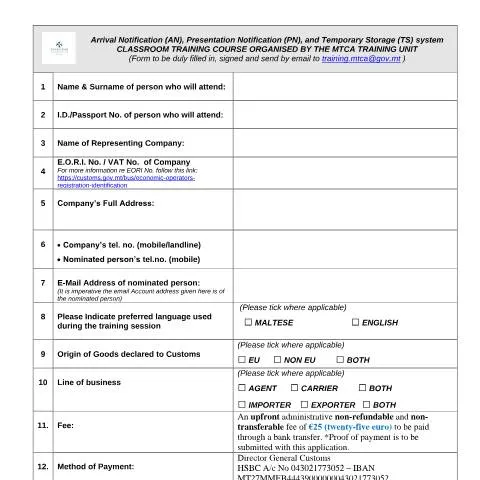
The CES Training Application Form, identified by the reference code an-pn-ts-application-form, plays a pivotal role in Malta's income tax system. This document is integral for individuals seeking to apply for the CES (COVID-19 Wage Supplement) training allowance. Understanding this form is essential for both employees and employers who wish to access the financial support provided by the government during economic downturns.
Understanding the Regulatory Framework
The CES training initiative was introduced as a response to the economic challenges posed by the COVID-19 pandemic. The program aims to support both employees and employers affected by the crisis by providing financial assistance for training and development. The legal framework underpinning this initiative is grounded in the Public Administration Act (Cap. 595 of the Laws of Malta), which outlines the parameters for various forms of assistance, including this training allowance.
Historical Context
The introduction of the CES scheme marked a significant shift in Malta's approach to workforce development during times of crisis. Prior to the pandemic, similar programs existed, but the scale and urgency of the CES initiative highlighted the need for rapid adaptation. This form was designed specifically for those who had to pivot their skill sets in response to new demands in the job market.
Who Should Submit the Application?
Identifying the right applicants for the CES training allowance is crucial. The form can be submitted by various stakeholders, including:
- Employers: Organizations looking to upskill their workforce or provide training to support employees during the financial downturn.
- Employees: Individuals who want to pursue training opportunities that improve their employability or help them transition into new roles.
It’s important to note that certain exceptions exist. For example, individuals who are self-employed may have specific conditions to meet before they can apply for this training allowance. Understanding these nuances is vital for successful applications.
Key Sections of the CES Application Form
When filling out the CES Training Application Form, attention to detail is critical. Here’s a breakdown of the main sections of the form:
1. Personal Information
The first section requires detailed personal information, including:
- Name and surname
- Maltese ID number (7-digit + letter format)
- Contact details
Ensuring accuracy in this section is crucial as any discrepancies can delay processing.
2. Employer Details
If the application is submitted by an employer, the form must include:
- Company name
- Company registration number
- Contact person details
Employers must ensure that they are registered with the Income Tax Department and have all necessary documentation to support their application.
3. Training Course Details
This section focuses on the specifics of the training program for which assistance is being sought:
- Name of the training provider
- Duration of the course
- Purpose of the training
It's important to detail how the training aligns with current market demands to increase the chances of approval.
4. Financial Information
Applicants will need to provide information on costs associated with the training, including:
- Total cost of the training program
- Amount of funding requested
Providing a clear and justified financial breakdown can strengthen the application, especially in a competitive landscape.
Suggested Timeline for Submission
Timelines play a crucial role in the application process. While specific dates may vary, generally, the application for the CES Training Allowance follows a structured timeline:
- Application Period: Identify the start and end dates for applying, which are typically announced by the authorities.
- Processing Time: Once submitted, the processing of applications may take several weeks, depending on the volume of requests.
- Notification: Successful applicants will receive a notification regarding their application status, which is vital for subsequent steps.
Adhering to these timelines is crucial to ensure that applicants do not miss the opportunity for funding.
Profiles of Potential Applicants
Different profiles may have unique considerations when applying for the CES training allowance. Here’s a closer look at various scenarios:
1. Employees in Distress
Employees who have been laid off or whose hours have been significantly reduced may be prioritized for assistance. For these individuals, detailed documentation proving their employment status and financial need will enhance their application.
2. Employers in Certain Sectors
Employers in sectors hit hardest by the pandemic, such as tourism and hospitality, have specific criteria to meet. These may include demonstrating a commitment to retaining employees through training initiatives.
3. Self-Employed Individuals
Self-employed individuals face unique challenges. Their applications should clearly outline how the training will contribute to their business sustainability and growth.
Additional Steps Post-Application
Upon submission of the CES Training Application Form, applicants should prepare for the following steps:
- Follow-Up: Maintain open lines of communication with the Income Tax Department for any updates or additional information requests.
- Documentation: Keep copies of all submitted documents and correspondence for future reference.
- Preparing for Training: Once approved, applicants should be proactive in scheduling and participating in the training as outlined in their application.
Being well-organized during this phase can help maximize the benefits derived from the training allowance.
Conclusion: Navigating the Complexity of the CES Training Application Form
Successfully navigating the CES Training Application Form requires a thorough understanding of the requirements and strategic preparation. By paying close attention to each section of the form and adhering to deadlines, applicants position themselves for a successful outcome. Whether you are an individual employee or an employer, taking the time to understand every aspect of this process will be your best asset in accessing the financial support available through the CES training initiative.
Understanding the CES Training Framework in Malta
The CES (Continuing Education and Skills) training framework in Malta is designed to enhance the skills and competencies of individuals in various sectors. This framework is crucial for fostering a skilled workforce, thereby supporting Malta's economic growth and adaptability in a rapidly changing job market. The CES training programs are generally aligned with the European Qualifications Framework (EQF), ensuring that they meet international standards.
The training provided under CES encompasses various areas, including but not limited to, vocational education, adult education, and professional upskilling. Participants are encouraged to evaluate the available courses and select ones that align with their career goals and personal development needs. The application process for these training programs often requires the completion of specific forms, such as the an-pn-ts-application-form.pdf, which will be discussed in detail later.
Moreover, the CES framework is supported by multiple stakeholders, including government agencies, educational institutions, and private entities. This collaborative approach ensures a well-rounded training experience that can cater to the diverse needs of learners. Additionally, the framework promotes lifelong learning, thus paving the way for individuals to continuously enhance their skills throughout their careers.
Navigating the Application Process for CES Training
The application process for CES training in Malta can seem daunting due to the various forms and requirements involved. However, understanding the steps can make it significantly more manageable. The key document required for initiating this process is an application form, often referred to as an “an-pn-ts-application-form.pdf.”
To start, applicants must ensure they have a valid e-ID, as this is necessary for online submissions. Once logged into the central portal, the form can typically be located under the training section. It is essential to fill out the form accurately, providing all requested information, which may include personal details, qualifications, and the specific training program of interest.
Once the application is submitted, tracking its status becomes crucial. Applicants can do this through the same portal where they submitted their form. If further information is required from the applicant, notifications will be sent electronically, emphasizing the importance of regularly checking the associated email address.
Additionally, applicants might wonder about the appeal process in the case of an unsuccessful application. If your application is declined, you have the right to request an administrative review. This requires submitting a request through the appropriate channels, outlining the reasons for your disagreement with the decision.
Funding Opportunities and Financial Aid for CES Training
Funding opportunities play a significant role in facilitating access to CES training programs in Malta. Understanding the available financial aid options can significantly reduce the burden of tuition fees and associated costs. Various government schemes and private scholarships are available to support individuals pursuing further education and training.
One of the primary funding sources is the European Social Fund (ESF), which offers financial support for training initiatives aimed at enhancing employment opportunities. Eligibility for funding typically depends on factors such as the applicant’s age, employment status, and the specific training program chosen. It is advisable to consult the official guidelines available on the ESF Malta website to determine if you qualify.
In addition to governmental support, various organizations also provide scholarships aimed at specific groups, such as women, individuals seeking to reskill, or those returning to the workforce after a long absence. Interested applicants can often find detailed information on these scholarships through educational institutions or related organizations. It's critical to pay attention to application deadlines to ensure that you do not miss any opportunities for financial assistance.
Applying for funding is often a separate process from the CES training application. This may involve submitting specific forms, proof of income, or letters of recommendation. It is crucial to meticulously gather the necessary documentation to present a solid case to potential funders.