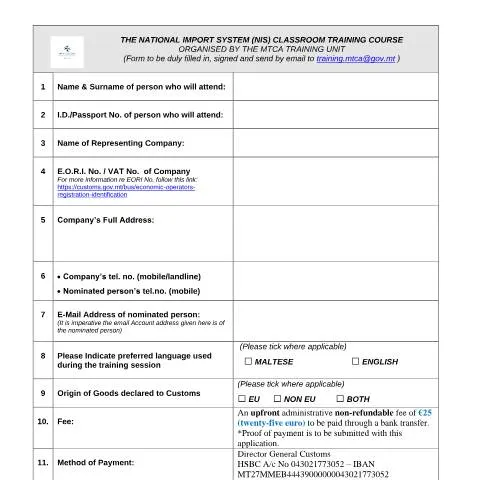
Understanding the CES Training Application: Key Insights
In the landscape of professional development, the National Import System Classroom-Based Application Form plays a pivotal role for educators and trainers in Malta. With an emphasis on continuing education and training programmes, this document serves as the bridge connecting potential applicants to crucial funding and resources. Navigating through its complexities requires attention to detail and an understanding of the application process, making it essential for anyone looking to embark on this educational journey.
Decoding the Application Process: Step by Step
The journey begins the moment an individual decides to apply for CES training. Understanding the chronological order of steps can streamline the process significantly:
- Preparation: Before diving into the application, applicants should gather all necessary documentation that supports their training objectives and qualifications.
- Completing the Form: The National Import System Classroom-Based Application Form requires detailed information about the training initiative, including objectives and expected outcomes.
- Submission: The completed form must be submitted electronically, leveraging the centralized e-ID platform for authentication. Alternatively, the paper version can be filed through designated offices.
- Review Process: Upon submission, the form enters a review stage where the income tax authorities evaluate the application based on predefined criteria.
- Notification of Decision: Applicants will receive a formal notification regarding the outcome of their application, detailing any further steps if required.
The Distinct Nature of the Classroom-Based Application Form
In the realm of educational funding applications, the Classroom-Based Application Form stands out for several reasons:
- Target Audience: Unlike other forms aimed at individuals seeking personal financial assistance, this application specifically caters to professionals in the education sector.
- Focus on Classroom Initiatives: The emphasis is on programs that will directly impact classroom settings, distinguishing it from other forms which may cover broader educational initiatives.
- Assessment Criteria: The review process involves distinct benchmarks tailored to assess the potential impact on learners, ensuring that funding goes towards effective educational strategies.
A Closer Look at the Form’s Structure and Sections
To successfully navigate the National Import System Classroom-Based Application Form, one must be familiar with its sections:
| Form Section | Description | Common Pitfalls |
|---|---|---|
| Section A: Applicant Details | Information regarding the applicant’s background, qualifications, and professional experience. | Omitting relevant qualifications or providing inaccurate contact information. |
| Section B: Training Programme Details | Describes the training programme, including objectives, methodologies, and expected outcomes. | Failure to align objectives with learner needs or to provide a detailed training plan. |
| Section C: Budget Overview | A breakdown of projected costs associated with the training programme. | Inaccurate estimations or lack of clarity on funding sources. |
The Role of the Application in the Wider Educational Ecosystem
The Classroom-Based Application Form is not merely a bureaucratic hurdle; it is an integral part of Malta's commitment to enhancing the quality of education through targeted training. By investing in educators, the government aims to uplift the entire educational framework. This initiative supports:
- Professional Development: Ensuring that teachers and trainers are equipped with the latest pedagogical skills.
- Quality Assurance: Providing a framework for assessing the viability and effectiveness of proposed training programmes.
- Resource Allocation: Facilitating the judicious use of public funds aimed at enhancing educational outcomes.
Special Considerations for Unique Situations
Not all applicants will fit the conventional mold. Understanding how unique situations can affect the application process is crucial:
- International Applicants: Non-Maltese applicants may need to provide additional documentation regarding their qualifications and eligibility.
- Minors: Applications submitted on behalf of individuals under the age of 18 will require parental consent and may be subject to additional scrutiny.
- Complex Cases: Those with previous unsuccessful applications or unique educational contexts might need to provide supplementary information to clarify their situation.
Submission Channels: Navigating the Options
When it comes to submitting the National Import System Classroom-Based Application Form, there are multiple avenues available:
- Electronic Submission: Using the e-ID platform is recommended for speed and efficiency. This method also allows for real-time tracking of the application's progress.
- Paper Submission: For those who prefer traditional methods, the form can be printed and submitted by mail or dropped off at designated offices.
- In-Person Submission: Applicants may opt to present their forms directly to officials at income_tax offices for immediate clarification on any concerns.
Historical Context and Regulatory Framework
The framework governing the CES Training and the associated Classroom-Based Application Form is rooted in Malta's Public Administration Act, established to streamline and enhance public service delivery. This historical context provides insight into:
- The Evolution of Educational Funding: The continuous adaptation of educational policies to meet evolving learner needs and societal demands.
- Regulatory Requirements: Ensuring compliance with national standards while fostering a culture of accountability and transparency within educational institutions.
- Future Directions: Anticipating changes in educational demands due to technological advancements and global trends influencing pedagogical practices.
Final Remarks: Ensuring a Successful Application
Completing the National Import System Classroom-Based Application Form is a crucial step for educators seeking to enhance their professional skills. By understanding the intricacies of the application process, recognizing the importance of accurate information, and being aware of the various submission channels, applicants can significantly improve their chances of success. For further information and assistance, it is advisable to consult the official authorities at income_tax or access relevant resources through servizz.gov.mt.
Understanding the CES Training Framework in Malta
The CES (Continuing Education and Skills) Training program in Malta is designed to enhance the skills and competencies of individuals involved in various sectors, particularly in the import and trade industries. This framework aims to provide a structured approach to professional development through classroom-based applications. The importance of such training cannot be overstated, especially in a competitive global market where skills need to be continuously refreshed and updated.
The CES Training framework is aligned with the national import system, ensuring that participants acquire relevant knowledge that meets local and EU regulations. Various training modules touch upon critical aspects such as customs regulations, compliance issues, and the logistics of managing imports. Depending on the specific needs of businesses and individuals, these modules can provide both theoretical knowledge and practical skills, allowing participants to apply their learning directly to their roles.
How to Navigate the Classroom-Based Application Process
Filing a classroom-based application for CES Training can be somewhat daunting for first-time applicants. However, understanding the essential steps involved can alleviate much of the stress associated with this process. Initially, applicants must familiarize themselves with the requirements outlined by the National Commission for Further and Higher Education (NCFHE), which oversees educational frameworks in Malta.
To begin, ensure that you have your e-ID at hand, as it is mandatory for accessing the online application system. The application form, typically available on servizz.gov.mt, can be completed digitally using your e-ID credentials. The form will require you to provide personal details, including your 7-digit Maltese ID number along with the corresponding letter (e.g., L/M for residents), contact information, and a brief background about your professional experience.
Once the application form is completed, it is crucial to attach any supporting documentation that demonstrates your previous qualifications or experiences related to the import sector. This may include transcripts from previous education, certificates from other training programs, or letters of recommendation from past employers. Incomplete applications might delay the approval process.
After submission, applicants should expect to receive confirmation of their application status within a few weeks. If additional information is needed, the NCFHE may reach out directly via email or phone. It is essential to respond promptly to avoid unnecessary delays.
Tailoring Your Training Experience: Choosing the Right Modules
One of the standout features of the CES Training program is its modular structure, which allows participants to tailor their educational experience according to specific career goals and job requirements. With various modules available, individuals can select training that focuses on vital areas such as international trade policies, risk management in imports, and the latest technologies in customs processing.
When choosing the right modules, consider your current skill level and the demands of your job role. If you are new to the import sector, enrolling in foundational modules may be beneficial. For seasoned professionals, advanced courses that delve deeply into compliance or strategic import management may be more appropriate. This targeted approach not only maximizes your learning experience but also enhances your employability.
Additionally, networking opportunities often arise within these training sessions. Engaging with instructors and fellow participants can lead to valuable connections that extend beyond the classroom. Joining professional associations or groups that form around CES training can further enhance your career trajectory.
Lastly, ensure that you remain updated on any changes to the CES Training offerings by periodically checking the NCFHE website or consulting with your training facilitator. The landscape of import regulations is ever-evolving, and continued education is key to staying relevant in this dynamic field.