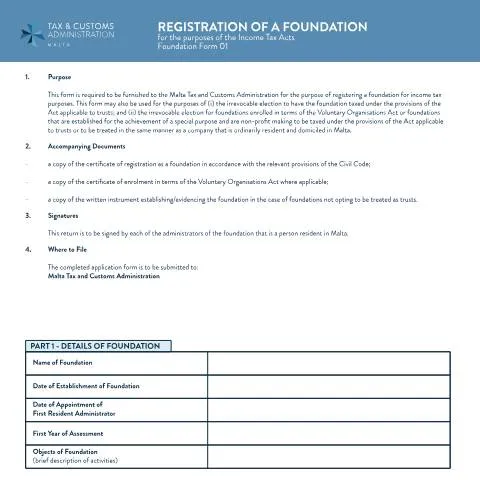
Understanding the Foundations Registration Process in Malta
Establishing a foundation in Malta represents a significant step for many individuals and organizations. This process is governed by specific regulations encapsulated in the Foundations Registration Form, a document critical to the legal formation of a foundation. Understanding the nuances of this form can facilitate a smoother registration process and ensure compliance with Maltese law.
Historical Context and Regulatory Framework
The origins of the foundations in Malta can be traced back to the enhanced legal framework introduced in recent years, aimed at promoting transparency and accountability in the non-profit sector. The Public Administration Act (Cap. 595 of the Laws of Malta) lays the groundwork for this process, establishing a legal basis that governs the functioning of foundations within the Maltese jurisdiction.
Foundations play a pivotal role in a variety of sectors, including philanthropy, education, and cultural preservation. The Maltese government has sought to create an environment conducive to the establishment of such entities, thereby also enhancing its image as a jurisdiction for international philanthropy and wealth management.
Key Distinctions: Foundations vs. Other Corporate Forms
In the landscape of corporate documentation in Malta, the Foundations Registration Form is often compared with other corporate forms such as limited liability companies or non-governmental organizations (NGOs). However, there are distinct differences:
- Purpose: While companies focus on profit generation, foundations primarily aim for charitable or non-profit objectives.
- Structure: Foundations do not have shareholders or owners; instead, they have beneficiaries and a council.
- Governance: The governance of a foundation is typically more flexible, allowing for a more tailored approach to management.
These distinctions clarify the purpose of the foundations registration form and its significance in paving the way for the establishment of legal entities aimed at social good.
The Precise Role of the Foundations Registration Form
At the heart of the registration process lies the Foundations Registration Form. This document does not merely serve as a bureaucratic tool; it encapsulates vital information that outlines the foundation’s objectives, structure, and governance. Completing this form is a prerequisite for the legal recognition of a foundation by the corporate_tax authority.
The registration process is more than just a formality; it ensures that the foundation's objectives align with Maltese law, particularly in relation to charitable activities, tax exemptions, and regulatory oversight.
Step-by-Step Journey: From Initiation to Decision
The registration process begins with several preparatory steps that must be carefully navigated:
- Preparation: Collect all necessary information regarding the foundation, including its mission, governance structure, and intended beneficiaries.
- Completion of the Form: Accurately filling out the Foundations Registration Form is critical. Each section must reflect the foundation’s objectives and operations.
- Submission: The form, once completed, should be submitted to the corporate_tax authority via the designated channels, ensuring that all required amendments and attachments are included.
- Review Process: The corporate_tax authority undertakes a thorough review of the application, which includes assessing the alignment of the foundation’s objectives with legal requirements.
- Approval or Rejection: Once the review is complete, a decision will be communicated regarding the foundation’s registration status.
This structured journey ensures that all aspects of the foundation are transparent and compliant with Maltese law, significantly impacting its future operations.
Diving into the Form: Essential Sections and Common Challenges
When approaching the Foundations Registration Form, it is imperative to understand the various sections and the information required. Below are key components of the form along with insights on potential pitfalls to avoid:
Section Breakdown
| Section | Required Information | Pitfalls to Avoid |
|---|---|---|
| Foundation Name | The full legal name of the foundation. | Ensure that the name is unique and does not resemble existing entities. |
| Objectives | A clear description of the foundation's purpose. | Avoid vague language; specificity enhances clarity. |
| Governance Structure | Details about council members and their roles. | Ensure that all members are adequately qualified as per Maltese law requirements. |
| Beneficiaries | Outline of intended beneficiaries or communities served. | Clearly define beneficiaries to avoid future discrepancies. |
Completing each section with accuracy is paramount. Misunderstandings or ambiguities can lead to delays or rejections in the registration process.
Administrative Processing: Navigating the Corporate_Tax Authority
Once the Foundations Registration Form is submitted, the role of the corporate_tax authority becomes central to the process. Their assessment involves a meticulous review, which can often raise questions or require clarifications from the applicant.
Maintaining clear and open communication with the authority is essential. Applicants should be prepared to respond promptly to any inquiries and provide additional documentation if requested.
Tracking Your Application Status
After submission, it is advisable to monitor the status of your application actively. The corporate_tax authority typically provides avenues for tracking its progress, which can include:
- Online Portals: Use the e-ID system to access your application status.
- Direct Contact: Engage with the authority directly via phone or email for updates.
Being proactive in tracking the status of your application can mitigate potential delays and enhance the responsiveness of the authority.
Implications of Registration: Legal and Financial Considerations
Registering a foundation in Malta not only grants the entity legal recognition but also opens doors to potential tax benefits and grants. Foundations, when properly registered, may qualify for various exemptions under the Maltese tax regime, particularly in relation to income generated from charitable activities.
Furthermore, the establishment of a foundation can enhance credibility and trust, especially in dealings with donors and beneficiaries. The formal recognition signals a commitment to governance, transparency, and accountability, which are essential in the non-profit sector.
The Future of Foundations in Malta: Emerging Trends and Resources
As the landscape of non-profit organizations and foundations continues to evolve in Malta, potential founders should stay informed about changes in legislation and administrative practices. The corporate_tax authority periodically issues guidelines and updates, which can significantly impact the registration and operational processes for foundations.
Engaging with local legal counsel and experts in corporate governance can provide valuable insights and ensure compliance with the latest regulations. Additionally, resources such as workshops and informational sessions hosted by the government can offer further clarity and support.
Conclusion: A Comprehensive Approach to Foundation Establishment
The journey to establishing a foundation in Malta, while multifaceted, is navigable with the right preparation and understanding of the Foundations Registration Form. By approaching the process with diligence and attention to detail, founders can contribute positively to the Maltese social fabric while enjoying the benefits associated with legally recognized charitable entities.
Understanding the Importance of the Foundations Registration Process in Malta
The foundations registration process in Malta is a significant administrative procedure that supports the establishment and governance of private foundations. These entities can play a crucial role in estate planning, philanthropy, and asset protection. When considering the formation of a foundation, understanding the specific requirements and implications of registration is essential. It not only ensures compliance with Maltese law, specifically the Civil Code of Malta, but also establishes a legal identity for the foundation, allowing it to operate within the regulatory framework.
Firstly, the importance of registering a foundation cannot be overstated. It affords the foundation legal recognition, allowing it to conduct activities such as holding property, engaging in financial transactions, and entering into contracts. Furthermore, the registration process guarantees transparency and accountability, as it helps to prevent misuse or fraudulent activities associated with unregistered entities. By adhering to the registration protocols set forth by the Authorities, including the Registrar of Foundations, the foundation can build credibility with potential stakeholders, beneficiaries, and the public.
Another critical aspect of the registration process is compliance with tax regulations. Foundations in Malta may benefit from various tax incentives, but these can only be accessed if the entity is formally registered. Consequently, it is paramount for founders to understand how the registration impacts their tax obligations and potential benefits. Engaging with a legal advisor or tax professional familiar with the nuances of Maltese law can provide invaluable insights into optimizing the foundation’s structure for fiscal efficiency.
Essential Documentation for Foundations Registration in Malta
When preparing to register a foundation in Malta, several essential documents must be gathered and submitted to ensure a smooth application process. These documents play a vital role in establishing the foundation's identity, purpose, and operational framework. Below is an overview of the key documentation typically required during the registration process.
Foundational Charter: This document outlines the foundation's purpose, objectives, and governance structure. It should detail the roles of the board members, the process for appointing and removing them, and other operational guidelines. The charter must be drafted in compliance with the provisions set out in the Civil Code of Malta, particularly those concerning foundations.
Identification Documents: Founders must provide valid identification, which includes a Maltese ID card (for residents) or a passport. This documentation ensures the Registrar can verify the identity of the founders and board members of the foundation.
Proof of Address: A document proving the residential address of the founders and board members, such as a utility bill or bank statement, must also be included. This is crucial for establishing the legitimacy of the individuals involved in the foundation.
Declaration of Intent: Founders may be required to submit a declaration outlining their intentions regarding the foundation. This document should clarify why the foundation is being established and highlight any social or philanthropic goals it aims to achieve.
Financial Statements: Depending on the size and scope of the foundation, preliminary financial projections or statements may be required. This allows the authorities to assess the foundation's fiscal viability and purpose.
Compliance with Financial Regulations: Detailed information regarding compliance with Maltese financial regulations, particularly concerning anti-money laundering (AML) and counter-terrorism financing (CTF), may be necessary. Foundations must demonstrate that they have mechanisms in place to prevent financial misconduct.
It is crucial for founders to ensure that all documentation is accurately completed and submitted to avoid delays in the registration process. The Authorities may require amendments or additional information, which could prolong the timeline for establishment. Therefore, meticulous preparation is essential.
Navigating Post-Registration Obligations for Foundations in Malta
Once a foundation has been successfully registered in Malta, it is essential to be aware of the ongoing obligations that accompany its operation. These requirements are established to ensure compliance with Maltese law and effective governance practices. Understanding these responsibilities is critical for the foundation's long-term sustainability and alignment with its stated objectives.
Annual Reporting: Registered foundations in Malta are typically required to submit annual reports to the Registrar. These reports must include financial statements detailing the foundation’s income and expenditures over the preceding year. Moreover, the report should outline any significant developments or changes in governance, activities, or strategic direction. Failure to present these reports can result in penalties or, in severe cases, revocation of the foundation’s registration.
Financial Audits: Depending on the size of the foundation and the nature of its activities, periodic financial audits may be required. Engaging an independent auditor helps maintain transparency and accountability, which are crucial for retaining public trust and meeting legal obligations. This is especially important for foundations that receive funding from external sources or engage in substantial financial activities.
Governance Reviews: Regular reviews of governance structures and practices are encouraged to ensure that the foundation operates effectively and in accordance with its charter. This involves assessing the performance of board members, reviewing governance policies, and making necessary adjustments to improve operational efficiency.
Compliance Training: Foundations should implement ongoing training programs for board members and employees to remain updated on compliance obligations, particularly concerning AML and CTF regulations. Understanding these frameworks is vital for reducing risks associated with financial misconduct.
Engagement with Beneficiaries: Active engagement with the foundation’s beneficiaries is essential for fulfilling its mission. This can involve regular communication, feedback mechanisms, and public reporting on the foundation’s impact. Establishing a feedback loop enhances the foundation's reputation and can inform future activities and funding decisions.
Review of Purpose and Objectives: The foundation should periodically assess its purpose and objectives to ensure they remain relevant and aligned with societal needs. Changes in the external environment, such as economic shifts or emerging social issues, may necessitate a reevaluation of the foundation’s focus and strategies.
By staying compliant with these post-registration obligations, foundations in Malta can ensure long-term viability, foster trust within their communities, and effectively pursue their philanthropic goals.