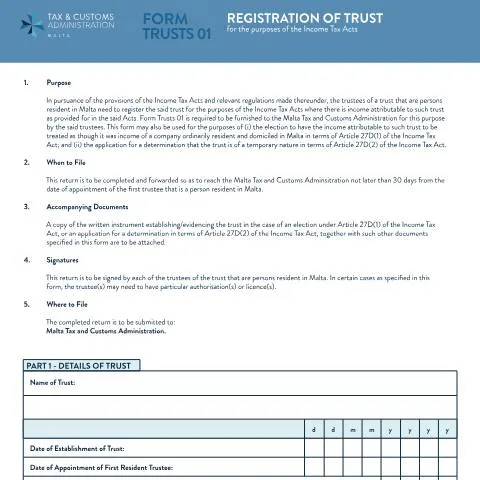
Understanding the Corporate Tax Registration Trust Form
The Corporate Tax Registration Trust Form serves as a pivotal document for entities operating within Malta's legal and economic framework. Particularly, it relates to the registration of trusts, which are increasingly being recognized as essential financial instruments for estate planning and asset management. Understanding the nuances of this form is crucial for stakeholders who wish to engage in trust-related activities.
Who Is Required to Submit the Registration Trust Form?
Individuals or entities looking to establish a trust within Malta must ensure that they complete and submit the Registration Trust Form as mandated by the Corporate Tax authorities. This requirement cuts across various profiles, including:
- Foreign Individuals and Entities: Non-residents wishing to register a trust in Malta must comply with the local regulations, ensuring that their application aligns with Maltese tax laws.
- Minors: When trusts involve minors, their legal guardians or parents must fill out the form on their behalf, providing additional documentation to verify their legal authority.
- Complex Situations: Scenarios involving multiple trustees, beneficiaries with diverse interests, or unique asset types may require detailed explanations and attachments.
- Urgent Registrations: In cases where time is critical, such as impending asset transfers or tax obligations, it may be beneficial to consult administrative guidelines on expedited processing.
Demystifying the Registration Trust Form: Key Sections
The design of the Registration Trust Form is not merely bureaucratic; it serves distinct purposes. Different sections are tailored to capture vital information regarding the trust being registered. Understanding these sections can facilitate a smoother application process.
- Trust Details: Here, applicants must provide comprehensive details about the trust, including its name, purpose, and the type of assets involved.
- Trustees’ Information: This section requires details about the appointed trustees, such as their identity, roles, and responsibilities within the trust framework.
- Beneficiary Information: Applicants must specify who will benefit from the trust, which is crucial for tax implications and legal recognition.
- Documentation Requirements: This part of the form outlines any additional documents that need to be submitted alongside the registration, including trust deeds or financial statements.
Completing the Registration Trust Form: Tips and Considerations
Filling out the Registration Trust Form isn’t merely a matter of providing information; it requires diligence and attention to detail. Here are some practical considerations to keep in mind:
Accuracy is Key
Double-check all entries for accuracy. Errors can lead to delays or rejections of your application. In particular, pay attention to:
- Legal Names: Ensure that all names are spelled correctly and match the corresponding identification documents.
- Asset Descriptions: Clearly describe all assets included in the trust to avoid ambiguity.
Documentation: What to Include
Alongside the completed form, various supporting documents must be included. Common requirements may include:
- Copy of the Trust Deed
- Identification documents for trustees and beneficiaries
- Proof of residence for foreign trustees
Always confirm the latest requirements with the Corporate Tax authorities, as these can change over time.
Submission Process: Where to Send Your Registration Trust Form
Once the Registration Trust Form is completed and accompanied by the necessary documents, it must be submitted to the relevant authority. In Malta, this typically involves:
- Online Submission: Utilizing the e-ID platform can streamline the submission process. Many forms can be lodged electronically.
- In-person Submission: Alternatively, you can visit the offices of the Corporate Tax department to submit the form physically. Ensure to make an appointment where necessary.
What Happens After Submission?
After the Registration Trust Form has been submitted, it enters a review process. Here’s what to expect:
- Processing Time: While the timeframe can vary, applicants should allow several weeks for the review process. It’s prudent to remain patient but proactive.
- Status Tracking: Many tax-related services provide a means to check the status of your application online using your e-ID. This can help you stay informed about any requirements for further information or clarifications.
Understanding the Implications: Rights and Obligations
Registering a trust brings a myriad of implications, both advantageous and obligatory. Applicants should be aware of the following:
- Tax Responsibilities: Depending on the assets held in trust, tax obligations may arise. Familiarize yourself with the associated tax rates and reporting requirements.
- Legal Obligations: The trustees are bound by legal responsibilities to manage the trust according to its terms and in the best interests of the beneficiaries.
- Potential for Changes: Should circumstances change (such as the addition of new beneficiaries or changes in asset types), further filings may be necessary to update the trust's registration.
Navigating Complex Situations: Special Considerations
Occasionally, applicants may find themselves in complex scenarios requiring unique attention. Some examples include:
- International Trusts: Trusts involving foreign elements may necessitate compliance with the laws of other jurisdictions as well. Legal counsel should be sought to navigate these waters.
- Trusts for Minors: Special regulations may apply when the beneficiaries of the trust are minors, including additional oversight and reporting requirements.
- Multiple Trustees: Trusts with multiple trustees may require unanimous decisions on management issues, which can complicate the registration and ongoing administration.
Final Thoughts on the Registration Trust Form
The Registration Trust Form is not just a formality but a significant step towards effective trust management within Malta's legal context. Proper understanding and completion of this document can pave the way for successful trust operation, ensuring compliance with Maltese regulations while safeguarding the interests of all parties involved. Engage with the Corporate Tax department for tailored advice and to stay abreast of changes that may affect your trust.
Understanding the Registration Process for Trusts in Malta
The registration of trusts in Malta is governed by the Trusts and Trustees Act (Cap. 331 of the Laws of Malta). Establishing a trust involves a clear understanding of the roles of the settlor, trustee, and beneficiary, as well as the legal implications of the trust deed. In Malta, the registration process is crucial to ensure that the trust operates within the legal framework, thus providing the necessary protections to the parties involved.
To register a trust, the applicant must complete the appropriate forms, which can be accessed online through e-ID. The key document is the trust deed, which outlines the terms and conditions of the trust, including details such as the name of the trust, the assets involved, and the identification of the parties. It's essential for the deed to be drafted in compliance with Maltese law, and it may be prudent to engage legal assistance to ensure all provisions are clear and enforceable.
Upon completion of the trust deed and the requisite forms (such as Form V for registration), these documents must be submitted to the Registry of Trusts under the Financial Services Authority. The registration fee applies, and the processing time typically varies based on the complexity of the trust. In some cases, additional documentation may be required, especially if the trust involves foreign assets or beneficiaries.
Once registered, the trust is provided with a registration number, which must be referenced in all future dealings. It's important to keep accurate records of all transactions and decisions made by trustees to safeguard against potential disputes and to ensure compliance with any tax obligations under Maltese law.
Tax Implications and Reporting Obligations for Trusts in Malta
In Malta, trusts are subject to specific tax regulations that can significantly influence their operation and the benefits they provide to beneficiaries. The taxation framework for trusts is primarily established under the Income Tax Act (Cap. 123 of the Laws of Malta), which outlines the tax liabilities applicable to income generated by the trust and distributions made to beneficiaries.
Trusts can be categorized as either transparent or opaque for tax purposes. A transparent trust means that the income is taxed in the hands of the beneficiaries, whereas an opaque trust is taxed as a separate entity. This distinction is vital, as it affects the overall tax liability and the strategy employed by the settlor when establishing the trust.
Moreover, trusts must adhere to reporting obligations, including the filing of annual tax returns. This involves declaring income earned by the trust and any distributions made to beneficiaries. The Malta Revenue Authority requires that annual returns be submitted electronically, typically by the 30th of June following the end of the financial year. Failure to comply with these obligations may result in financial penalties or additional scrutiny from tax authorities.
To optimize tax benefits, many individuals establish trusts as a means of estate planning. By structuring a trust efficiently, settlors can mitigate potential inheritance taxes and ensure a smoother transition of assets to the next generation. However, it's advisable to consult with a local tax advisor who is well-versed in Maltese tax law to navigate the complexities of trust taxation and ensure compliance with all legal requirements.
Common Challenges and Solutions in Trust Registration
Despite the clear framework for trust registration in Malta, individuals often encounter challenges during the process. One of the most common issues is misunderstanding the legal and administrative requirements, which can lead to incomplete applications or errors in documentation. These missteps can result in delays or even rejections of registration applications.
To circumvent these challenges, it is crucial to thoroughly familiarize oneself with the necessary forms and the requisite information before proceeding with the registration. Utilizing resources available on servizz.gov.mt can help clarify the requirements and provide insights into common pitfalls. Additionally, engaging a legal professional who specializes in trusts can be invaluable, as they offer guidance throughout the process and can ensure that all documentation is accurately completed and submitted.
Another challenge is dealing with cross-border trust issues, particularly if the settlor or beneficiaries are non-residents. Different jurisdictions may have varying regulations regarding trust taxation and registration. Therefore, understanding the implications of Maltese law alongside international standards is essential. It is often beneficial to consult with legal experts who have experience in both Maltese and international trust law to navigate these complexities effectively.
Finally, ensuring ongoing compliance post-registration is critical. Trusts must be actively managed and maintained to avoid any legal repercussions. This includes timely tax filings, transparent record-keeping, and adherence to the terms set forth in the trust deed. Regularly reviewing the trust's structure and operations with professional advisors can help ensure it remains compliant and continues to meet the objectives set by the settlor.