The Importance of the Affidavit for Business Entities in Tax Matters
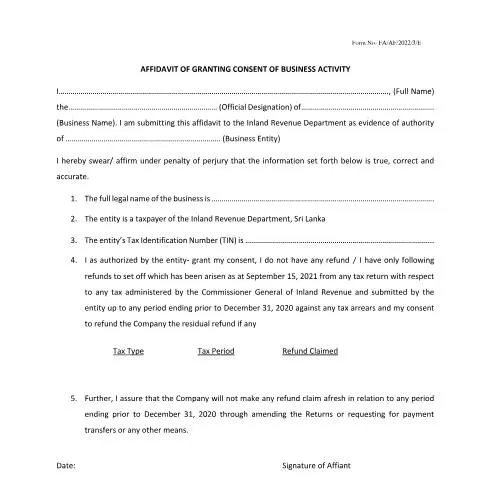
In the intricate web of tax compliance in Sri Lanka, the Affidavit - Business Entity serves a critical role. This document is not just another form; it is a formal declaration that embodies the taxpayer's commitment to transparency and compliance with the Inland Revenue Department (IRD). By executing this affidavit, authorized representatives affirm the legitimacy of the business's tax status while outlining any possible refunds against tax arrears.
Practical Implications for Business Owners
For business owners, filling out the Affidavit is more than a mere bureaucratic step. It opens the door to potential tax relief and clarifies the standing of any refund claims against outstanding tax liabilities. Specifically, it is essential for entities that have overpaid taxes or anticipate refund processes. Failure to complete this document accurately can lead to significant repercussions, including:
- Ineligibility for Refunds: If the affidavit is not submitted or is incorrectly filled out, the business may forfeit its right to receive refunds.
- Increased Tax Liabilities: Without proper documentation, businesses may face higher tax obligations due to a lack of evidence for tax overpayment.
- Legal Consequences: Misrepresentation or failure to disclose required information could potentially lead to penalties under Sri Lankan law.
The Affidavit Within the Bigger Picture of Tax Compliance
This affidavit functions as a cog in the larger machinery of tax compliance in Sri Lanka. It is intrinsically linked with various processes that taxpayers must navigate, including:
- Tax Return Filings: The affidavit supports the claims made in tax returns, especially regarding refunds.
- Tax Audits: It serves as proof of the taxpayer's assertions during audits, validating their refund claims and compliance efforts.
- Legal Framework: The affidavit is governed by regulations that dictate the processes surrounding tax administration, notably the Electronic Transaction Act and the principles of English common law.
Legislative Context and Importance
The Affidavit for Business Entities is underpinned by principles set forth in the Interpretation Ordinance and specific enactments tailored to tax administration. This legal framework ensures that businesses operate under a structure that mandates accountability and accuracy in reporting. The affidavit’s role in this context cannot be overstated; it is a legal tool that reinforces the integrity of the tax system in Sri Lanka.
Essential Elements of the Affidavit
Understanding the contents of the Affidavit is crucial for effective completion. Below is a breakdown of key sections that need to be addressed:
- Full Legal Name of the Business: This must be exact as per registration documents.
- Tax Identification Number (TIN): This unique identifier is essential for the IRD to track tax accounts.
- Consent Declaration: The authorized representative must clearly state the intent regarding refunds and tax liabilities.
- Signature of Affiant: The affidavit must be duly signed by the authorized individual, indicating commitment and truthfulness in the provided information.
Documentation and Preparation
To successfully navigate the affidavit submission process, businesses should prepare the following documentation:
- Tax Returns: Previous tax returns relevant to the refund claims must be accessible.
- Business Registration Documents: Proof of business registration to validate the legal name and authorized representatives.
- Identification: A copy of the National Identity Card (NIC) of the person signing the affidavit to confirm their authority.
Submission Channels: Navigating the Options
The Affidavit - Business Entity can be submitted through various channels, each with its own procedures and benefits:
| Submission Method | Description | Advantages |
|---|---|---|
| Online Submission | Via the official government portal for tax forms. | Faster processing times and the ability to track submission status. |
| In-Person Submission | At the local IRD office. | Opportunity to ask questions and clarify any doubts directly with officials. |
| Postal Submission | Mailing the completed affidavit to the designated IRD address. | Good for those who prefer traditional methods; however, it may take longer for processing. |
Online Submission Process
For those opting for online submission through forms.gov.lk, the process is streamlined:
- Access the site and navigate to the tax forms section.
- Select the Affidavit - Business Entity form.
- Input the required information accurately into the digital form.
- Submit the form electronically, ensuring to keep a copy for your records.
Critical Timelines and Next Steps
Understanding the timeline surrounding the affidavit is vital. Typically, businesses must submit this affidavit within a specific timeframe following the identification of overpaid taxes. The deadlines may vary, but generally, submissions should be made well before the tax year-end to ensure timely processing and to mitigate any potential compliance issues.
What to Expect After Submission
Once the affidavit is submitted, businesses can expect the following:
- Acknowledgment Receipt: Upon successful submission, an acknowledgment will be issued by the IRD.
- Review Period: The IRD will review the affidavit alongside the corresponding tax returns and documentation.
- Outcome Notification: Businesses will be informed of any refunds or additional tax liabilities arising from the review process.
Real-Life Scenarios: When to Utilize the Affidavit
Several scenarios necessitate the submission of the Affidavit - Business Entity:
- Post-Refund Assessment: If a business finds itself with overpaid taxes from prior periods, the affidavit is essential to set off those amounts against any outstanding tax liabilities.
- Change in Business Structure: When a business undergoes structural changes, such as mergers or acquisitions, the affidavit may be required to clarify tax obligations and refund claims.
- Tax Audits: During a tax audit, an affidavit may support claims made about overpayments and the intention to rectify any discrepancies.
Conclusion: The Significance of Due Diligence
The Affidavit - Business Entity is not merely a procedural obligation but an essential document that significantly influences a business's financial health and compliance status. Mastering its completion and submission is crucial for any entity operating in Sri Lanka. By understanding the implications, preparing adequate documentation, and adhering to the necessary timelines, businesses can navigate the complexities of tax compliance and safeguard their interests effectively.
Understanding the Types of Affidavits for Business Entities in Sri Lanka
In Sri Lanka, businesses may encounter various types of affidavits, each serving a distinct purpose in the realm of corporate governance and compliance. An affidavit is a written statement confirmed by oath or affirmation, used as evidence in legal proceedings. In a business context, the most common types of affidavits include:
- Affidavit of Incorporation: This affidavit serves to confirm that a business has been registered and incorporated according to the prevailing laws of Sri Lanka. It is essential for demonstrating the legitimacy of the business entity to banks, creditors, and potential investors.
- Affidavit of Compliance: This type of affidavit is often required by regulatory bodies to ensure that a business entity complies with industry-specific regulations and standards. It may be used during inspections or audits to validate that operational protocols align with legal requirements.
- Affidavit of Financial Status: This document is commonly requested by financial institutions when a business applies for loans or credit facilities. It includes declarations regarding the financial standing of the entity, including assets, liabilities, and profit margins.
Each affidavit must comply with the stipulations outlined in the Interpreter Ordinance and relevant sector-specific regulations. Understanding the specific requirements and implications of each type of affidavit is paramount for business entities seeking to maintain compliance and avoid legal complications.
The Process of Drafting an Affidavit for a Business Entity
Drafting an affidavit for a business entity in Sri Lanka is a meticulous process that involves several key steps. Whether an affidavit is being prepared for incorporation, compliance, or financial disclosure, the following guidelines can assist in creating a legally sound document:
- Title the Affidavit: Clearly title the document as an "Affidavit" followed by a brief descriptor (e.g., "Affidavit of Incorporation"). This establishes the nature and intent of the document from the outset.
- Introduction: Include an introductory statement identifying the affiant (the individual making the affidavit) and their position within the business entity. Use formal language to convey the professional context of the affidavit.
- Body of the Affidavit: This section should contain factual statements relevant to the purpose of the affidavit. Each statement must be clear, concise, and supported by evidence where applicable. Ensure that the statements are sequential and logical.
- Declaration of Truth: Conclude the body of the affidavit with a declaration affirming the truthfulness of the statements made. This typically reads, “I, [Name], do hereby declare under oath that the foregoing is true and correct to the best of my knowledge and belief.”
- Signature and Notarization: The affidavit must be signed in the presence of a qualified notary public or an authorized officer. Notarization is crucial as it adds an additional layer of authenticity and legal recognition to the document.
It is advisable to consult with legal counsel during the drafting process to ensure that the affidavit complies with all applicable laws and regulations in Sri Lanka. An accurately drafted affidavit not only serves its immediate purpose but also safeguards the entity against potential legal challenges in the future.
Common Mistakes to Avoid When Filing an Affidavit for a Business Entity
Filing an affidavit for a business entity is a process that requires careful attention to detail. Common mistakes can lead to delays, legal challenges, or even rejection of the document. Below are some pitfalls to avoid when preparing and filing an affidavit:
- Inaccurate Information: Providing false or misleading information in an affidavit can lead to severe legal repercussions, including fines or criminal charges. Always double-check facts, figures, and statements before submission.
- Lack of Proper Formatting: Ensure that the affidavit adheres to the proper formatting standards dictated by the authorities. This includes font size, spacing, and inclusion of any required headers or footers. Non-compliance can result in unnecessary complications.
- Failure to Notarize: Neglecting to have the affidavit notarized can result in it being considered invalid. Always ensure that the document is signed by both the affiant and a notary public or a designated official.
- Missing Supporting Documents: Depending on the type of affidavit, additional documentation may be required. Failing to include these documents can delay processing or lead to outright rejection of the affidavit. Ensure that all necessary attachments are provided.
- Not Understanding the Purpose: Each type of affidavit serves a specific purpose. Misunderstanding the intended use of the affidavit can lead to drafting errors. Take the time to thoroughly research the requirements for the specific affidavit being prepared.
Being vigilant about these common mistakes can enhance the efficiency of the affidavit filing process and ensure that your business entity remains compliant with Sri Lankan law. Properly prepared affidavits not only serve their intended legal purpose but also reflect positively on the professionalism of the business entity.