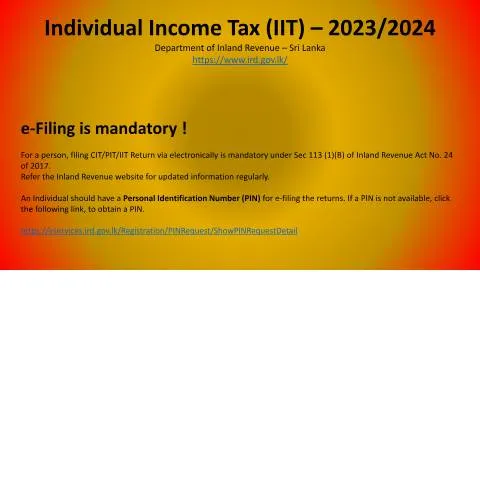
Navigating the Guide to File Individual Return of Income Online: A Comprehensive Overview
The Guide to File Individual Return of Income Online, a critical document issued by the Department of Inland Revenue in Sri Lanka, addresses the essentials of filing income tax returns electronically. As the regulatory landscape evolves, understanding the nuances of this guide becomes paramount for individuals aiming to comply with the Inland Revenue Act No. 24 of 2017, particularly under Section 113 (1)(B), which mandates electronic filing for certain taxpayers.
Understanding the Structure and Content of the Guide
This guide serves as a comprehensive resource for individuals seeking to file their Individual Income Tax (IIT) returns online. It delineates the procedural steps and prerequisites necessary to fulfill tax obligations effectively. Below are key sections typically covered:
- Eligibility Criteria: Outlines who must file an income tax return.
- Required Documentation: Details the identification and financial documents necessary for electronic filing.
- Login Process: An explanation of how to access the e-filing portal.
- Return Submission: Instructions on completing and submitting the return.
- Post-Submission Procedures: Guidance on what to do after submitting your return.
Eligibility Criteria Detailed
The eligibility criteria for e-filing IIT involves various income thresholds and conditions that individuals must meet. Notably, any individual whose income surpasses the stipulated exemption limit is required to file a return. This figure is subject to annual adjustments, so it is advisable to refer to the latest guidelines from the Department of Inland Revenue.
Interrelationships with Other Relevant Documents
A successful filing process doesn’t solely hinge on the Guide to File Individual Return of Income Online; it interconnects with several other critical documents:
- Tax Identification Number (TIN): Essential for all taxpayers, the TIN is required for logging into the e-filing system.
- Personal Identification Number (PIN): Mandatory for e-filing. If an individual lacks a PIN, they must follow specific instructions to obtain one.
- Supporting Financial Documents: This includes income statements, previous tax returns, and any relevant financial disclosures.
Understanding how these documents converge is vital for ensuring compliance and minimizing errors during the filing process.
Common Misinterpretations and Their Impacts
Misinterpretations of the guide can lead to unintentional non-compliance, which may result in penalties. Some prevalent misconceptions include:
- Assuming All Income Is Taxable: Not all income is taxable under Sri Lankan law; certain exemptions exist based on the nature of income.
- Underestimating Required Documentation: Many individuals may believe they can file with minimal documents; however, comprehensive documentation is crucial for accuracy.
- Overlooking Registration for IIT: If an individual is not properly registered for IIT, they will not find the option to file in the e-services portal.
Clarifying these points is essential to avoid unnecessary complications during the filing process.
Target Audience: Who Needs This Guide?
This guide is indispensable for several groups:
- Self-Employed Individuals: Those operating their businesses must ensure they report their income accurately.
- Employees with Additional Income Sources: Individuals who have income from various sources beyond their salary.
- New Tax Registrants: Those who are filing their returns for the first time, who may find the guide particularly useful.
Understanding the target audience allows for a more tailored approach to using the guide effectively.
Step-by-Step Guide to Leveraging the Document
Utilizing the Guide to File Individual Return of Income Online can be straightforward when broken down into systematic steps:
- Preparation: Gather all necessary documents, including your TIN and PIN.
- Accessing the E-Filing Portal: Use the link to the Inland Revenue Department website for log-in.
- Navigating to IIT Section: Under the Return/Schedule Management section, find the Individual Income Tax (IIT) option.
- Selecting the Tax Year: Ensure you choose the correct tax year, which for this guide is 2023/2024.
- Completing the Return: Carefully follow the on-screen prompts, ensuring all information is accurate.
- Submission: After reviewing your return, submit it via the portal. Ensure to keep a confirmation of your submission.
Following these steps will facilitate a smooth filing experience, enabling compliance with Sri Lankan tax laws.
Post-Submission Considerations and Responsibilities
After submitting your IIT return, there are several key responsibilities and considerations:
- Retaining Copies: Always keep copies of submitted returns and related documents for future reference.
- Monitoring for Communication: Be vigilant for any correspondence from the Department of Inland Revenue regarding your submission.
- Payment of Taxes Due: If your return indicates owing taxes, ensure timely payment to avoid penalties.
These post-submission tasks are vital in ensuring that your tax affairs are in order.
Conclusion: Maximizing the Use of the Guide
In essence, the Guide to File Individual Return of Income Online is more than just a set of instructions; it is a crucial tool for ensuring tax compliance in Sri Lanka. By understanding its contents, interrelations with other documents, and the procedural nuances, taxpayers can navigate the complexities of income tax filing with confidence. With an increasing push towards digital governance, embracing such resources will not only streamline individual tax processes but also contribute to the overall efficiency of the national tax system.
Understanding the Tax Residency Status in Sri Lanka
Before filing an Individual Return of Income online in Sri Lanka, it is crucial to understand your tax residency status, as it impacts your tax obligations. According to the Income Tax Act, a person is considered a tax resident if they meet one of the following criteria:
- A stay of 183 days or more during the previous year.
- A cumulative stay of 90 days or more during the previous year and 180 days or more during the preceding four years.
Non-residents are only taxed on Sri Lankan sourced income, while residents are taxed on their worldwide income. If you are uncertain about your residency status, it is advisable to consult a tax professional or the Department of Inland Revenue (DIR) for clarification. Accurately determining your residency status can prevent potential tax liabilities or penalties in the future.
Navigating Tax Deductions and Exemptions
When filing your Individual Return of Income online, it is essential to be aware of the various tax deductions and exemptions available to you. Tax deductions reduce your taxable income and can significantly lower your tax liability. Some common deductions include:
- Contributions to approved retirement funds.
- Education expenses for children.
- Medical expenses exceeding a specified threshold.
- Interest on housing loans.
In addition to deductions, certain income may be exempt from taxation altogether. Examples include:
- Income from dividends.
- Some categories of interest income.
To ensure you maximize your deductions and exemptions, it is recommended to keep thorough records of all relevant expenses and consult the latest guidelines published by the DIR or seek professional advice. Filing an accurate and comprehensive return not only ensures compliance with tax laws but also helps in optimizing your tax position.
Common Mistakes to Avoid When Filing Online
Filing your Individual Return of Income online can be a straightforward process if done correctly. However, several common pitfalls can lead to errors or delays in processing. Here are some mistakes to avoid:
- Incorrect Personal Information: Ensure that all personal details, such as your National Identity Card (NIC) number, name, and contact information, are accurately entered. Mismatches with official records can lead to rejections.
- Failing to Declare All Income Sources: It is imperative to report all sources of income, including salaries, freelance work, and investment earnings. Omitting income can result in penalties and interest on unpaid taxes.
- Neglecting to Save Drafts: While completing your online return, remember to save your progress. The online system may time out, leading to the loss of unsaved information.
- Ignoring Deadlines: Be aware of the filing deadlines set by the DIR to avoid late fees or penalties. Typically, the deadline for individual tax returns is 30th November of the assessment year.
By being mindful of these common mistakes and taking the necessary precautions, you can ensure a smoother filing process and reduce the risk of complications with your tax return.