Understanding the Taxpayer Charter: A Crucial Guide for Every Taxpayer
Navigating the complexities of the Indian tax system is no small feat. For taxpayers, understanding their rights and obligations is paramount, especially when completing forms such as the Taxpayer Charter. This charter not only outlines the expectations from the income tax department but also reinforces the responsibilities of taxpayers, ensuring a balanced and fair tax ecosystem.
Timeline of the Taxpayer Charter Submission Process
Timeliness is essential in tax compliance. The Taxpayer Charter must be adhered to from the beginning of the fiscal year, which runs from April to March. Here’s a breakdown of the timeline associated with the Taxpayer Charter:
- Start of Financial Year: April 1st marks the beginning of a new fiscal year. Taxpayers should familiarize themselves with the charter obligations and rights.
- Mid-Year Review: By September, taxpayers should review their compliance status according to the charter, ensuring that all submitted information is accurate and updated.
- End of Financial Year: By March 31st, all tax-related documents should be assessed and submitted. Compliance with the charter ensures that all obligations are met timely.
Channels of Submission: Online vs Paper vs In-person
Different submission channels exist for interacting with the income tax authorities regarding the Taxpayer Charter. Here’s a comparative overview:
| Channel | Pros | Cons |
|---|---|---|
| Online Submission |
|
|
| PAPER Submission |
|
|
| In-person Submission |
|
|
Special Cases: Navigating Unique Taxpayer Situations
Tax compliance isn't one-size-fits-all. Unique situations require special consideration under the Taxpayer Charter:
- Foreign Nationals: Foreigners earning income in India must comply with the charter, which includes obtaining a Permanent Account Number (PAN).
- Minors: Minors earning taxable income must have a guardian file on their behalf, ensuring adherence to the charter.
- Urgent Needs: In situations requiring immediate tax declarations, taxpayers can request expedited processing through designated channels.
Departmental Processing: What's Next After Submission?
Upon submission of the Taxpayer Charter, it is crucial to understand what happens next:
- The income tax authorities are mandated to process your submission within a time-bound manner, as per the charter.
- You can follow up on your submission through the online portal or by contacting the Taxpayer Charter Cell under the Principal Chief Commissioner of Income Tax.
- Tracking your submission is essential to ensure compliance and to address any issues that may arise promptly.
Rights and Responsibilities: What Every Taxpayer Should Know
Understanding your rights under the Taxpayer Charter is just as important as knowing your obligations:
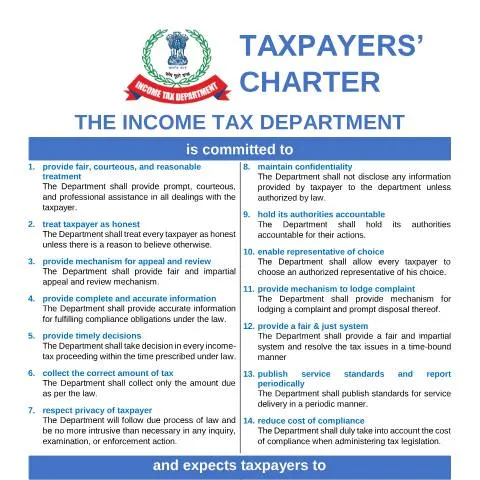
- Fair Treatment: Expect courteous and professional treatment from tax officials.
- Honesty Expectation: The tax department will assume you are honest until proven otherwise.
- Privacy and Confidentiality: Your information will be kept confidential, releasing it only when mandated by law.
- Right to Appeal: Should you disagree with any decisions made, you have the right to appeal.
Conversely, you are also expected to uphold certain responsibilities:
- Maintain accurate records of your financial transactions.
- Submit information in a timely manner to ensure compliance.
- Pay taxes owed within the prescribed time frame to avoid penalties.
Addressing Issues: What to Do in Case of Challenges
Even with the best preparations, challenges can arise during the tax process. Here’s how to effectively deal with them:
- In Case of Refusal: If your submission is rejected, promptly seek clarification from the tax department to understand the reasons.
- Missing Documents: If essential documentation is missing, provide proof of submission and prepare to offer the outstanding documents as soon as possible.
- Appeal Process: Utilize the appeal mechanism established by the tax authorities if you believe your case warrants a review.
Distinguishing the Taxpayer Charter from Other Tax Forms
To navigate the Indian income tax landscape successfully, it's crucial to differentiate the Taxpayer Charter from other official documents. Unlike forms that pertain directly to tax filings or assessments, the Taxpayer Charter serves as a guiding framework aimed at establishing the relationship between the taxpayer and the tax department. It is designed to:
- Outline taxpayer rights and duties in a clear format.
- Encourage compliance by informing taxpayers about the standards of service they can expect.
- Empower taxpayers to recognize their roles within the tax system.
Understanding this distinction can prevent confusion with other forms like Form 26AS, which relates specifically to tax credit details.
Conclusion: Empowering Yourself Through the Taxpayer Charter
By actively engaging with the Taxpayer Charter, you are taking a vital step towards responsible tax compliance. This charter not only reinforces your rights as a taxpayer but also clarifies your responsibilities, fostering a transparent relationship with the income tax department.
For further guidance, you may wish to consult the Taxpayer Charter Cell within your jurisdiction, ensuring that your voice is heard and your rights are protected. Understanding and adherence to this charter is essential for a smooth and compliant tax experience.
Understanding Your Rights as a Taxpayer Under the Taxpayer Charter
The Taxpayer Charter, introduced by the Central Board of Direct Taxes (CBDT), outlines the rights and duties of taxpayers in India. As a taxpayer, you have fundamental rights that are designed to ensure fair treatment and transparency throughout your interactions with the income tax department. Familiarizing yourself with these rights is essential for making informed decisions regarding your tax obligations.
Your Rights Explained
- Right to Fair Treatment: You are entitled to courteous and respectful treatment by tax officials. This right ensures that every taxpayer is treated equally, regardless of their financial standing or background.
- Right to Information: You have a right to receive clear and understandable information regarding your tax obligations, forms, and procedures. It is important to request clarification if any instructions are unclear.
- Right to Privacy: Your personal and financial information is confidential and should only be disclosed as mandated by law. The CBDT is responsible for upholding this confidentiality.
- Right to Representation: You can represent yourself or be represented by a tax professional in dealings with the income tax department. This right is crucial for ensuring that your voice is heard during disputes or clarifications.
- Right to Appeal: Should you disagree with any assessment or decision, you have the right to appeal the decision as per the prescribed procedures. This empowers you to challenge unfair decisions.
Practical Steps to Assert Your Rights
To effectively exercise your rights under the Taxpayer Charter, it is advisable to keep the following practical steps in mind:
- Documentation: Maintain thorough records of all your tax-related documents, including Form 16, income tax returns, and any correspondence with the tax office. This documentation can support your rights if disputes arise.
- Communication: Always communicate with the tax department through official channels. Utilize the Income Tax Department’s official website for authentic information and provide feedback or complaints if your rights are not respected.
- Seek Guidance: If you face challenges in understanding your rights or the tax processes, consult tax professionals or financial advisors. Their expertise can provide clarity and help you navigate complex situations.
The Importance of Taxpayer Duties: A Balance with Rights
While the Taxpayer Charter highlights your rights, it also enumerates your duties as a taxpayer. Understanding these duties is crucial for maintaining a constructive relationship with the tax authorities and ensuring compliance with the Indian tax laws.
Your Duties as a Taxpayer
- Filing Returns: You are obligated to file your income tax returns accurately and timely, usually by July 31 for individuals and October 31 for companies, for the financial year ending March 31. Failing to meet these deadlines can lead to penalties.
- Providing Accurate Information: It is your duty to provide complete and truthful information on your tax returns. Any attempt to mislead the authorities can result in severe penalties and even legal action.
- Cooperation with Tax Authorities: You must cooperate during assessments or audits by providing requested documents and information promptly. This cooperation helps the tax department resolve issues more efficiently.
- Maintaining Records: Keeping accurate and comprehensive records of your income, expenses, and deductions is not just a practical necessity, but also a legal requirement. These records should be maintained for at least six years from the end of the relevant assessment year.
The Balance Between Rights and Duties
Understanding your duties as a taxpayer ensures that your rights are protected. When taxpayers uphold their duties, the overall efficiency of the tax system improves, reducing the burden on both taxpayers and tax officials. This balance contributes to a more transparent and accountable tax administration, ultimately benefiting everyone in society.
Utilizing Digital Platforms for Enhanced Taxpayer Experience
In line with India’s National e-Governance Plan under the IT Act, 2000, the introduction and use of digital platforms have transformed the taxpayer experience significantly. The integration of technology within the tax administration system has made it easier for you to fulfill your obligations while exercising your rights. Understanding how to navigate these platforms can greatly enhance your experience.
Key Digital Services Available
- e-Filing of Income Tax Returns: You can file your income tax returns online through the Income Tax Department’s e-filing portal. The e-filing process is straightforward, and the portal provides facilities for various forms, including ITR-1 to ITR-7.
- Taxpayer Services on Mobile Apps: Various taxpayer services are available through mobile applications, including the ability to check your refund status, view your tax credit statement (Form 26AS), and more.
- Grievance Redressal Mechanism: The online grievance redressal system allows you to lodge complaints and track their status. This digital approach enhances responsiveness and accountability.
Maintaining Security and Privacy Online
While utilizing online platforms, safeguarding your personal and financial information must be a priority. Here are some best practices:
- Use Strong Passwords: Ensure that your login credentials for tax portals are secure. A strong password should include a mix of uppercase letters, lowercase letters, numbers, and special characters.
- Beware of Phishing Scams: Be cautious of unsolicited communications requesting personal information. Always verify the authenticity of any correspondence before acting on it.
- Utilize Two-Factor Authentication: If available, enable two-factor authentication on your tax accounts to add an extra layer of security against unauthorized access.
Embracing E-Governance for Better Compliance
The transition to digital platforms also aligns with the government’s vision of achieving better compliance through increased accessibility and transparency. Engaging with electronic systems can help streamline the tax process, providing you with timely updates and reducing the chances of errors.