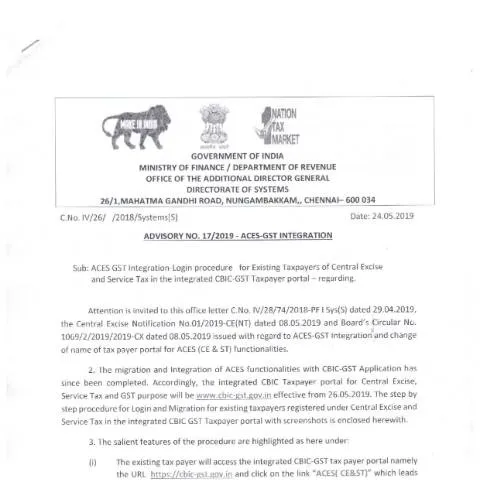
Navigating the Advisory 17 for Existing CE ST Taxpayers: A Comprehensive Guide
In the complex world of Goods and Services Tax (GST) in India, understanding the nuances of various advisory documents is critical for taxpayers. Advisory 17 dated 24th May 2019 specifically plays a crucial role for existing Central Excise Service Tax (CE ST) taxpayers who need to log into the GST portal. This document is not merely a routine procedural step; it is an essential tool that empowers taxpayers to manage their GST compliance efficiently.
Distinguishing Advisory 17: A Unique Component of GST Compliance
Advisory 17 stands apart from other forms and advisories related to GST compliance due to its specific focus on existing CE ST taxpayers. While many taxpayers might be familiar with filings such as GST returns, the advisory's distinct function is to assist individuals who have previously been registered under the Central Excise framework in transitioning smoothly into the new GST regime.
Key Differences from Other Forms
- Target Audience: Unlike forms aimed at new GST registrants, Advisory 17 is tailored for businesses transitioning from Central Excise to GST.
- Login Procedures: It provides specific instructions for accessing the GST portal, which are critical for maintaining compliance.
- Documentation Requirements: The advisory outlines unique documentation that might differ from those required for standard GST return filings.
Identifying the Stakeholders: Who Should Pay Attention?
The Advisory 17 is primarily aimed at existing CE ST taxpayers. However, understanding the nuances of who exactly falls under this category is essential for proper compliance.
Profiles of Affected Taxpayers
Taxpayers can be classified into several groups based on their business operations and compliance status:
- Manufacturers: Those engaged in the production of goods who were previously registered under the Central Excise Act.
- Service Providers: Businesses that provided taxable services and were registered for Service Tax.
- Small and Medium Enterprises (SMEs): Enterprises that may have special provisions applicable under GST which require careful navigation.
Sub-cases and Exceptions
It's important to note that certain exceptions may apply:
- Taxpayers with dual registrations (Central Excise and Service Tax) need to ensure that their transition is smooth and that they don’t miss critical steps outlined in Advisory 17.
- Businesses undergoing mergers or acquisitions may also need to re-evaluate their registration and compliance strategy in line with the advisory.
Special Considerations: Non-Residents and Unique Circumstances
Understanding the provisions for foreign entities and individuals in unique situations can often be a complex aspect of GST compliance. Advisory 17 addresses some of these situations:
Non-Resident Taxpayers
Foreign entities conducting business in India may need to comply with local GST regulations despite their non-resident status:
- Such entities often have to appoint a local representative for GST compliance.
- The process for non-resident taxpayers logging into the GST portal may vary, and they should consult local experts for guidance.
Complex Situations and Urgent Needs
In cases where taxpayers face hurdles such as technical issues with the GST portal or impending deadlines, the advisory serves as a guide to help navigate these problems efficiently.
- Individuals should maintain documentation of all communications and attempts to log in or submit required forms.
- In urgent situations, direct assistance from the GST helpdesk might be necessary to avoid compliance issues.
Understanding the Timeline: Critical Dates and Follow-ups
Time management is crucial when dealing with GST compliance, especially for existing CE ST taxpayers utilizing Advisory 17. Here’s a breakdown of the key timelines:
Submission Periods
It is essential to understand when you should be acting on the advisory:
- Advisory 17 typically provides specific timelines for logins and submissions that must be adhered to.
- Late submissions may lead to penalties, so being proactive is advisable.
Subsequent Procedures
After successfully logging in and complying with the advisory instructions, taxpayers should be aware of what comes next:
- Verification of your login status and compliance completion will typically follow shortly after submission.
- Stay alert for notifications from the GST portal regarding any additional requirements or confirmations needed.
Role of Advisory 17 in the Broader GST Framework
Advisory 17 serves a critical function in the larger scheme of GST compliance, particularly for transitioning taxpayers. Understanding this role can enhance your compliance strategy.
Integration with Other Compliance Obligations
Successfully logging in and adhering to the guidance of Advisory 17 is just the beginning. Here's how it fits into the wider compliance framework:
- It facilitates access to various compliance features on the GST portal, including filing returns and updating business information.
- Engaging with the advisory also helps in understanding the ongoing changes within GST regulations, keeping taxpayers informed and prepared.
Importance of Continuous Learning
Taxpayers should view Advisory 17 not just as a procedural document but as part of an ongoing learning experience:
- Regularly reviewing advisories and updates ensures that businesses remain compliant with the most recent GST developments.
- Attending workshops or webinars on GST compliance can further enhance understanding and application of such advisories.
Methods of Submission: Navigating Different Channels
When it comes to submitting your Advisory 17 compliance, understanding the channels available is vital.
Online vs. Offline Submission
While the GST portal predominantly facilitates online submissions, it's crucial to understand the nuances of each method:
| Method | Description | Advantages |
|---|---|---|
| Online Submission | Direct entry of information into the GST portal. | Speed, convenience, and immediate confirmation of receipt. |
| Paper Submission | Submitting printed documents at designated GST offices. | Useful for those who may lack internet access; physical records can be maintained. |
Considerations for Each Submission Type
When deciding on a submission method, consider the following:
- Online submissions typically have faster processing times.
- Paper submissions may require follow-up visits and can be subject to delays in processing.
Addressing Issues: What to Do When Challenges Arise
In the realm of GST compliance, challenges may arise during or after the submission of Advisory 17. Being proactive in addressing these issues is essential.
Steps to Take in Case of Rejection or Errors
If your submission is rejected or contains errors, follow these steps:
- Review the rejection notice carefully to understand the reason for non-acceptance.
- Make necessary corrections and prepare to resubmit, ensuring that all guidelines from the advisory are met.
- Engage with the GST helpdesk for clarifications if needed.
Handling Missing Documents
Sometimes, you may realize after submission that certain documents are missing:
- Check the advisory for any advice on missing documentation.
- Gather the required documents as soon as possible and prepare for a follow-up submission, if allowed.
Conclusion: The Path Forward
For existing CE ST taxpayers, Advisory 17 dated 24th May 2019 is more than just a document; it is a vital resource that facilitates a smoother transition into the GST framework. By understanding its role, navigating the complexities, and actively engaging with the necessary compliance processes, you can ensure that your business remains compliant and well-prepared for the evolving landscape of taxation in India.
Understanding the Implications of Advisory 17 Dated 24/05/2019 for Existing CE ST Taxpayers
Advisory 17 issued on May 24th, 2019, is a critical notification for existing Central Excise Service Tax (CE ST) taxpayers in India. It pertains to the transition from the older system of taxation to the Goods and Services Tax (GST) regime. This advisory outlines the necessary steps that CE ST taxpayers must follow to ensure compliance and seamless operation under the new GST framework.
One of the primary implications of Advisory 17 is the need for existing CE ST taxpayers to register under the GST system. This shift requires you to understand the nuances of the GST registration process. You must provide your existing CE ST registration details, along with your Permanent Account Number (PAN) and Aadhaar details when filling out Form GST REG-01. It's crucial to complete this step within the stipulated timeline to avoid penalties.
Additionally, the advisory emphasizes the importance of maintaining accurate records during the transition. You are encouraged to reconcile your previous CE ST records with your GST records. This includes ensuring that all invoices issued and received under the CE ST framework are accounted for in your GST returns, particularly in Form GSTR-1 for outward supplies and Form GSTR-3B for summary returns.
For businesses operating across multiple states, it is important to obtain separate GST registrations in each state where you are engaged in taxable activities. Be mindful that the GST system operates on a principle of destination-based consumption tax, which means that the state in which the goods or services are consumed will be the one to levy the tax.
Steps to Access the CE ST Taxpayer Login Post-Advisory Transition
In light of Advisory 17, accessing the CE ST taxpayer login has undergone significant changes. Here are the detailed steps you need to follow to log in successfully:
- Visit the official CBEC-GST portal: Navigate to the Central Board of Indirect Taxes and Customs (CBEC) GST portal. Ensure you have a stable internet connection to avoid session timeouts.
- Enter your credentials: Use your existing CE ST login credentials. If you have transitioned to GST, your login details might have changed. You may need to retrieve your login information using your registered email address or mobile number.
- Password Reset: If you encounter issues logging in, utilize the 'Forgot Password' feature to reset your password. Follow the prompts to receive a password reset link via your registered email.
- Navigating the Dashboard: Once logged in, familiarize yourself with the dashboard. Check the notifications for any updates or alerts relevant to your account. You will find options to file returns, make payments, and view your previous filings under the CE ST regime.
- File Necessary Returns: If you continue to have pending returns from the CE ST period, ensure they are filed promptly, as there may be implications for non-compliance.
Additionally, you are encouraged to utilize the resources available on the CBEC-GST portal, such as FAQs and user manuals, for a more comprehensive understanding of the transition process and how to manage your account effectively.
Consequences of Non-Compliance with Advisory 17
Failure to comply with the directives outlined in Advisory 17 can lead to several repercussions for CE ST taxpayers. These consequences can vary widely, depending on the nature of the non-compliance.
Firstly, if you do not register under the GST framework by the specified deadline, you might face penalties. The penalty for failing to obtain GST registration can be equal to the amount of tax evaded or ₹10,000, whichever is higher. This penalty underscores the importance of timely action in adhering to the advisory's requirements.
Moreover, non-compliance could result in the inability to claim input tax credit (ITC) on goods and services purchased before the transition. You must ensure that all eligible credits are availed before shifting to the GST regime. The loss of ITC can severely impact your cash flow and overall business profitability.
In addition to financial penalties, persistent non-compliance might lead to increased scrutiny from tax authorities. You may be subjected to audits or investigations, which can be time-consuming and costly. It's crucial to maintain transparency and compliance to avoid such situations.
Lastly, non-compliance could tarnish your reputation in the market. Trust and credibility are key components of a successful business, and any lapses in tax compliance can affect your standing with clients, suppliers, and other stakeholders.
To mitigate these risks, it's advisable to consult with a tax professional who can provide tailored guidance based on your specific situation and ensure that you remain compliant with the evolving tax landscape in India.