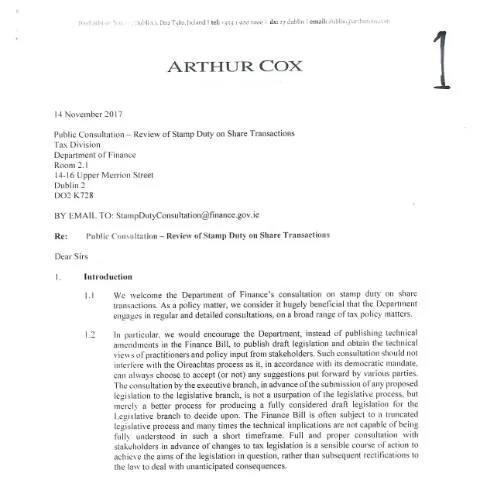
Understanding the Role of Stamp Duty in Irish Financial Markets
The recent public consultation initiated by the Department of Finance regarding the application of stamp duty to share transactions has ignited significant discourse among stakeholders. Stamp duty, a tax levied on certain transactions, is a critical component of Ireland’s taxation framework, particularly in the context of share transactions involving Irish incorporated companies.
Participants in the Consultation Process
Various stakeholders are invited to submit their views, including financial institutions, legal experts, and corporate entities. These submissions provide valuable insights into the implications of stamp duty on share transactions.
- Financial institutions analyze the impact on market liquidity.
- Legal professionals assess compliance and potential regulatory changes.
- Corporate entities evaluate how these duties affect their operational costs.
Who Should Submit?
Entities involved in share transactions, including investment firms and companies with shares listed on the Irish Stock Exchange, are encouraged to participate. This is an opportunity for them to voice concerns or support regarding the current structure of stamp duty and its impact on their business operations.
Breaking Down the Submission Process
The submission process for this consultation involves various channels through which stakeholders can express their views. Understanding these channels is crucial for effective participation.
Online Submission
Submissions can be made through email at [email protected]. This method allows for a broader reach and easier accessibility for participants unable to submit paperwork by traditional means.
Paper Submission
Alternatively, stakeholders may opt for a paper submission. This method typically involves mailing documents directly to the Department of Finance. While it offers a tangible approach, it may be slower than online options, potentially delaying responses.
In-Person Consultation
Some stakeholders may prefer engaging in face-to-face discussions during organized public hearings. This interactive format allows for immediate feedback and clarification of complex issues surrounding stamp duty legislation.
The Significance of Stamp Duty in the Broader Tax Framework
Stamp duty has been a longstanding fixture in Ireland’s tax legislation, with roots tracing back to the 1600s. Its role has evolved, but it remains a critical revenue stream for the government.
Historical Context
Initially introduced as a means to raise revenue for the state, the reasons for imposing stamp duty have transformed. With the rise of international business and the European Union's influence, the relevance of stamp duty in the context of global financial markets is now under scrutiny.
Current Legislative Framework
The Taxes Consolidation Act 1997 governs stamp duty regulations. It specifies the conditions under which stamp duty is applied to share transactions, including definitions of “Irish situated property” and exemptions that have been introduced over the years.
Detailed Examination of Submission Content
When completing submissions, it's essential to address various key areas outlined by the Department of Finance, ensuring clarity and comprehensiveness in responses.
Key Sections of the Submission
- Introduction: Briefly state the purpose of the submission and the issues you aim to address.
- Analysis of Stamp Duty: Provide insights into how stamp duty affects share transactions, including economic implications.
- Recommendations for Reform: Offer practical suggestions for changes to the current stamp duty framework.
- Conclusion: Summarize your position and emphasize the significance of the recommendations made.
Avoiding Common Pitfalls
Attention to detail is critical when preparing submissions. Common pitfalls include:
- Failure to clearly articulate the impact of stamp duty on specific sectors.
- Omitting supporting data or evidence to back claims.
- Neglecting to address potential alternative revenue sources as solutions.
Understanding Exemptions and Special Cases
The intricacies of stamp duty exemption criteria can be challenging. Certain transactions, particularly involving non-Irish companies or cross-border shares, may not be subject to the same duties as those involving Irish incorporated firms.
Special Situations
Entities operating in unique circumstances, such as multinational corporations, must pay close attention to how stamp duty applies to their transactions. Examples of special cases include:
- Foreign companies issuing shares that "relate to" Irish property may still incur stamp duty.
- Transactions involving bonds may be exempt under specific conditions.
Processing and Follow-Up on Submissions
Once the consultation period concludes, submissions will be reviewed, and stakeholders will receive feedback. Understanding the processing timeline is essential for those invested in the outcomes.
Anticipated Timelines
| Action | Timeline |
|---|---|
| Submission Deadline | Typically 4-6 weeks post-announcement |
| Review Period | 2-3 months |
| Publication of Results | Approximately 1 month after the review |
Tracking Submission Status
Stakeholders may follow up on the status of their submissions through direct communication with the Department of Finance. Regular updates may also be provided through official channels.
Conclusion: The Future of Stamp Duty in Ireland
The ongoing consultation reflects a broader reevaluation of tax structures in Ireland. As stakeholders contribute their perspectives, the potential for transformative changes in the application of stamp duty is tangible. For companies engaged in share transactions, staying informed and actively participating in the consultation process will be crucial in shaping the future landscape of Irish taxation.
Understanding Stamp Duty in the Context of Marketable Securities
Stamp duty is a significant aspect of financial transactions in Ireland, particularly affecting the buying and selling of marketable securities in incorporated companies. It is essential to understand how stamp duty applies to these transactions to navigate the complexities of compliance and financial implications effectively.
Stamp duty is levied on instruments executed in Ireland, and it primarily affects shares in companies, including Irish incorporated entities. As per the Finance Act 2019, the stamp duty rate on the transfer of shares is set at 1% of the consideration paid. However, transactions involving certain types of shares, such as those traded on a stock exchange, may have different considerations.
When assessing the application of stamp duty to marketable securities, it is crucial to consider the multiple dimensions of the transaction:
Types of Securities: Different classifications of securities can influence the stamp duty implications. For instance, the nature of the securities being traded (ordinary shares, preference shares, etc.) can affect the evaluation of transaction value.
Exemptions and Reliefs: Some transactions may qualify for exemptions or reliefs under the provisions of the Taxes Consolidation Act 1997, specifically sections that deal with corporate reorganisations or transfers between associated companies. Understanding these nuances can provide potential financial relief for businesses and investors.
Reporting Requirements: When making a submission regarding the application of stamp duty, stakeholders must be cognizant of the reporting obligations to the Revenue Commissioners. Detailed records must be maintained to substantiate the transaction values and comply with the self-assessment framework laid out in the relevant tax legislation.
In the context of the review of stamp duty applications, it is pertinent for stakeholders to evaluate how current practices align with international standards and trends, particularly how other jurisdictions structure their taxation of financial transactions involving stocks and securities.
The Impact of Stamp Duty on Investment Decisions
The implications of stamp duty extend beyond compliance and into the realm of strategic investment decision-making. Investors and corporations must take into account how the cost of stamp duty affects the overall profitability and attractiveness of investments in Irish incorporated companies.
Cost-Benefit Analysis: Investors often conduct a thorough cost-benefit analysis when considering an investment. The 1% stamp duty can significantly impact lower-margin investments or smaller transactions. In this regard, potential investors may reassess their investment strategies based on the cumulative costs of stamp duty and other transaction-related expenses.
Market Perception: The application of stamp duty on securities can influence market sentiment. High transaction costs associated with stamp duty may deter foreign investments, leading to a potential decrease in market liquidity for Irish stocks. Stakeholders are encouraged to consider how a more nuanced approach to stamp duty might enhance the attractiveness of Irish markets for both domestic and international investors.
Long-Term Planning for Corporations: For corporations, understanding the implications of stamp duty is essential for long-term financial planning. Companies may need to strategize on issuance and transfer of shares, ensuring they are well-informed about the tax liabilities and potential for exemptions, which could affect capital-raising efforts.
By understanding the implications stamp duty has on investment decisions, submissions to the consultation process can be more nuanced and tailored to advocate for changes that could benefit the broader economic landscape in Ireland.
Stakeholder Engagement and the Consultation Process
Effective engagement with stakeholders is a critical component of the consultation process regarding the review of the application of stamp duty to stocks and marketable securities. Active participation can shape the future of taxation policy in this area.
Identifying Key Stakeholders: Stakeholders can include corporate entities, financial institutions, tax advisors, and individual investors. Each of these groups has a unique perspective on how stamp duty impacts their operations or investment decisions. Engaging them is essential to garner diverse insights that could influence policy adjustments.
Conducting Surveys and Workshops: The Department of Finance may facilitate surveys or workshops to collect qualitative and quantitative data from stakeholders. These forums can provide a platform for open dialogue, allowing stakeholders to present their concerns, suggestions, and experiences regarding the application of stamp duty.
Feedback Mechanisms: Establishing clear feedback mechanisms will ensure that stakeholder contributions are valued and considered. A transparent process where inputs are acknowledged can enhance trust in the consultation process.
Continuous Engagement Beyond the Consultation: It is vital to maintain engagement with stakeholders even after the conclusion of the consultation phase. Continuous dialogue can lead to better implementation of changes and foster a collaborative environment for future revisions of tax policy.
In summary, engaging with stakeholders effectively throughout the consultation process is paramount for achieving a balanced and comprehensive review of the application of stamp duty to stocks and marketable securities. By fostering an inclusive environment, policymakers can ensure that the revised policies serve the interests of all parties involved.