Understanding the Residential Tenancy Agreement Template in Ireland
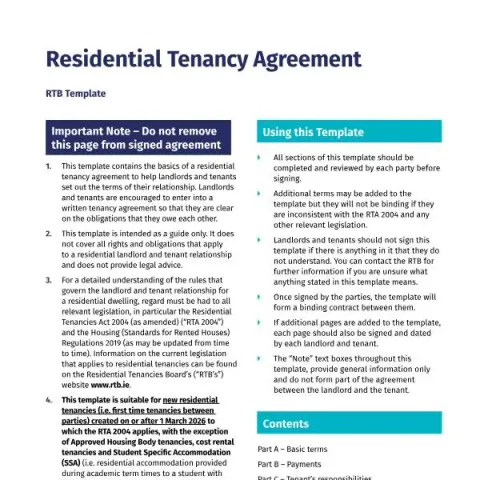
The Residential Tenancy Agreement template provided by the Residential Tenancies Board (RTB) serves as a fundamental document for landlords and tenants entering into a rental contract for a residential property. It aims to clarify the rights and obligations of both parties, ensuring a transparent and legally compliant relationship under Irish law.
What is the Purpose of this Agreement?
This template acts as a guide to outline the essential terms of a tenancy, including details about the rented dwelling, payment conditions, responsibilities, and procedures for ending the tenancy. While it is not a legally binding lease on its own, once completed and signed by both parties, it forms the basis of a binding contract enforceable under the Residential Tenancies Act 2004 (as amended).
Who Should Use this Template?
The agreement is suitable for new residential tenancies created on or after 1 March 2026, where the Residential Tenancies Act 2004 applies. It is intended for standard private rental arrangements, excluding certain types such as approved housing body tenancies, cost rental tenancies, and student-specific accommodation. Both landlords and tenants are encouraged to use this template to ensure clarity and compliance from the outset of their tenancy.
How to Complete the Agreement
1. Basic Terms
The agreement begins with identifying the parties involved:
- Landlord: The person or entity renting out the property, including their full name, contact details, and CRO (Companies Registration Office) number if applicable.
- Tenant: The individual(s) renting the property, with their full name(s) and contact details.
2. Details of the Rented Property
It is important to specify the address of the dwelling, including the Eircode and the registered tenancy number if available. This ensures clarity on which property the agreement pertains to.
3. Payment Terms
Part B of the template covers rent details, including the amount payable, payment intervals, and methods. It is essential to specify the rent amount and ensure both parties agree on payment procedures.
4. Responsibilities and Additional Terms
The agreement also includes sections on tenant responsibilities (such as maintaining the property and paying rent on time) and landlord responsibilities (like ensuring the property meets legal standards). Additional terms can be added but must be consistent with legislation.
Documents to Prepare and Attach
While the template itself does not specify supporting documents, landlords and tenants should ensure they have:
- Proof of identity (e.g., passport or driver’s license).
- Proof of address or previous rental references.
- Details of rent payments and deposits, if applicable.
Where and How to Finalize the Agreement
The completed agreement should be signed and dated by both parties before the commencement of the tenancy. It is advisable to keep copies for future reference. The landlord must also register the tenancy with the RTB within one month of its start date and provide the tenant with the relevant details, including the rent setting notice.
Fill in your form directly online
No printing: type your details into the boxes of the official form, tick, then download the PDF ready to send.
- 1Type into the form boxes
- 2Tick in one click
- 3Save and download the PDF
Common Errors to Avoid
Tenants and landlords should be cautious to avoid:
- Leaving sections incomplete or ambiguous, which could lead to disputes.
- Failing to sign and date the agreement properly.
- Neglecting to register the tenancy with the RTB, which is a legal requirement.
- Adding inconsistent or illegal terms that conflict with the Residential Tenancies Act 2004.
Legal Considerations
This template is a guide and does not replace legal advice. For a comprehensive understanding of the rights and obligations under Irish law, parties should refer to the Residential Tenancies Act 2004 and related regulations, available on the RTB website. The RTB does not accept responsibility for inaccuracies or omissions in this template, so legal consultation is recommended for complex situations.
Conclusion
Using the RTB’s Residential Tenancy Agreement template ensures that both landlords and tenants have a clear, legally compliant document outlining their relationship. Proper completion, signing, and registration are essential steps to protect both parties and promote a smooth tenancy experience in Ireland.