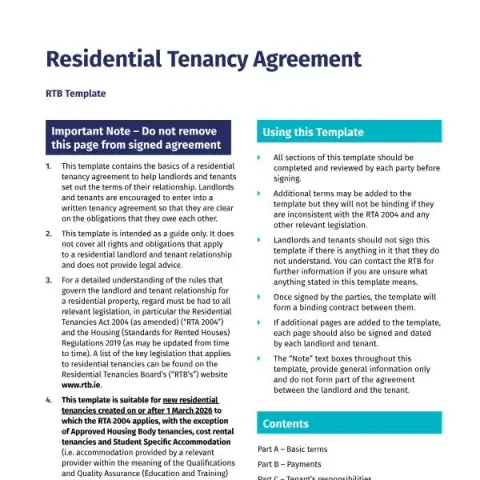
Understanding the Residential Tenancy Agreement RTB Template in Ireland
The Residential Tenancy Agreement RTB Template is an official document provided by the Residential Tenancies Board (RTB) designed to help landlords and tenants establish clear and legally compliant rental arrangements for residential properties in Ireland. This template serves as a guide to draft a written tenancy agreement, which is highly encouraged by the RTB to ensure transparency and mutual understanding between both parties.
Purpose and Importance of the RTB Template
The primary purpose of this template is to set out the essential terms of a tenancy, including the rights and obligations of both landlords and tenants. While it is not a legally binding contract on its own, once completed and signed, it forms the basis of a binding agreement under Irish law. Using this template helps prevent misunderstandings and disputes by clearly documenting key details such as rent, duration, responsibilities, and other conditions.
Who Should Use This Template?
This template is suitable for landlords and tenants entering into a new residential tenancy from 1 March 2026 onwards, where the Residential Tenancies Act 2004 (as amended) applies. It is particularly relevant for standard private lettings, excluding certain types such as Approved Housing Body tenancies, cost rental tenancies, and student-specific accommodations provided by authorized providers. Both parties are encouraged to review the document thoroughly before signing to ensure mutual understanding.
How to Complete the RTB Template
Part A – Basic Terms
- Agreement Details: Confirm the start date, property address, and registration number with the RTB if available.
- Parties Involved: Fill in the full names and contact details of the landlord(s) and tenant(s). For multiple landlords or tenants, additional pages can be attached.
- Property Details: Specify the property's address and Eircode, ensuring accuracy for official records.
Part B – Payments
Outline the rent amount, payment frequency, and deposit details. It is important to specify how and when payments should be made and any conditions regarding rent increases or deductions.
Part C & D – Responsibilities
Detail the tenant's responsibilities (such as maintaining the property and adhering to house rules) and the landlord's obligations (like repairs and maintenance). Clear delineation of responsibilities helps prevent conflicts during the tenancy.
Part E – Additional Terms and Part F – Termination
Include any extra conditions agreed upon and procedures for ending the tenancy, including notice periods and conditions for deposit refund.
Completing and Signing the Agreement
Both parties should carefully review each section of the completed template before signing. It is advisable to sign and date each page if additional pages are attached. Once signed, the document becomes a legally binding tenancy agreement, and both parties should retain copies for their records.
Fill in your form directly online
No printing: type your details into the boxes of the official form, tick, then download the PDF ready to send.
- 1Type into the form boxes
- 2Tick in one click
- 3Save and download the PDF
Where and How to Submit the RTB Template
While the template itself does not require submission to the RTB at the outset, landlords must register the tenancy with the RTB within one month of its commencement. This registration can be completed online via the RTB's MyRTB portal or through other designated channels. Additionally, landlords are obliged to provide the tenant with a rent setting form at the start of the tenancy and to keep records of payments and agreements.
Common Errors to Avoid When Using the RTB Template
- Incomplete Information: Ensure all sections are filled out accurately, including contact details and property specifics.
- Inconsistent Terms: Avoid conflicting clauses or additional terms that contradict legislation such as the RTA 2004.
- Unclear Responsibilities: Be precise about maintenance obligations and payment procedures to prevent disputes.
- Failure to Register: Remember to register the tenancy with the RTB within the legal timeframe.
Legal Context and Further Guidance
This template reflects the law as of 1 March 2026. It is designed to be a practical guide but does not replace legal advice. For comprehensive understanding, refer to all relevant legislation, particularly the Residential Tenancies Act 2004 (as amended) and the Housing (Standards for Rented Houses) Regulations 2019. The RTB website offers additional resources and updates to ensure compliance with current legal standards.