Understanding the Residential Tenancies Board Notice of Rent Setting Form
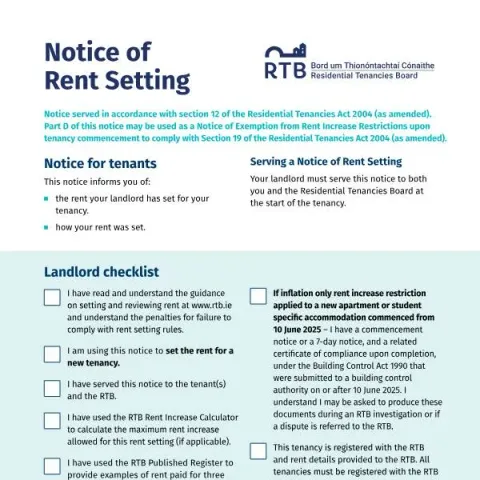
The Notice of Rent Setting Form is an official document used in Ireland to communicate changes in rent to tenants, in accordance with section 12 of the Residential Tenancies Act 2004 (as amended). This form is essential for landlords to formally notify tenants of the rent amount, how it was determined, and any applicable exemptions from rent increase restrictions. It also serves as a record for the Residential Tenancies Board (RTB), Ireland’s regulator for rental agreements.
Who Must Fill Out the Notice of Rent Setting Form?
This form is primarily completed by landlords or their agents when setting or adjusting the rent for a tenancy. It is mandatory to serve this notice at the start of a new tenancy or when a rent increase occurs during an existing tenancy. Additionally, landlords claiming an exemption from rent increase restrictions—such as rent caps or inflation-based increases—must complete specific sections of the form, notably Part D, and provide supporting evidence.
How to Complete the Notice of Rent Setting Form
Part A: Tenancy Details
- Tenancy type: Indicate whether the tenancy is private, student-specific, or another type.
- Address and identifiers: Provide the full dwelling address, Eircode, and RT (Residential Tenancy) numbers if available.
- Rent details: Record the previous and current rent amounts, along with the dates these rents were set.
- Tenancy start date: Specify when the tenancy commenced.
- Floor area and BER: Include the dwelling's floor area in square meters and the Building Energy Rating (BER), where applicable.
Part B: Details of the New Rent
In this section, the landlord must specify the new rent amount, the date the notice is signed, and whether a rent increase is capped or exempt. If a rent increase is capped, the RTB Rent Increase Calculator should be used to determine the maximum allowable increase. For exemptions, Part D must be completed, and relevant documentation attached.
Part C: Comparable Dwellings and Market Rent
This section requires the landlord to provide rent information for three comparable properties, based on the RTB’s published register. The landlord must confirm that the new rent aligns with the market rent for similar dwellings, considering size, type, and location. The reasons for no recent tenancy or substantial changes to the dwelling should also be indicated if applicable.
Key Considerations When Filling Out the Form
- Accuracy: Ensure all details, including dates, rent amounts, and property specifics, are correct. Incorrect information can lead to disputes or penalties.
- Supporting Documentation: When claiming an exemption from rent increase restrictions, supporting evidence must be attached, such as certificates or notices from relevant authorities.
- Timely Service: The notice must be served to the tenant and submitted to the RTB at the start of the tenancy or before implementing a rent increase.
Where and How to Submit the Form
The completed Notice of Rent Setting Form must be served directly to the tenant(s) and also submitted electronically or by post to the Residential Tenancies Board. It is important to keep a copy of the served notice for your records. For online submission, landlords can use the RTB's online portal through MyGovID or ROS (Revenue Online Service).
Fill in your form directly online
No printing: type your details into the boxes of the official form, tick, then download the PDF ready to send.
- 1Type into the form boxes
- 2Tick in one click
- 3Save and download the PDF
Common Errors to Avoid
- Omitting required sections: Failing to complete parts related to exemptions or rent calculations can delay processing or invalidate the notice.
- Incorrect rent figures: Using outdated or incorrect rent amounts can lead to disputes or penalties.
- Serving notice late: Notices must be served at the appropriate time—either at tenancy commencement or before a rent increase—otherwise, they may not be valid.
Conclusion
The Notice of Rent Setting Form is a vital tool for ensuring transparency and compliance with Ireland's rental regulations. Proper completion and timely service help prevent disputes and ensure that rent adjustments are legally valid. Landlords should familiarize themselves with the RTB guidance and use available online tools, such as the Rent Increase Calculator, to assist in accurately completing this form.