Understanding the Cork City Council Flood Defence Works Application
The Cork City Council's planning application for flood defence works is a significant document that plays a crucial role in the enhancement and protection of the river quaysides in Cork. This application, specifically known for its inclusion of comments from conservation architects, serves a multifaceted purpose that goes beyond mere administrative compliance. By embedding historical context and environmental considerations into urban planning, this document becomes a pivotal tool for achieving sustainable urban development while safeguarding the city’s heritage.
The Impetus Behind the Application
Urban areas are increasingly vulnerable to flooding due to climate change, necessitating comprehensive flood defence systems. The Cork City Council has recognized the urgent need to bolster its flood resilience, particularly around Morrison’s Island. The planning application not only addresses the physical infrastructure required for flood defence but also acknowledges the historical and cultural significance of the area. By integrating modern design approaches with conservation principles, this initiative aims to enhance the overall environment while providing necessary protection.
Architectural Insights and Conservation Considerations
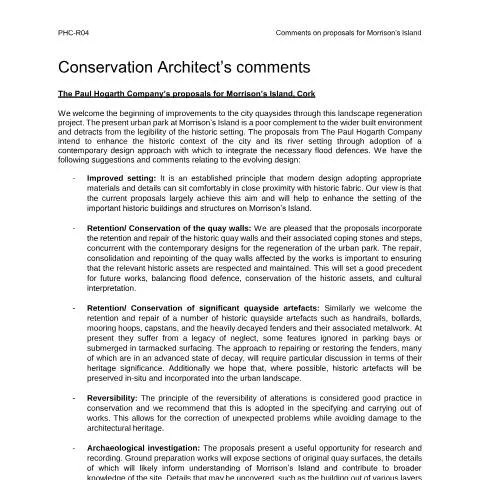
One of the noteworthy aspects of this application is the involvement of conservation architects who assess the proposed designs and offer constructive feedback. The comments made by The Paul Hogarth Company emphasize the importance of respecting and retaining the historic quay walls and artefacts, which are integral parts of Cork’s heritage.
- Enhancing Historical Context: The application advocates for a design that marries contemporary aesthetics with the historical fabric of the city, suggesting that modern elements can coexist harmoniously with older structures.
- Retention of Historic Features: Key historical features, such as quay walls and artefacts, must be preserved. This not only protects the physical elements but also retains the cultural memory encapsulated by these structures.
- Reversibility Principle: The feedback stresses the importance of reversibility in alterations. This principle allows future restoration if unforeseen issues arise, thereby protecting the integrity of Cork’s historical architecture.
A Step-by-Step Journey Through the Application Process
Understanding the application process for flood defence works in Cork requires familiarity with several key stages. Each phase of this journey has specific requirements and timelines that stakeholders must follow to ensure efficient processing.
- Proposal Development: Initially, the project team drafts the proposal, which outlines the intended flood defence works and integrates feedback from various stakeholders, including conservation architects.
- Submission of Application: Once the proposal is finalized, it is submitted to the Cork City Council for review. This application includes detailed plans, environmental assessments, and historical analyses.
- Public Consultation: Following the submission, the council organizes a public consultation phase, allowing community members to voice their opinions and concerns regarding the proposed works.
- Review by Regulatory Bodies: The council then forwards the application to relevant regulatory bodies, including the Department of Housing, Local Government and Heritage, for further examination.
- Decision Issuance: After thorough assessment and possible revisions based on feedback, a decision is issued. This could result in approval, modification, or rejection of the application.
- Implementation: If approved, the project moves into the implementation phase, where construction begins under the oversight of conservation standards set forth during the application review.
Navigating Potential Challenges in the Process
Throughout the lifecycle of this planning application, stakeholders may encounter challenges that require proactive management. Understanding these potential hurdles can significantly influence the success of the application.
Addressing Refusals and Modifications
In the event that the application is refused, it is essential to understand the implications and available recourse. The following steps can be taken:
- Review the Decision: Carefully examine the feedback provided by the council or regulatory bodies, identifying specific reasons for the refusal.
- Reassessment: Engage with conservation architects and the project team to reassess the proposal. This may involve making necessary changes to align with the feedback received.
- Resubmission: Once modifications are made, the application can be resubmitted, incorporating the recommendations from the previous review process.
Managing Missing Documentation
Documentation is crucial in ensuring a smooth application process. If any required documents are missing, it is imperative to address this promptly:
- Immediate Contact: Reach out to the Cork City Council to clarify what documents are missing and the best course of action.
- Expedited Collection: Gather the necessary documentation quickly to avoid delays in the overall process.
- Ensure Completeness: Prior to resubmission, verify that all required forms and attachments are included to avoid further complications.
The Role of Public Engagement in Urban Planning
The success of the Cork City Council flood defence works is not solely dependent on the technical aspects of the application but also significantly influenced by public participation. Engaging with the community plays a critical role in shaping an effective and inclusive urban development strategy.
Importance of Public Consultation
Public consultations offer an invaluable opportunity for community members to express their views, share local knowledge, and contribute to the planning process. This can take various forms:
- Open Forums: Hosting open forums allows residents to discuss their concerns and suggestions directly with city planners and project stakeholders.
- Surveys and Feedback Forms: Distributing surveys can help capture a broader range of opinions and suggestions, which may not come up during live discussions.
- Workshops: Interactive workshops can be organized to brainstorm ideas and solutions collaboratively, fostering a sense of community ownership and involvement in the project.
Bridging Historical Preservation and Modern Infrastructure
One of the most significant features of this application is its commitment to preserving Cork’s rich historical landscape while implementing modern flood defence measures. Striking a balance between these seemingly opposing objectives requires a nuanced understanding of both heritage conservation and contemporary urban design.
Strategic Conservation Techniques
The integration of conservation techniques into modern infrastructure projects is not merely beneficial but necessary for the sustainability of urban areas. Key strategies include:
- Adaptive Reuse: Utilizing existing structures and materials in new developments can significantly reduce environmental impact while preserving historical characteristics.
- Material Selection: Choosing materials that are both durable and in line with the historical context can help ensure that new constructions blend seamlessly with the existing environment.
- Community-Centric Design: Engaging local artists and historians in the design process can add layers of cultural significance to the new infrastructure, making it a point of pride for the community.
Long-Term Implications for Cork’s Urban Landscape
As Cork City progresses through the planning and implementation of flood defence works, the long-term implications extend far beyond immediate flood protection. The anticipated outcomes hold the potential to reshape the urban landscape and enhance community resilience.
Creating a Sustainable Urban Future
By addressing flooding through a lens of conservation and community engagement, the flood defence works carry the promise of a sustainable urban future for Cork. The anticipated benefits include:
- Enhanced Public Spaces: Improved quaysides and urban parks will not only serve a functional purpose but also act as vibrant community spaces.
- Increased Civic Pride: The successful integration of historical elements into modern design can foster a sense of pride among residents, enhancing their connection to the city.
- Educational Opportunities: As the city invests in its historical context, educational initiatives related to heritage conservation can be developed, engaging future generations in the importance of their local environment.
Fundamental Rights and Responsibilities in the Application Process
As stakeholders engage with the Cork City Council flood defence application, it is crucial to understand both the rights and responsibilities that come with participation in this process.
Rights of Stakeholders
Participants and interested parties have several rights that empower them within the planning framework:
- Access to Information: Stakeholders are entitled to access detailed information regarding the application, including architectural plans and environmental assessments.
- Opportunity to Comment: Community members have the right to voice their opinions during public consultations and contribute to the decision-making process.
- Transparency: The application review process must be conducted transparently, ensuring that stakeholders are informed of any changes or decisions made.
Responsibilities of Stakeholders
Alongside their rights, stakeholders also bear certain responsibilities that ensure a productive and respectful application process:
- Provide Constructive Feedback: Feedback should be constructive, focused on enhancing the proposal rather than merely opposing it.
- Stay Informed: Stakeholders should actively seek out information and updates regarding the application to remain engaged in the process.
- Respect the Process: Respect for the established procedures and timelines is vital to ensure a smooth review and implementation of the application.
Conclusion: A Step Towards Resilience and Heritage Conservation
The Cork City Council's planning application for flood defence works represents a critical intersection of urban planning, environmental sustainability, and historical conservation. Engaging with this process provides stakeholders with the opportunity to shape their city, ensuring that future developments honor Cork’s rich heritage while addressing modern challenges. As the application moves forward, it sets a precedent for how cities can harmoniously balance the need for infrastructure with the preservation of cultural identity, paving the way for resilient and vibrant urban landscapes.
Understanding the Planning Application Process for Flood Defence Works
When submitting a planning application for significant projects like flood defence works, it is critical to understand the multi-layered planning process within Ireland. In this case, Cork City Council’s application to An Bord Pleanála (ABP) under reference number 36442 Kb involves several stages and compliance with various local and national regulations.
The first step is to prepare a comprehensive application that addresses all necessary environmental, architectural, and engineering considerations. This includes detailed drawings, flood risk assessments, and ecological impact studies. It is vital to engage conservation architects early in the planning phase to ensure that any interventions are sensitive to the local environment and heritage. Their insights are invaluable, given Ireland’s stringent regulations surrounding conservation, which are encapsulated in the Planning and Development Act 2000 (as amended).
Once the application is submitted, Cork City Council will conduct an initial review to determine its completeness. Following this, public notices are typically issued to inform local residents and stakeholders, inviting submissions and observations. The importance of community engagement cannot be overstated, as local input can influence the outcome of the application. After the public consultation period, the Council will prepare a report summarising the observations received and providing a recommendation to ABP for consideration.
ABP then assumes responsibility for a more detailed examination of the application. This involves an independent assessment where ABP may hold oral hearings to discuss contentious issues raised during the public consultation. Once the assessment is complete, ABP issues a decision, which can either grant or refuse planning permission, and this decision can be appealed if not in favour of the applicant.
The Role of Conservation Architects in Flood Defence Projects
Conservation architects play a pivotal role in flood defence projects, especially in historically sensitive areas like Cork. They ensure that flood mitigation strategies do not compromise the historical integrity or aesthetic value of a site. Their expertise becomes essential when the proposed works intersect with conservation areas or listed structures, as is often the case in urban settings.
Their functions include conducting site assessments, providing recommendations for materials and construction techniques that respect the local architectural heritage, and ensuring compliance with national conservation policies. For instance, if a flood defence structure is proposed close to a heritage site, the conservation architect must evaluate potential visual impacts and suggest design modifications that mitigate any adverse effects.
Moreover, conservation architects often liaise with local authorities, including Cork City Council and ABP, to advocate for the integration of sustainable and resilient design principles in flood defence projects. They may also contribute to community consultations by explaining the importance of preserving local heritage while implementing modern flood resilience measures. Their role is essential in balancing contemporary infrastructure needs with the preservation of Cork’s rich historical landscape.
Community Involvement in Flood Defence Planning
Community involvement is an indispensable aspect of the planning process for flood defence works, particularly in areas vulnerable to flooding. The engagement of local residents and stakeholders can not only enhance the acceptance of the project but also improve the overall design and effectiveness of the proposed solutions.
Cork City Council typically organizes public meetings and information sessions to facilitate community dialogue around the proposed flood defence works. These gatherings provide a platform for residents to express their concerns, share local knowledge, and offer suggestions that may otherwise be overlooked. In addition, feedback from community consultations can lead to innovative solutions that apply local knowledge to technical challenges.
Moreover, involving community members extends to the formation of local advisory panels or committees, which can provide ongoing input throughout the project's lifecycle. This collaborative approach ensures that the flood defence measures not only address the technical requirements but also resonate with the community’s values and needs.
Effective communication strategies are crucial during this process. The use of clear, accessible language in public notices and workshops helps demystify technical jargon and encourages broader participation. Utilizing modern technologies, such as online engagement platforms, can also enhance the reach and inclusivity of community involvement efforts.