Understanding the CervicalCheck Briefing Note: A Vital Document for Patient Care
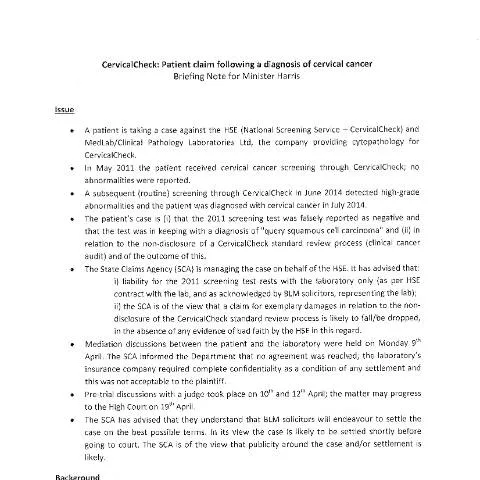
The CervicalCheck programme, a key initiative run by the Department of Health in Ireland, aims to ensure the early detection of cervical cancer, thereby improving patient outcomes. This is underpinned by a specific briefing note prepared for Minister Simon Harris, detailing a case that underscores the importance of proper procedures and accountability in health screening. This document is not merely procedural; it represents a critical juncture in the intersection of health care and patient rights.
Key Implications for Patients: Rights and Responsibilities
For patients undergoing screening, understanding their rights and responsibilities is paramount. The CervicalCheck programme operates under strict guidelines designed to ensure patient safety and effective treatment outcomes.
- Informed Consent: Patients must provide informed consent prior to undergoing screening. This means they should be fully aware of the screening process, potential outcomes, and follow-up procedures.
- Right to Access Information: Patients have the right to access their medical records, including their screening results. This transparency is critical for informed decision-making.
- Obligation to Follow Up: It is the patient’s responsibility to attend follow-up appointments and communicate any concerns regarding their health.
Failure to adhere to these responsibilities can have serious consequences, including delayed diagnosis and treatment, which may impact the overall effectiveness of the CervicalCheck programme.
The Role of the Briefing Note in the Healthcare Framework
The briefing note prepared for Minister Harris is not an isolated document; rather, it is embedded within a broader framework of healthcare policies and procedures. This document serves multiple purposes:
- Accountability: It outlines the responsibilities of the HSE and associated laboratories, reinforcing the need for accountability in patient screening.
- Legal Considerations: The note addresses ongoing legal issues surrounding a patient claim, highlighting the necessity for healthcare bodies to be prepared for litigation and to mitigate risks proactively.
- Policy Development: The insights derived from this case can inform future policy decisions, ensuring such incidents are less likely to recur.
Chronology of Events: From Initial Screening to Legal Proceedings
To fully grasp the significance of this briefing note, it is essential to understand the timeline of events that led to its creation. Below is a chronological overview:
| Date | Event |
|---|---|
| May 2011 | Initial cervical cancer screening conducted; no abnormalities reported. |
| June 2014 | Routine screening reveals high-grade abnormalities. |
| July 2014 | Patient diagnosed with cervical cancer. |
| September 2014 | CervicalCheck initiates a clinical cancer audit. |
| April 2018 | Briefing note prepared for Minister Harris. |
This timeline highlights the critical nature of timely responses and the importance of thorough screening processes in safeguarding patient health.
Challenges in the Screening Process: What Went Wrong?
The case at hand raises significant questions about the efficacy and reliability of the screening process within the CervicalCheck programme. The report specifically addresses the following challenges:
- False Negatives: The initial screening test in 2011 incorrectly reported no abnormalities, a critical error that had severe ramifications for the patient.
- Communication Breakdowns: Issues surrounding the non-disclosure of the CervicalCheck standard review process underline the need for better communication practices within healthcare settings.
- Testing Limitations: The inherent limitations of the cytology test used, including its low sensitivity, are highlighted as contributing factors to the misdiagnosis.
These challenges not only affect individual patients but also raise broader questions about the reliability of screening protocols in public health initiatives.
Legal Recourse: Navigating Claims and Complaints
For patients who find themselves in a situation similar to that of the individual in this case, understanding the pathways to legal recourse is crucial. The following steps outline the typical process:
- Document Everything: Patients should keep detailed records of all interactions, screenings, and diagnoses related to their case.
- Seek Legal Advice: Consult with a solicitor experienced in medical malpractice or patient rights to understand potential claims.
- Engage with the HSE: Initiate discussions with the HSE to address grievances directly, potentially leading to an informal resolution.
- Formal Legal Action: If negotiations do not yield satisfactory results, patients may proceed with formal legal action against relevant parties.
Throughout this process, transparency and communication remain vital, ensuring that patients are fully informed of their rights and options.
Reshaping the Future of Cervical Screening: Lessons Learned
The circumstances surrounding the CervicalCheck programme underscore the need for continuous evaluation and improvement of screening practices. The Department of Health has taken steps towards reform, including:
- Implementation of HPV Testing: Moving to HPV testing as the primary screening method, anticipated to significantly enhance accuracy.
- Ongoing Education for Healthcare Professionals: Ensuring that healthcare providers remain aware of best practices and emerging research related to cervical cancer screening.
- Strengthened Accountability Measures: Enhancing the oversight mechanisms within CervicalCheck to prevent future errors.
Moving Forward: The Importance of Patient Advocacy
For patients navigating the complexities of cervical screening, proactive advocacy is essential. Engaging with support groups, familiarising themselves with their rights, and maintaining open lines of communication with healthcare providers can significantly improve outcomes.
The CervicalCheck programme’s efficacy hinges on the collaboration between patients and healthcare professionals, fostering an environment where patient safety is prioritized.
Understanding the CervicalCheck Programme: Objectives and Achievements
The CervicalCheck programme, initiated in 2008, is Ireland's national cervical screening programme aimed at reducing the incidence of cervical cancer and saving lives through early detection. The programme's primary objective is to provide free screening to women aged between 25 and 65, enabling early identification of any pre-cancerous changes in the cervix. This initiative not only aims to enhance public health but also seeks to educate women on the importance of regular screenings.
Since its inception, CervicalCheck has achieved a significant increase in screening rates across the country. In the first few years, the uptake among the target demographic was modest; however, intensive awareness campaigns and outreach initiatives have led to improved participation. For instance, figures from 2019 indicated that over 80% of women in the eligible age range participated in the screening programme, a notable increase compared to earlier years.
Furthermore, the programme has successfully implemented quality assurance measures to ensure that screening tests are accurate and reliable. The establishment of a monitoring system allows for real-time data collection, helping to identify any discrepancies and ensuring that the programme adheres to the highest standards of care. This quality control is crucial in maintaining public trust and ensuring that women receive the best possible support throughout their screening journey.
However, despite these achievements, challenges remain. Issues such as inequalities in access particularly among disadvantaged groups and the need for continuous public education are pertinent. Addressing these challenges should be part of the ongoing discussions on the future direction of CervicalCheck, with a focus on inclusivity and equitable access for all women across Ireland.
Recent Developments and Future Directions for CervicalCheck
In recent years, CervicalCheck has undergone several significant developments aimed at enhancing the overall effectiveness of the programme. One of the most notable changes has been the introduction of primary HPV (Human Papillomavirus) screening. This transition, which began rolling out in 2020, represents a shift towards a more effective screening methodology, as HPV testing has been shown to be more sensitive than the previous Pap smear tests.
The move to HPV screening not only promises to improve early detection rates but also aims to streamline the screening process, ultimately reducing the frequency of appointments for women. Under the new system, women will now be invited for screening every five years, rather than the previous three-year interval, which aligns with international best practices.
A key part of the future direction for CervicalCheck will also involve leveraging technology to enhance service delivery. The introduction of an online portal for booking appointments and accessing results is in the pipeline. This development aims to improve user experience, making it easier for women to manage their health and access necessary information quickly. The online portal will also facilitate better communication between healthcare providers and patients, ensuring that any follow-up care is efficiently coordinated.
Moreover, there is a significant emphasis on ongoing public education and outreach. Given the historical context of the programme, including controversies and legal issues, it is vital for CervicalCheck to rebuild and maintain public trust. Initiatives such as community workshops, information sessions, and partnerships with local health organizations are all part of the strategy to ensure that women are informed about their health choices and the benefits of participating in screening.
Overall, as the CervicalCheck programme continues to evolve, it remains essential that the Minister and stakeholders keep a close eye on data from screening outcomes, as well as public satisfaction and participation rates. These metrics will be instrumental in guiding policy decisions and ensuring that the programme remains responsive to the needs of Irish women.
Evaluating Access and Equity in Cervical Screening
Access to the CervicalCheck programme is a critical factor in its effectiveness and overall success. While the programme is designed to be accessible to all women in the target age range, disparities in access persist, particularly among marginalized groups. Factors such as socio-economic status, geographic location, and cultural background can significantly impact a woman's likelihood of participating in cervical screening.
Research indicates that women from lower socio-economic backgrounds and those living in rural areas often face barriers that prevent them from engaging with healthcare services. These barriers may include lack of transportation, financial constraints, or a lack of awareness about the importance of cervical screening. Moreover, cultural differences can influence how women perceive health services and their willingness to participate in screening programmes.
To address these disparities, the CervicalCheck programme must prioritize outreach initiatives aimed at vulnerable populations. Targeted campaigns that consider cultural sensitivities and the unique challenges faced by these groups can improve uptake. Collaborating with community organizations and healthcare providers can also help to build trust and ensure that information is delivered in an accessible and relatable manner.
Additionally, the incorporation of health equity assessments into the programme's evaluation processes is essential. By analyzing participation rates among different demographic groups, stakeholders can identify gaps in access and develop tailored interventions to address these inequities. This proactive approach is crucial in moving towards a more inclusive healthcare system that leaves no woman behind.
Ultimately, ensuring that all women in Ireland have equitable access to cervical screening is not just a public health imperative; it is a fundamental aspect of building a fair and just healthcare system. The ongoing commitment to assess and improve access will play a vital role in the future sustainability and success of the CervicalCheck programme.