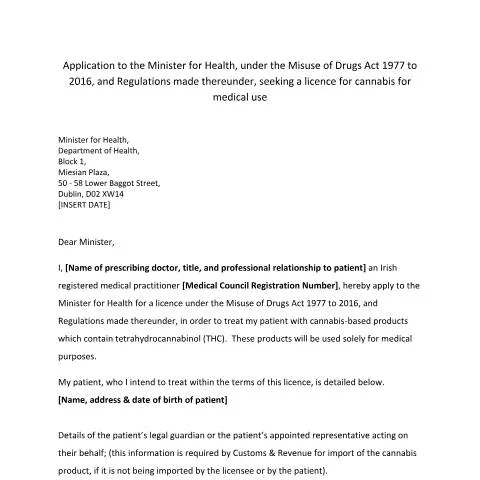
Understanding the Application for a Licence for Medical Cannabis
In the realm of evolving healthcare paradigms, the use of cannabis for medical purposes has become a focal point of discussion. The Application to the Minister for Health seeking a licence for cannabis for medical use is a critical document that facilitates the legal prescription of cannabis-based products containing tetrahydrocannabinol (THC) within the framework established by the Misuse of Drugs Act 1977 to 2016. The procedure surrounding this application is both intricate and essential for healthcare practitioners and patients alike.
Who Initiates the Application?
The responsibility for submitting this application rests primarily on registered medical practitioners in Ireland. Specifically, the prescribing doctor must be on the Irish Medical Council's register and demonstrate a legitimate professional relationship with the patient requiring treatment. A comprehensive understanding of the patient's history and medical conditions is vital in justifying the need for THC-based treatments.
Eligibility Criteria for Practitioners
- Must be registered with the Irish Medical Council.
- Maintain an active practice and demonstrate a professional relationship with the patient.
- Possess knowledge of the patient's medical history and prior treatments.
Key Components of the Application Document
The application form is structured to elicit specific information that supports the case for prescribing cannabis. Each section of the form serves a unique purpose, demanding careful attention to detail.
Details Required in the Application
- Applicant Information: Full name, professional title, and Medical Council registration number of the prescribing doctor.
- Patient Information: Name, date of birth, address, and legal guardian details (if applicable).
- Medical History: A detailed outline of previous treatments prescribed and the rationale for the current application.
- Product Specification: Information on the cannabis-based product, including brand name, form, and strength.
- Supplier Details: Identification of the pharmacy or manufacturer supplying the product.
- Clinical Monitoring Plan: Outline arrangements for continuous care and monitoring post-prescription.
- Endorsement from a Consultant: Signed confirmation from the patient's consultant who will oversee the treatment.
The Procedure of Submission: Channels and Methods
Submitting the application involves critical considerations regarding the method of delivery. Each channel has its protocols and implications for processing time and accessibility.
Online Submission via MyGovID
Practitioners may choose to submit applications online through the MyGovID portal, streamlining the process and enabling quicker processing times. Online submissions require the practitioner to have a verified account with MyGovID.
Paper Submission
Alternatively, applications can be completed on paper and sent directly to the Department of Health at the following address:
Department of Health, Block 1, Miesian Plaza, 50 - 58 Lower Baggot Street, Dublin, D02 XW14
Paper submissions may take longer to process due to postal delays and manual handling.
Documentation: Preparing Essential Evidence
Compiling the correct documentation is essential to strengthen the case for the licence application. Missing documents can lead to delays or rejections, impacting patient access to necessary treatment.
Checklist for Completeness
| Document Type | Description |
|---|---|
| Application Letter | Summarises the application, including personal and patient details. |
| Medical Treatment History | A summary of all previous relevant medications and treatments. |
| Rationale for THC Prescription | Justification based on the patient’s unique circumstances. |
| Product Information | Details on the cannabis product including dosage and supplier. |
| Monitoring Plan | Outline for ongoing clinical oversight during treatment. |
| Consultant Endorsement | Signature of the overseeing consultant confirming their role. |
Implications and Responsibilities for the Applicant
Applying for a medical cannabis licence involves more than filling out forms; it creates a framework of responsibilities for the prescribing doctor. Understanding these obligations is crucial to ensure compliance and patient safety.
Patient Rights and Healthcare Obligations
- Patients have the right to access medical treatment deemed necessary by their healthcare providers.
- Practitioners must inform patients about potential risks and benefits associated with THC.
- Ongoing monitoring is mandatory to evaluate the treatment's efficacy and safety.
Consequences of Non-compliance
Failure to adhere to the application process or subsequent care protocols can have serious implications:
- Legal repercussions for the practitioner.
- Potential health risks for the patient due to lack of oversight.
- Increased scrutiny from regulatory bodies.
Historical and Regulatory Context Surrounding Medical Cannabis
The framework for medical cannabis in Ireland is rooted in a complex legislative history. Understanding this context can offer valuable insights into the importance of the application process.
Legislative Background
The regulation of cannabis for medical use is primarily governed by the Misuse of Drugs Act 1977 to 2016. This legislation outlines the conditions under which controlled substances may be prescribed and highlights the importance of safeguarding patient health.
Recent Developments in Medical Cannabis Legislation
In recent years, there has been a shift in public perception and legislative approach towards cannabis use in medical settings, reflecting a growing body of evidence supporting its therapeutic benefits.
Understanding the Timeline: From Application to Treatment
Timing is a crucial factor in the application process, influencing how quickly patients can begin their treatment. Understanding this timeline can help practitioners manage expectations effectively.
Application Submission to Decision
Once the application is submitted, the timeline for processing can vary based on the clarity and completeness of the provided information. Practitioners should be prepared for potential follow-up queries from the Department of Health, which can extend the review period.
Post-Approval Steps
Upon receiving a licence, the practitioner can proceed with prescribing the cannabis-based product. It is vital to maintain clear communication with the patient regarding the treatment schedule and any necessary follow-up appointments.
Ongoing Treatment and Review
After treatment begins, regular reviews should be scheduled to ensure the patient's wellbeing and to assess the effectiveness of the cannabis-based therapy.
Conclusion: Navigating the Administrative Landscape
The application to the Minister for Health for a licence to prescribe cannabis for medical use encompasses a rigorous and structured process that ensures patient safety and adherence to legal standards. For practitioners, understanding the nuances of this application can foster a more efficient approach to providing necessary treatment. As attitudes towards cannabis in medical contexts continue to evolve, staying informed about regulatory changes and best practices is essential for healthcare professionals dedicated to patient care.
Understanding Medical Cannabis Legislation in Ireland
The intricate landscape of medical cannabis legislation in Ireland is largely shaped by the Misuse of Drugs Acts and the Health Products Regulatory Authority (HPRA). In 2019, the Irish government enacted a scheme allowing access to cannabis products for patients suffering from specific medical conditions, marking a significant shift in public health policy. It is crucial to grasp the nuances of this legislation as it directly impacts the application process for obtaining a license to cultivate, manufacture, or distribute medical cannabis.
The legislation lays out qualifying conditions for patients, including multiple sclerosis, severe epilepsy, and nausea related to chemotherapy. However, access remains tightly regulated, with prescribers required to adhere to strict guidelines to ensure that medical cannabis is used appropriately. The application to the Minister for Health must reference these conditions, providing robust medical documentation to support the claim.
Additionally, it is essential for applicants to remain up-to-date with potential amendments in the law that can affect the licensing process. For instance, as the government reviews long-term strategies for medical cannabis use, changes may arise in the approved conditions or in the application requirements. Staying engaged with updates from the Department of Health and the HPRA can enhance your understanding of the evolving landscape of medical cannabis regulation in Ireland.
Application Process for Medical Cannabis License: Step-by-Step Guide
Applying for a license to cultivate or distribute medical cannabis in Ireland is a detailed process that demands thorough documentation and compliance with various regulatory requirements. The application is made directly to the Minister for Health and is primarily guided by the provisions set out in the Misuse of Drugs Acts.
Preparation of Documentation: Start by assembling all necessary documentation that supports your application. This includes a comprehensive business plan, details about the cannabis strains you intend to use, and evidence showing compliance with the required health and safety standards. Keep in mind that your documentation should also reflect your understanding of the medical conditions treated by cannabis.
Consult with Regulatory Bodies: Before submitting your application, it’s prudent to consult with the HPRA. They can provide guidance on what is required and clarify any ambiguities related to your application. Understanding their perspective can significantly enhance the quality of your submission.
Submission of Application: Complete the application form thoroughly, ensuring that you provide all required information and supporting documents. Applications are assessed based on a range of criteria, including the applicant's knowledge of cannabis cultivation/production and understanding of medical implications.
Evaluation Process: Once submitted, the application undergoes scrutiny by the Department of Health. This may involve a review of the applicant's background, the proposed use of cannabis, and potential impacts on public health. The evaluation can take several months, so be prepared for a waiting period.
Awaiting Approval or Rejection: After the evaluation, you will receive either an approval or rejection notice. If approved, you must comply with ongoing regulatory requirements, including regular inspections and reporting to ensure continued compliance with the established guidelines.
Compliance and Reporting: Following the license grant, maintaining compliance with all regulatory requirements is ongoing. Regular audits and checks will be conducted to ensure adherence to regulations. Non-compliance can lead to the revocation of the license, so it is critical to stay informed about any changes in regulations.
By following these steps diligently and ensuring all requirements are met, applicants can enhance their chances of successfully securing a license for medical cannabis use in Ireland.
Challenges and Considerations in the License Application Process
Navigating the application process for a medical cannabis license presents unique challenges. Understanding these hurdles can help applicants prepare effectively and increase their chances of success.
Complexity of Regulations: The regulatory framework governing medical cannabis in Ireland can be complex and often overwhelming for first-time applicants. Familiarizing yourself with the relevant acts, guidelines, and statutory obligations is essential. Seeking legal advice or engaging experts with experience in cannabis licensing can ameliorate many of these difficulties.
Cost Implications: The financial burden associated with applying for and maintaining a medical cannabis license can be significant. This includes costs related to compliance, facility setup, and ongoing operations. Budgeting for these expenses early in the application process can prevent financial strain down the line.
Public Perception and Stigma: The societal views surrounding cannabis can pose challenges for applicants. Despite the legalisation for medical use, stigma may still exist within certain communities. Building a positive narrative around the benefits of medical cannabis and engaging with community stakeholders can foster a supportive environment.
Ongoing Monitoring and Compliance: After obtaining a license, the responsibilities do not cease. Applicants must adhere to strict monitoring and reporting requirements to ensure they remain compliant with the law. This could involve regular interactions with regulatory authorities and being prepared for inspections.
Evolving Legislation: The landscape of cannabis legislation is continually evolving. Being proactive about changes in law or policy can provide a significant advantage. Joining professional networks or forums related to medical cannabis can keep you informed about the latest developments and best practices.
By being aware of these challenges and preparing for them in advance, applicants can streamline their journey through the licensing process and position themselves for long-term success in the medical cannabis industry.