Understanding the All-Ireland Traveller Health Study: Insights into the Ourgeels Aiths Questionnaire
The All-Ireland Traveller Health Study has been a remarkable initiative aimed at addressing the health disparities faced by the Irish Traveller community. A critical component of this study is the Ourgeels Aiths Questionnaire, which serves as the primary data collection tool. This questionnaire not only reflects the unique health concerns of the Traveller population but also provides valuable insights into their living conditions, healthcare access, and overall well-being.
The Historical and Legislative Context Behind the Questionnaire
To truly appreciate the significance of the Ourgeels Aiths Questionnaire, it is essential to consider the historical and legislative backdrop against which it was developed. The Irish Traveller community has long been marginalized, facing systemic barriers to healthcare access, as highlighted in various reports and studies over the years. In 1998, the National Health Service initiated a focus on the health of Travellers, culminating in the All-Ireland Traveller Health Study.
The questionnaire itself is grounded in the Constitution of Ireland and subsequent health acts aimed at promoting equality in health services. The research is supported by key organizations, including the Department of Health and various Traveller advocacy groups, underscoring a commitment to improving health outcomes for this community.
Breaking Down the Questionnaire: A Comprehensive Look
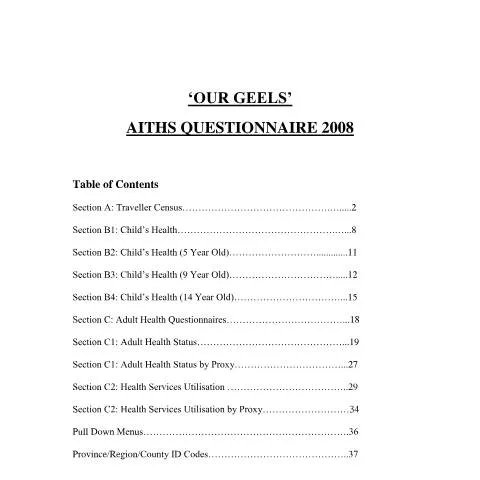
The Ourgeels Aiths Questionnaire is divided into several sections, each focusing on different aspects of health and living conditions. Each section is designed to gather specific data while being sensitive to the respondent's context. Here’s a detailed breakdown:
- Section A: Traveller Census - This section collects demographic data, such as family size and living arrangements, crucial for understanding the Traveller community's composition.
- Section B: Child Health - Various subsections cater to different age groups (5, 9, and 14 years old) to comprehensively assess children’s health across critical developmental stages.
- Section C: Adult Health Questionnaires - This segment focuses on adult health status, capturing self-reported health conditions as well as proxy-reported data for those unable to respond themselves.
- Health Services Utilisation - Here, the questionnaire delves into the accessibility and frequency of healthcare services used by Travellers, providing insights into their engagement with the health system.
Who Should Participate? Profiles of Respondents
The design of the Ourgeels Aiths Questionnaire takes into account various demographic and social factors. Participation is primarily aimed at members of the Irish Traveller community, with respondents typically comprising:
- Adults who identify as Travellers.
- Parents or guardians completing sections on behalf of their children.
- Individuals living in a variety of accommodation types, including caravans, houses, and halting sites.
Special consideration is given to vulnerable groups, such as minors and individuals with disabilities, ensuring their voices and experiences are adequately represented. The questionnaire also allows respondents to skip sensitive questions, thereby respecting their comfort and privacy.
How to Navigate the Questionnaire: Step-by-Step Guidance
Completing the Ourgeels Aiths Questionnaire involves a series of steps designed to facilitate a smooth and informative process. Here’s a structured guide:
- Initial Engagement: The interviewer explains the purpose of the study, assuring respondents of confidentiality and their right to refuse to answer any questions.
- Demographic Data Collection: Respondents provide basic information about their family and living situation. For instance, questions about family size and accommodation types help frame the context for health inquiries.
- Child Health Assessment: Parents are prompted to answer specific questions regarding the health of each child in the family, tailored to age brackets to capture developmental nuances.
- Adult Health Insights: Adults respond to health status questions, which may include queries about chronic conditions and healthcare access.
- Utilisation of Health Services: The questionnaire concludes with a focus on how often respondents access health services and their perceptions of healthcare quality.
By following this structured approach, respondents can contribute valuable data that drives improvements in healthcare access and outcomes for the Traveller community.
Submission Channels: Where and How to Submit Your Responses
Upon completing the Ourgeels Aiths Questionnaire, respondents have several options for submitting their answers. Each method provides flexibility, ensuring that participation is accessible:
- Face-to-Face Interviews: Most responses are collected through direct interviews with trained researchers, allowing for deeper engagement and clarification of sensitive topics.
- Online Submission: In some cases, an online version of the questionnaire may be available, accommodating those who prefer digital communication.
- Paper Forms: For those without internet access, physical copies of the questionnaire can be completed and returned via mail or at designated collection points.
Each of these channels is designed to ensure that data collection is efficient and respectful of the community's needs.
Confidentiality and Data Handling: Protecting Respondent Privacy
Understanding the concerns surrounding data privacy is crucial for encouraging participation in health studies. The Ourgeels Aiths Questionnaire adheres to stringent data protection guidelines established by the Department of Health. Key protocols include:
- Confidentiality Assurance: All responses are treated with the utmost confidentiality, and data is anonymized to protect individual identities.
- Restricted Access: Only authorized personnel involved in the study have access to the data, ensuring that sensitive information is safeguarded.
- Ethical Compliance: The study abides by ethical guidelines for research involving human subjects, promoting trust and transparency within the Traveller community.
Such measures are integral to fostering an environment where respondents feel safe and valued as contributors to the study.
Implications of the All-Ireland Traveller Health Study
The insights gleaned from the Ourgeels Aiths Questionnaire have far-reaching implications for public health policy and community support. Findings from the study are expected to:
- Inform Policy Development: Data can influence health policy makers and service providers to tailor initiatives that address the unique health challenges faced by Irish Travellers.
- Enhance Community Services: Results may guide the allocation of resources towards healthcare services and programs specifically designed for the Traveller community.
- Raise Awareness: By highlighting the health disparities and challenges, the study can foster broader societal awareness and encourage dialogue surrounding the needs of Travellers.
Ultimately, this comprehensive research effort aims to bridge the gap in health equity and promote better health outcomes for the Traveller community.
Understanding the All-Ireland Traveller Health Study: Key Findings and Implications
The All-Ireland Traveller Health Study, launched in 2008, serves as a pivotal resource for understanding the health disparities faced by the Traveller community in Ireland. This study's comprehensive approach provides invaluable insights into the health status, health-seeking behaviours, and overall wellbeing of Travellers, a historically marginalized group. One of the notable aspects of this study is the Our Geels Aiths questionnaire, which was designed specifically for this community, ensuring culturally relevant data collection.
The findings from the 2008 study highlighted numerous health challenges faced by Travellers, including a significantly lower life expectancy compared to the general population. The data indicated that health issues such as respiratory diseases, mental health concerns, and substance abuse were prevalent. Notably, the study revealed that Travellers often experience barriers to accessing healthcare services, which are compounded by social determinants such as poverty, discrimination, and lack of education.
Additionally, the study underscored the need for tailored health services that are culturally sensitive. This means health providers must be trained to understand the unique challenges faced by Travellers, fostering trust and encouraging engagement with health services. The implications of the findings extend to policy-level changes, advocating for the integration of Traveller perspectives in health planning and the development of community-led health initiatives.
Implementation of Recommendations from the All-Ireland Traveller Health Study
In light of the findings from the All-Ireland Traveller Health Study, various stakeholders, including government bodies, health service providers, and community organisations, have been called to action. One of the primary recommendations was the need for comprehensive health programmes that specifically address the unique health needs of Travellers.
To implement these recommendations, the Department of Health in Ireland has initiated several programmes aimed at improving health outcomes for Travellers. Collaborations have formed between local health authorities and Traveller organisations, focusing on culturally appropriate health education and outreach efforts. For example, community health workers from within the Traveller community have been engaged to bridge the gap between health services and Travellers, enhancing communication and understanding.
Furthermore, ongoing training for health professionals on cultural competency is essential. This educational focus aims to dismantle stereotypes and encourage a more inclusive healthcare environment. Regular workshops and seminars have been established to ensure that healthcare providers can effectively engage with Travellers, ensuring their voices are heard within the healthcare system.
Policy changes at both local and national levels are also critical. The incorporation of Traveller health concerns into broader public health strategies is necessary to ensure that these issues receive the attention they deserve. Government policies should reflect the specific health needs of Travellers, potentially through dedicated funding streams for Traveller health initiatives.
The Role of Community Involvement in Traveller Health Initiatives
Community involvement is a crucial element in the success of health initiatives aimed at the Traveller community. Empowering Travellers to take a leading role in their health and wellbeing can drive significant improvements in health outcomes. This includes not only their participation in health service design but also in the delivery of health education and support programmes.
Engaging Travellers in the planning and implementation of health initiatives fosters a sense of ownership and accountability. For instance, programmes that are co-created with Traveller input tend to resonate more with the community, leading to higher participation rates and better health outcomes. This collaborative approach can also help to remove the stigma associated with seeking healthcare services.
Moreover, building networks within the Traveller community can enhance peer support systems. Initiatives that create spaces for Travellers to share experiences and support each other in health-related matters are invaluable. Workshops, discussion groups, and health fairs can facilitate this aspect, allowing Travellers to gain knowledge from one another and build trust in health services.
Additionally, monitoring and evaluation of health initiatives should involve community feedback. Gathering insights from Travellers about what works and what doesn’t can help health providers adjust their approaches to be more effective. Establishing channels for continuous dialogue between health services and the Traveller community ensures that health initiatives remain relevant and impactful.