Navigating the DAFM Approved Establishments Amendment Process: A Comprehensive Guide
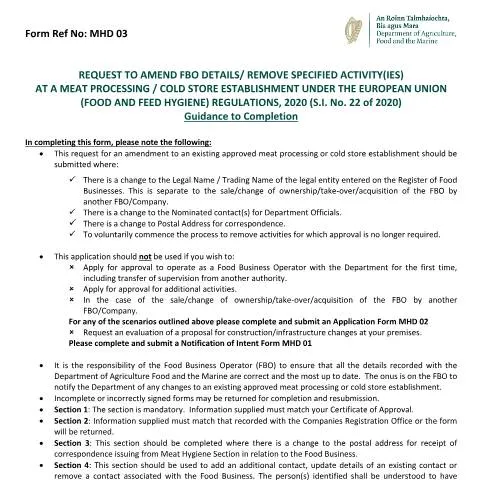
For businesses operating within Ireland’s food industry, understanding the nuances of regulatory documentation is vital. The DAFM Approved Establishments — MHD 03 amendment form plays a crucial role in ensuring compliance with the European Union (Food and Feed Hygiene) Regulations, 2020. This article delves deep into the intricacies of the MHD 03 form, exploring its precise function, the responsibilities of Food Business Operators (FBOs), and the implications that arise from various amendments.
Understanding the DAFM MHD 03 Form: Its Unique Role
The MHD 03 form is distinct from other regulatory forms such as the MHD 02, which is used for initial approvals or additional activities. Instead, the MHD 03 serves a targeted purpose, acting as an official request to amend existing details related to approved meat processing or cold store establishments. This includes changes to the legal name, trading name, postal address, or nominated contacts.
What Sets MHD 03 Apart
- Specificity: The MHD 03 form addresses specific changes rather than serving as a general application for approvals.
- Regulatory Compliance: It ensures that FBOs maintain accurate records with the Department of Agriculture, Food and the Marine.
- Resilience Against Inaccuracies: Incomplete or incorrectly signed forms can lead to delays, underscoring the importance of detail-oriented submissions.
In this regulatory landscape, understanding not just the document's purpose, but its distinct features, can save time and avoid unnecessary complications that may arise during the amendment process.
The Responsibilities of Food Business Operators: Ensuring Compliance
Upon the amendment of any details, it becomes the responsibility of the FBO to ensure the Department's records are accurate and current. Any changes that deviate from the original approval must be communicated effectively.
Who Needs to Complete the MHD 03?
Primarily, this form is necessary for:
- FBOs changing their legal or trading names.
- Updating postal addresses for correspondence.
- Adjusting contact details for Department liaisons.
- Voluntarily removing activities for which approval is no longer required.
Neglecting to submit this form when changes occur could lead to significant repercussions, such as fines or operational delays, highlighting the urgency for FBOs to act promptly on any amendments.
Filling Out the MHD 03 Form: A Step-by-Step Approach
Completing the MHD 03 form requires a meticulous approach. Each section of the form has specific requirements, and the accuracy of the information provided is paramount.
Breaking Down the Sections
| Section | Description | Signature Requirement |
|---|---|---|
| Section 1 | Mandatory details matching the Certificate of Approval. | Director or Secretary. |
| Section 2 | Details must align with the Companies Registration Office. | Director or Secretary. |
| Section 3 | Updates to the postal address. | Director or Secretary. |
| Section 4 | Changes to contact details. | Director or Secretary. |
| Section 5 | Notify the removal of activities. | Director or Secretary. |
| Section 6 | Changes in legal or trading names requiring a company seal. | Director and Secretary. |
Each section of the form must be filled out with precision. Missing or incorrect information can lead to the form being returned, causing unnecessary delays.
Submission Process: From Completion to Acknowledgment
Once the MHD 03 form is completed, the next step involves its submission to the Department of Agriculture, Food and the Marine. Understanding the submission process can streamline this critical phase.
Where to Submit?
The completed form should be sent to the relevant office within the Department that handles meat hygiene. It's advisable to double-check the latest contact details on the official government website, ensuring the form reaches the right department swiftly.
Tracking Your Amendment Request
After submission, FBOs may wish to follow up on their request. While the Department aims to process amendments in a timely manner, proactive follow-ups can help in clarifying any outstanding issues or requirements.
- Keep a copy of the submitted form for your records.
- Document any correspondence related to the amendment.
- Contact the Department via their official communication channels for updates.
Consequences of Inaction: What Happens If You Forget?
Failing to submit the MHD 03 form when necessary can have dire consequences for FBOs. Beyond legal ramifications, such as fines or sanctions from the Department, operational disruptions may occur, affecting business continuity.
Risks Incurred by Ignoring Amendments
- Legal Penalties: Operating under incorrect or outdated details can lead to compliance issues and potential legal actions.
- Loss of Business Reputation: Inconsistent information may erode client trust and affect relationships with stakeholders.
- Operational Delays: An unreported change may lead to miscommunications, impacting deliveries and operations.
For those who wish to maintain their standing within the food industry, adherence to amendment protocols is not just legal compliance; it is also a matter of business integrity.
The Broader Framework: MHD 03 Within the European Regulations
The MHD 03 form operates within the framework established by the European Union (Food and Feed Hygiene) Regulations, 2020. Understanding this relationship helps FBOs appreciate the importance of their operational compliance.
Linking to Broader Regulatory Context
The purpose of the MHD 03 is not solely for internal amendments; it also ensures that Ireland aligns with EU standards concerning food safety and hygiene. This alignment is essential for fostering consumer confidence and maintaining public health standards.
By adapting to changes in operating procedures or contact points, FBOs contribute to a collective effort towards rigorous food safety practices—an obligation that relies on accurate documentation and communication with the Department.
Final Insights: Enhancing Your Compliance Strategy
Completing the MHD 03 form is a critical component of managing a compliant meat processing or cold store establishment. FBOs who actively engage in this process not only mitigate risks but enhance their operational efficiency and reputation in the market.
Best Practices for Ongoing Compliance
- Regular Audits: Conducting periodic reviews of your compliance status can help identify any areas needing attention.
- Maintain Updated Records: Ensure that all changes are documented and communicated promptly to the Department.
- Stay Informed: Keep up with any changes in regulations or requirements issued by the Department of Agriculture, Food and the Marine.
By embracing a proactive approach to compliance, Food Business Operators can navigate the complexities of regulatory documentation with confidence, ensuring that their establishments remain approved, safe, and fully operational.
Understanding the DAFM Approval Process for Establishments
The Department of Agriculture, Food and the Marine (DAFM) establishes rigorous protocols to ensure that establishments engaged in food production, processing, and distribution comply with health and safety regulations. The approval process for these establishments is crucial for maintaining the integrity of the food supply chain in Ireland. Applicants must submit detailed documentation and adhere to specific guidelines set out by the DAFM.
To begin the approval process, an establishment must demonstrate compliance with relevant regulations, including the Food Safety Authority of Ireland (FSAI) standards and EU legislation. This involves submitting an application that includes detailed descriptions of the premises, the types of food products handled, and procedures for hygiene and safety. Additionally, establishments must be registered with the DAFM, which requires filling out the appropriate forms, such as the MHD 03 amendment form for changes affecting their approval status.
Once the application is submitted, a DAFM representative will conduct an inspection to verify compliance with health and safety standards. This inspection may cover various aspects, including the physical condition of the premises, equipment used, and staff training in food safety practices. Upon successful inspection, the establishment will receive approval, which must be renewed periodically, depending on the type of operation and any changes made to the facility or processes.
Common Amendments and Their Implications
The MHD 03 amendment form is specifically designed for establishments that need to report changes in their operational status or structure. Common amendments include alterations in management structures, changes to the types of products produced, and modifications in processing methods. Each of these changes can significantly affect the establishment's compliance with food safety regulations, thus necessitating the submission of the amendment form.
For instance, if an establishment decides to expand its product line to include new food types, it must ensure that its facility can accommodate these changes while maintaining hygiene standards. This often requires submitting additional documentation along with the MHD 03 form, such as updated floor plans or details on new machinery. Failure to report these changes can lead to penalties, including the suspension of approval, making it imperative for operators to understand when and how to submit the amendment form.
It is important to note that the DAFM expects amendments to be reported promptly. Delayed submissions can result in increased scrutiny during inspections and may affect the establishment's reputation within the industry. Keeping accurate records and being proactive about reporting changes is vital for maintaining compliance and ensuring the continued approval of the establishment.
Training and Resources for Compliance with DAFM Regulations
Staying compliant with DAFM regulations is an ongoing process that requires continuous education and training for staff members at approved establishments. The DAFM provides various resources and training programs designed to help businesses understand and meet regulatory requirements. These programs cover essential topics such as food safety, hygiene practices, and new legislative updates.
Additionally, establishments can seek external training providers that specialize in food safety and compliance with DAFM regulations. Engaging in regular training sessions not only helps in keeping staff informed but also fosters a culture of safety and compliance within the organization. This proactive approach to training can significantly enhance the operational efficiency of the establishment and reduce the risk of non-compliance during inspections.
Furthermore, it is beneficial for establishments to keep abreast of changes in legislation and regulatory updates from the DAFM. Subscribing to newsletters or attending DAFM-hosted workshops can provide valuable insights into emerging trends and best practices in food safety. Such resources can assist businesses in adapting their operations in line with legislative changes and maintaining their approval status with minimal disruption.