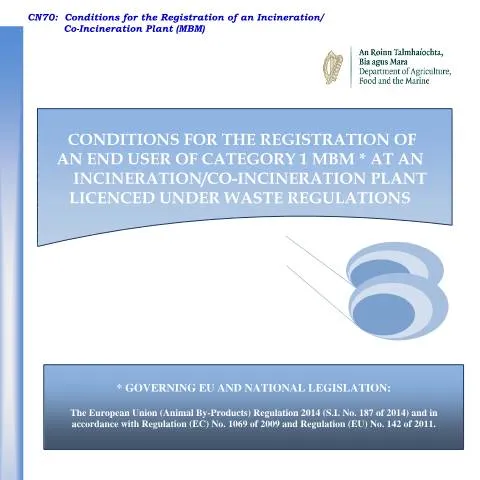
Understanding the CN70 Form: A Key Player in Animal By-Products Management
In the landscape of agricultural regulation in Ireland, specific compliance requirements are critical for operators handling animal by-products. The CN70 form, officially titled "Conditions for the Registration of an Incineration or Co-Incineration Plant (MBM)," serves as an essential document for operators in this sector. The significance of this form goes beyond mere compliance; it is a linchpin in ensuring both public health and environmental safety in animal by-product management.The Role of the CN70 Form in Regulatory Compliance
The CN70 form is mandated by the Department of Agriculture, Food and the Marine (DAFM) and establishes conditions under which incineration and co-incineration plants must operate. It aligns with the EU regulations on animal by-products, specifically Regulation (EC) No. 1069/2009. By registering under the CN70, operators demonstrate their commitment to adhering to the stringent guidelines set forth to manage animal by-products responsibly.The Registration Process: Who Submits the CN70?
The responsibility of submitting the CN70 form falls upon operators of incineration and co-incineration plants that handle Category 1 materials—primarily animal by-products deemed unsuitable for human consumption. This includes entire animal bodies or parts, along with any products derived from these materials. The submission of the CN70 form must be accompanied by relevant documentation that substantiates the operational capabilities of the plant and its compliance with health and safety regulations.Key Sections of the CN70 Form: Detailed Breakdown
The CN70 form is structured into several critical sections, each addressing specific operational requirements and regulatory compliance aspects. Below is a concise breakdown of these sections:- General Overview: This section details operator requirements, emphasizing timely disposal of animal by-products and the necessity for strict hygiene practices.
- Intake Procedures: Operators must outline their procedures for receiving animal by-products, ensuring adherence to documentation standards as specified in the form.
- Operating Conditions: This part elaborates on the design, equipment, and construction requirements necessary for a compliant facility.
Documentation Preparation: What Operators Need to Know
Completing the CN70 form involves more than just filling out fields; operators must prepare supporting documentation that may include:- Operational Plans: Detailed descriptions of how animal by-products will be managed.
- Hygiene Protocols: Evidence of sanitation measures and pest control programs in place.
- Site Plans: Layouts of the facility demonstrating compliance with waste management regulations.
Consequences of Non-Compliance: What Happens When Requirements Are Ignored?
The implications of failing to comply with the requirements outlined in the CN70 form can be severe. Non-compliance may lead to sanctions from the DAFM, which can manifest as:- Fines: Financial penalties may be levied against operators who fail to meet the operational standards.
- Regulatory Action: The DAFM has the authority to revoke operating licenses, leading to potential shutdowns.
- Legal Repercussions: Ignoring compliance can result in legal challenges, damaging the operator's reputation and business.
Following Up With the DAFM: Tracking Your Registration Process
Once the CN70 form is submitted, the next step involves tracking the progress of the application. Operators can actively engage with the DAFM to stay informed about the status of their registration. This may involve:- Regular Communication: Establishing a line of communication with DAFM officials can facilitate updates on the registration process.
- Timeframes: Understanding the typical processing times for CN70 applications can help operators set realistic expectations.
- Documentation Management: Keeping copies of all submitted documents will aid in follow-ups or appeals if necessary.
Comparative Analysis: CN70 Versus Other Registration Forms
It is essential for operators to differentiate the CN70 form from other documentation they may encounter in related sectors. Below is a comparison with some common forms that might be confused with the CN70:| Form Name | Purpose | Unique Requirements |
|---|---|---|
| CN70 | Registration of incineration plants for Category 1 MBM | Specific operational, hygiene, and environmental standards |
| Form 11 | Income tax return for individuals | Focus on financial disclosures and personal income |
| RBN1 | Company and business name registration | Emphasis on business structure and ownership |
Preparing for Inspections: What to Expect Post-Submission
Upon submission of the CN70 form, operators should prepare for potential inspections by DAFM officials. These inspections are critical in verifying compliance with the conditions outlined in the registration. Operators can expect the following during an inspection:- Facility Tours: Inspectors will conduct thorough walkthroughs of the facility, examining operational areas for compliance with hygiene and safety standards.
- Document Reviews: All documentation submitted, along with operational records, will be scrutinized to ensure adherence to regulatory requirements.
- Interviews with Staff: Inspectors may interview staff to assess their understanding of operational procedures and compliance measures.
Sustaining Compliance: Ongoing Responsibilities After Registration
Once registered, operators are not relieved of their responsibilities. Continuous compliance with the CN70 form conditions is mandatory. Operators must:- Maintain Hygiene and Safety Protocols: Regular training and updates on hygiene practices must be conducted.
- Document Ongoing Operations: Keeping accurate records of all operational practices is vital for demonstrating compliance during future inspections.
- Adhere to Regulatory Changes: Staying informed about any changes in EU or national regulations regarding animal by-products is crucial for ongoing compliance.
Conclusion: The CN70 as a Catalyst for Responsible Practices
In summary, the CN70 form plays a critical role in the animal by-products sector in Ireland, acting as a regulatory safeguard that ensures the responsible handling and disposal of materials that pose risks to public health and safety. Operators who approach the CN70 with diligence and thoroughness will not only comply with regulations but also contribute positively to environmental sustainability and public trust. Embracing the requirements of this form will position operators as leaders in best practices within the agricultural community.Understanding Animal By-Products Regulations in Ireland
The management and processing of animal by-products in Ireland are under stringent regulatory frameworks designed to protect public health and the environment. The regulations are largely derived from European Union legislation, specifically Regulation (EC) No 1069/2009, which lays down health rules concerning animal by-products. This regulation ensures that animal by-products are processed in a manner that mitigates risks associated with disease transmission and environmental pollution.
In Ireland, the Department of Agriculture, Food and the Marine (DAFM) oversees the enforcement of these regulations. Before commencing operations, businesses must demonstrate compliance with specific health and safety standards. There are various categories of animal by-products, including Category 1, Category 2, and Category 3 materials, each with its own processing requirements and restrictions. For instance, incineration plants processing Category 1 by-products, which include materials that pose the highest risk to human and animal health, must adhere to the most rigorous standards.
Registration under the CN70 conditions is focused on ensuring that the incineration processes meet operational and environmental safety standards, making it imperative for operators to verify the complete compliance with these guidelines. Failure to comply with these regulations can lead to severe penalties, including the revocation of operational licenses and financial penalties.
Application Process for Incineration Plant Registration
Applying for registration as an incineration plant under the CN70 conditions involves a detailed process that demands thorough documentation and evidence of compliance with health and safety standards. The operator must prepare a comprehensive application that includes several key components:
- Detailed Operational Plan: This should outline the processes to be employed in the incineration of animal by-products, including the types of materials to be processed, incineration technology, and measures to control emissions.
- Risk Assessment: A thorough risk assessment must be conducted to evaluate potential hazards associated with the incineration process. This includes identifying possible points of contamination and outlining mitigation strategies.
- Environmental Impact Assessment (EIA): Depending on the scale of the operation, an EIA may be required to assess the potential impact on local ecosystems and communities.
- Compliance with Emission Standards: Operators must demonstrate their ability to comply with national and EU emission standards, which may involve the installation of advanced filtration and monitoring systems.
- Emergency Response Plans: Operators should include plans detailing how they will manage potential emergencies, such as spills or accidents involving hazardous materials.
Once the application is submitted, it will undergo a review process by the DAFM, which may take several weeks to months. During this time, the department may request additional information or amendments to the application, emphasizing the need for clarity and precision in the initial submission.
Compliance Monitoring and Inspections
Once an incineration plant is registered, ongoing compliance with the CN70 conditions is mandatory. The DAFM conducts regular inspections to ensure that all operational procedures adhere to the standards set forth during the registration process. These inspections may focus on various aspects of the operation, including:
Fill in your form directly online
No printing: type your details into the boxes of the official form, tick, then download the PDF ready to send.
- 1Type into the form boxes
- 2Tick in one click
- 3Save and download the PDF
- Operational Compliance: Inspections will evaluate adherence to the operational plans submitted in the registration application, ensuring that all processes are conducted as described.
- Record Keeping: Operators must maintain detailed records of all incoming and outgoing materials, their processing, and any emissions produced. These records are crucial for transparency and accountability.
- Emission Monitoring: Continuous monitoring of emissions is required to ensure compliance with set limits. Operators are expected to report findings to the DAFM as part of their compliance obligations.
- Staff Training and Safety Protocols: Inspections will also assess whether staff are adequately trained in handling hazardous materials, including emergency procedures and health and safety protocols.
Non-compliance during these inspections can result in significant ramifications, including fines, suspension of operations, or even dismantling of the facility if severe breaches are identified. Therefore, maintaining thorough records and adherence to protocols is not just a regulatory requirement but a critical aspect of operational integrity.