Navigating the Ash Dieback Scheme: An Essential Guide to FORM2
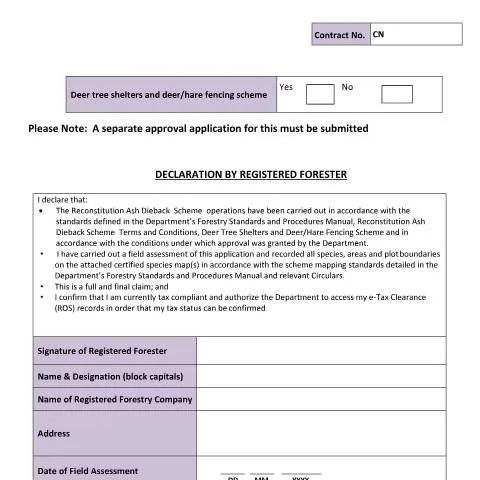
The Reconstitution Ash Dieback Scheme 2023-2027 provides crucial support for the forestry sector in Ireland. As part of this initiative, FORM2, officially titled "IFORIS Internet — reconstitution ash dieback scheme 2023-2027 form 2 declaration for inet applications," plays a pivotal role in facilitating funding and compliance for registered foresters. This document is not merely a form; it encapsulates the commitment of foresters to adhere to the guidelines of the scheme and ensures that the necessary assessments are conducted.
Understanding the Context of FORM2
As the forestry sector grapples with the challenges posed by ash dieback, a significant fungal disease affecting ash trees, it is imperative for registered foresters to engage with FORM2 effectively. This form acts as a declaration, confirming that all operations regarding the Reconstitution Ash Dieback Scheme are compliant with the Department of Agriculture, Food and the Marine's standards.
Foresters must grasp that FORM2 is a critical touchpoint for accessing financial assistance while maintaining operational integrity. The document serves to verify the field assessments conducted and ensures that all actions taken align with regulatory expectations.
Key Elements of FORM2: What to Include
To navigate the complexities of FORM2, understanding its components is vital. The following sections are pivotal:
- Declaration by Registered Forester: The forester must affirm that operations comply with the specified terms and conditions of the scheme.
- Field Assessment Details: This includes recording species, areas, and plot boundaries, an essential step for accountability and transparency.
- Confirmation of Tax Compliance: The forester authorizes the Department to check tax records, reinforcing the importance of fiscal responsibility.
Completing each section diligently is essential as inaccuracies or omissions may lead to delays in processing applications or, worse, rejection of funding requests.
The Submission Channels: Online vs. Paper
One of the crucial decisions for foresters involves selecting the appropriate submission channel for FORM2. There are two primary pathways: online submissions via the Department’s official portal and traditional paper submissions.
Online Submission
Utilizing the online system offers several advantages:
- Efficiency: Submissions can be processed faster, reducing waiting times for feedback.
- Accessibility: Foresters can submit applications from anywhere, eliminating geographical barriers.
- Real-Time Updates: The online system provides immediate notifications regarding application status, allowing for timely follow-ups.
Paper Submission
Some individuals may prefer traditional methods for various reasons:
- Familiarity: Those accustomed to paper processes may feel more comfortable with physical forms.
- Record Keeping: Paper forms can be physically stored and referenced easily.
However, it's essential to note that paper submissions may result in longer processing times due to manual handling. Foresters should weigh the pros and cons based on their preferences and operational needs.
After Submission: Managing Your Application
Once FORM2 has been submitted, foresters must remain proactive in managing their application. Understanding the subsequent steps is crucial for ensuring a smooth processing experience.
Tracking Progress
The Department allows applicants to track the status of their submissions. This can typically be done through the online portal or by contacting the relevant department directly. It's advisable to keep records of submission confirmations and any correspondences related to the application.
Responding to Queries
In some cases, the Department may require additional information or clarification regarding the application. Foresters should be prepared to respond promptly to any requests, as delays can impact funding timelines.
Special Situations: Cases Requiring Extra Attention
While most applications proceed smoothly, certain cases may necessitate special consideration. Familiarity with these scenarios can help foresters navigate potential challenges.
Foreign Applicants
For non-Irish applicants or those operating from abroad, additional documentation may be required. This can include proof of residency or business registration in Ireland. It is essential to consult the Department’s guidelines specific to foreign applicants to ensure completeness.
Minor Applicants
In situations where a minor is involved in forestry operations, parental consent and additional documentation will be necessary. Engaging with the Department early in the process can clarify requirements.
Consequences of Inaction: The Importance of Compliance
Failure to engage with FORM2 adequately can result in significant consequences for foresters. Understanding what is at stake encourages diligence in completing and submitting the form.
Potential Loss of Funding
Inaccuracies or delays in submission can lead to missed funding opportunities. Foresters should recognise that timely and compliant submissions are critical for financial support.
Legal Ramifications
Non-compliance with scheme guidelines can expose foresters to legal challenges. Understanding the nuances of the guidelines and ensuring adherence is vital for safeguarding against potential disputes.
Differentiating FORM2 from Similar Documents
Foresters often encounter various forms related to forestry and funding. Understanding the specificities of FORM2 compared to related documents is essential for accurate submissions.
Comparative Overview
| Form | Purpose | Required For |
|---|---|---|
| FORM2 | Declaration for ash dieback scheme applications | Registered foresters conducting assessments |
| FORM1 | Initial application for funding | Foresters seeking initial funding |
| FORM3 | Progress report on funding use | Foresters who have received funding |
Understanding these differences can help foresters ensure they are using the correct forms for their specific needs, thereby avoiding unnecessary complications.
Preparing Supporting Documents: A Checklist
Submitting FORM2 often requires the inclusion of supporting documents. Proper preparation can streamline the process and enhance the chances of approval.
Essential Documents to Include
- Field Assessment Reports: Detailed reports on species and areas impacted by ash dieback.
- Maps: Certified mapping of affected areas, outlining specific boundaries.
- Tax Clearance Certificate: Verification of tax compliance is necessary for processing.
Preparation of these documents should be thorough to avoid delays. Foresters are encouraged to maintain clear records and to double-check the requirements stipulated by the Department.
Final Considerations for Foresters
Successfully navigating FORM2 requires careful attention to detail and a proactive approach to compliance. Foresters must ensure they are fully informed about the requirements, keep abreast of any changes in regulations, and maintain open lines of communication with the Department of Agriculture, Food and the Marine.
In light of the ongoing challenges posed by ash dieback, timely and accurate submissions not only contribute to individual success but also support the health and sustainability of Ireland's forestry sector.
Understanding the Ash Dieback Scheme: Objectives and Eligibility Criteria
The Ash Dieback Scheme is a pivotal initiative aimed at addressing the pressing issue of Chalara dieback of ash (Hymenoscyphus fraxineus), a fungal disease that poses a significant threat to Ireland's ash tree population. Launched in 2023, this scheme is structured to support landowners and forestry stakeholders in managing and mitigating the impacts of this disease through a series of targeted actions. The primary objective of the scheme is not only to promote the sustainable management of affected ash woodlands but also to encourage the restoration of local ecosystems that have been compromised by this disease.
To be eligible for support under the Ash Dieback Scheme, applicants must meet specific criteria. The scheme is designed for private landowners or groups of landowners who are directly impacted by ash dieback. Eligible participants must hold a registered land title and demonstrate that they are actively engaged in forestry management practices. Importantly, only land areas where ash trees are present or were previously present are eligible for funding. This ensures that resources are allocated efficiently to areas where they can have the most significant impact.
Additionally, applicants must provide evidence of a confirmed case of ash dieback on their property. This can be established through a visual inspection by a qualified forestry expert, or through previous assessments conducted by the Department of Agriculture, Food and the Marine (DAFM). It is essential to include this information in your Form 2 Declaration as it underpins the validity of your application.
Moreover, adherence to best forestry practices is a criterion for continued eligibility. Participants must commit to implementing management strategies that minimize the risk of disease spread, such as proper sanitation measures, thinning practices, and the responsible disposal of affected trees. Familiarity with the relevant guidelines and recommendations published by the DAFM is crucial for participants to ensure ongoing compliance and enhance the resilience of their woodlands against future threats.
Completing the Form 2 Declaration: Step-by-Step Guidance
When it comes to submitting your Form 2 Declaration for the Ash Dieback Scheme, accuracy and completeness are paramount. The form is a critical component of your application and serves as a formal declaration that you are seeking financial assistance for specific management actions to combat ash dieback. Here’s a detailed breakdown of the sections you will need to complete, along with tips to ensure a successful submission.
1. Personal and Property Information: This section requires you to provide your Personal Public Service Number (PPSN) and detailed property information, including your Eircode, which uniquely identifies your property. Ensure that all addresses are accurate, as discrepancies can lead to processing delays.
2. Details of Ash Dieback Presence: Clearly document the location and extent of ash dieback observed on your property. Include photographs if possible, as visual evidence can significantly strengthen your application. Remember, the more precise your data, the easier it is for assessors to evaluate your situation.
3. Management Plan Outline: In this section, outline the management actions you intend to undertake. This could include plans for felling affected trees, replanting with disease-resistant species, or enhancing biodiversity in your woodland. Be as specific as possible about timelines and methodologies to give assessors a clear picture of your proposed efforts.
4. Financial Information: Any financial aid you are requesting should be justified with a detailed budget. Itemize expected costs, such as labor, materials, and replanting expenses. This level of detail not only demonstrates transparency but also improves your likelihood of receiving the necessary funds.
5. Signatures and Declarations: Ensure that all required signatures are obtained, including those from any partners or co-applicants involved in the project. Failure to include all necessary signatures can lead to disqualification of the application.
Once you have completed the Form 2 Declaration, it’s important to keep a copy for your records, as you may need to refer back to this information in subsequent stages of the application process. After submission, applicants can track the progress of their applications through the MyGovID portal, providing a convenient and straightforward way to stay informed.
Additional Support and Resources for Applicants
Navigating the intricacies of the Ash Dieback Scheme and understanding the reconstitution procedure can be daunting for many landowners. However, a variety of support resources are available to assist applicants throughout the process.
1. Department of Agriculture, Food and the Marine (DAFM) Resources: The DAFM provides extensive guidance materials, including that on best practices in forest management and specific methodologies for dealing with ash dieback. These documents are accessible through the DAFM website and include leaflets, reports, and detailed FAQs that can clarify common queries.
2. Local Authorities and Forestry Advisors: Engaging with local forestry advisors can provide personalized assistance. These professionals are well-versed in the realities of the Ash Dieback Scheme and can help you tailor your approach to meet the demands of your specific circumstances. They can also provide additional training, workshops, and information sessions to ensure that you are well-prepared for the application process.
3. Networking with Other Landowners: Connecting with local woodland owner groups or associations can create a community of support. These networks often share valuable insights, experiences, and best practices that can enhance your understanding of ash dieback management. Participants can benefit from shared resources and collective problem-solving, fostering stronger community resilience against this disease.
Ultimately, the Ash Dieback Scheme is not just about financial assistance; it represents an opportunity for landowners to actively participate in the restoration of Ireland's woodlands. By leveraging available resources and fully understanding the requirements and processes involved, applicants can enhance their chances of success and contribute positively to the environment.