Understanding the Protected Disclosures in the Department of Justice Annual Report 2024 (Code: PDA2)
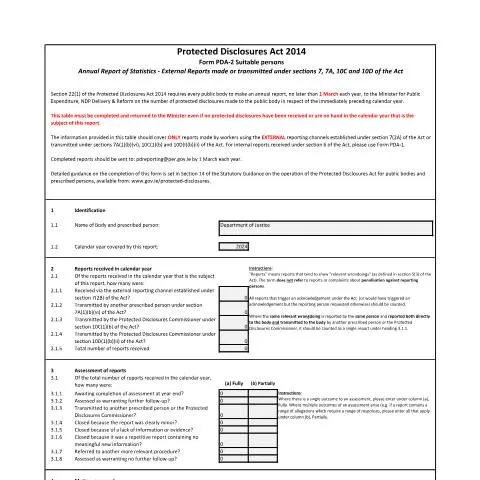
The Protected Disclosures Act 2014 establishes a legal framework in Ireland that encourages employees and workers to report wrongdoing in their workplaces without fear of reprisal. The Department of Justice, Home Affairs and Migration is mandated to compile and publish an annual report detailing the disclosures received and the department’s response to such reports. The Protected Disclosures in the Department of Justice Annual Report 2024 (form PDA2) provides a comprehensive overview of the department’s handling of protected disclosures for the year 2024.
Scope and Purpose of the Report
This report serves as a statutory obligation under Section 22(1) of the Protected Disclosures Act 2014, requiring public bodies to inform the Minister for Public Expenditure, NDP Delivery & Reform, about disclosures made by workers during the previous calendar year. Its primary purpose is to ensure transparency and accountability in how the department manages reports of wrongdoing, including criminal activity, breaches of legal obligations, environmental damage, and other misconducts.
Key Elements Covered in the 2024 Report
Number of Reports Received
In 2024, the Department of Justice received no external protected disclosures through the designated channels established under the Act. Specifically, there were zero reports transmitted via the external reporting channel, none transmitted by prescribed persons under sections 7A(1)(b)(vi), 10C(1)(b), or 10D(1)(b)(ii), and no reports received directly or indirectly by the department.
Assessment and Follow-up on Disclosures
The department assessed all reports received in 2024, with none requiring further investigation or follow-up. All disclosures were closed without further action, primarily because no reports were received during the year. The department also confirmed that no disclosures involved allegations of criminal offences, breaches of legal obligations, environmental damage, or other misconducts.
Investigation and Resolution of Reports
In cases where reports are received, investigations are initiated to verify the allegations. The 2024 report indicates that no investigations were opened during the year, and the department carried over four ongoing investigations from the previous year. Of these, three investigations were closed in 2024, with one remaining open at the end of the year. The average duration of investigations closed was approximately 78 days, with a median of 90 days, reflecting the department’s commitment to timely resolution.
Implications for Workers and Stakeholders
The absence of reports in 2024 highlights the importance of accessible and effective reporting channels. While no disclosures were made this year, the department maintains robust procedures to protect whistleblowers and ensure transparency. Employees are encouraged to use the prescribed external channels or internal mechanisms to report concerns, confident that their disclosures will be treated confidentially and without adverse consequences.
Fill in your form directly online
No printing: type your details into the boxes of the official form, tick, then download the PDF ready to send.
- 1Type into the form boxes
- 2Tick in one click
- 3Save and download the PDF
Legal and Procedural Context
The report aligns with Ireland’s legal obligations under the Protected Disclosures Act 2014 and the EU Whistleblowing Directive (EU 2019/1937), which emphasizes the importance of safe reporting environments within public bodies. The department’s adherence to these legal frameworks demonstrates its commitment to integrity, transparency, and accountability in public service.
Conclusion
The 2024 annual report underscores the department's transparency in handling protected disclosures, even in a year with no reports received. It reflects a proactive stance in maintaining a safe environment for whistleblowers and ensuring proper follow-up on any allegations of wrongdoing. Public bodies and employees alike benefit from understanding the procedures and protections available under the law, fostering a culture of openness and accountability.