Understanding the Habitual Residence Condition: A Guide for Applicants and Decision Makers
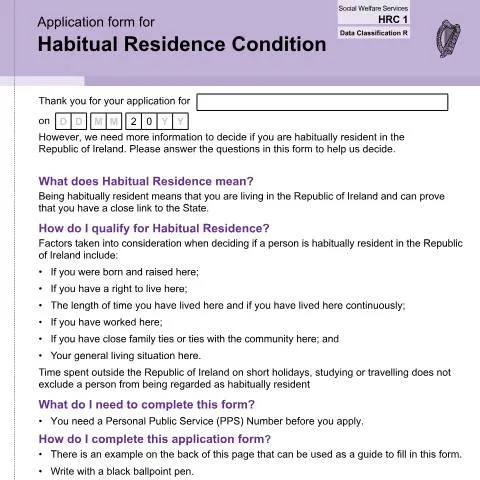
The Habitual Residence Condition (HRC) is a critical aspect of social welfare in Ireland, dictating eligibility for various benefits. Understanding this condition is paramount for those seeking support from the Department of Social Protection. The Operational Guidelines for Deciding Officers and Designated Persons provides a comprehensive framework to assess an individual's habitual residence, ensuring fair and consistent decision-making.
The Role of the Operational Guidelines in HRC Assessment
The HRC1 guidelines serve as an essential resource, outlining the responsibilities of decision-makers and clarifying the factors considered in determining habitual residence. This document is particularly useful for:
- Decision-makers within the Department of Social Protection
- Designated persons assisting applicants
- Individuals seeking clarity on their eligibility
By following these guidelines, officials can ensure that decisions are made based on relevant factors, reflecting an individual's genuine ties to Ireland.
Key Definitions and Concepts
Before navigating the guidelines, it's crucial to understand the key terms involved:
- Habitually Resident: Living in the Republic of Ireland with a close link to the State.
- Close Link: Factors such as family ties, community connections, and employment history contribute to establishing a close link with Ireland.
The guidelines provide a thorough explanation of these concepts, helping both applicants and decision-makers align their understanding with the legal framework established under the Constitution of Ireland and relevant acts.
Criteria for Establishing Habitual Residence
The guidelines outline several criteria that decision-makers should consider when assessing an individual's habitual residence:
- Duration of Residence: The length of time an individual has lived in Ireland, with an emphasis on continuous residence.
- Rights of Residence: Verification of the applicant's legal right to reside in Ireland, including EU and non-EU citizens.
- Employment History: Assessing whether the individual has worked in Ireland, which strengthens their claim to habitual residence.
- Family and Community Ties: Evaluating the presence of close family members or a significant community presence.
- General Living Situation: Understanding the applicant's overall circumstances, including housing and financial support.
Each of these criteria plays a vital role in the assessment process, ensuring that all relevant aspects are taken into account. The guidelines emphasize that no single factor is definitive; rather, the overall context must guide the decision.
Navigating the Application Process
The application process for determining habitual residence is nuanced and requires careful consideration of various elements. Here's a step-by-step guide to navigating the process:
Step 1: Gather Necessary Documentation
Before submitting an application, ensure you have the following documents:
- Your Personal Public Service Number (PPSN)
- Proof of residency, such as utility bills or lease agreements
- Evidence of family ties or community involvement, like membership in local organisations
- If applicable, documentation related to any employment history in Ireland
Step 2: Completing the Application Form
When filling out the application form, it's essential to:
- Provide accurate and complete information
- Use clear handwriting, preferably in black ink and block letters
- Sign the declaration to affirm the truthfulness of your information
Inaccuracies or omissions may lead to delays or rejections, so thoroughness is key.
Step 3: Submitting the Application
Your completed application form, along with the required documents, should be submitted to the relevant Intreo Centre or Social Welfare Office. Ensure that you keep a copy of your application for your records.
Common Pitfalls and Misinterpretations in HRC Applications
Applicants can encounter various challenges during the habitual residence determination process. Awareness of these common pitfalls can prevent delays and enhance the chances of successful applications.
Misunderstanding the Criteria
A recurring issue is the misinterpretation of what constitutes a close link to Ireland. Many applicants may assume that simply living in the country for a certain duration guarantees habitual residence; however, decision-makers look for a combination of factors. Applicants should be prepared to provide corresponding evidence.
Neglecting to Update Circumstances
Another common misstep is failing to inform the Department of any changes in personal circumstances, such as moving abroad or changes in family status. Keeping the department informed ensures the validity of your claim and compliance with regulations.
Assuming Automatic Entitlement
Some individuals may incorrectly believe that having lived in Ireland for an extended period automatically qualifies them for benefits. The guidelines clarify that each case is assessed on its individual merits, emphasizing the importance of presenting a strong case based on the outlined criteria.
The Decision-Making Process: A Closer Look
Decision-makers play a crucial role in interpreting the guidelines and applying them to individual cases. Understanding their perspective and the process can provide insight into what applicants can expect.
Initial Assessment
Upon receiving an application, decision-makers conduct an initial review to ensure that all necessary information has been submitted. Incomplete applications are returned, potentially delaying the process.
In-Depth Evaluation
Following the initial check, a thorough evaluation is conducted, considering all relevant factors:
- Comparative analysis of information provided versus what is required
- Interviews with applicants if necessary to clarify details
- Consultation of supporting documents to substantiate claims
Final Recommendation
Once the evaluation is complete, a recommendation is made regarding the applicant’s habitual residence status. This recommendation is then communicated to the applicant, along with any additional steps or requirements if the application is not approved.
Resources and Support for Applicants
For those embarking on the journey of applying for habitual residence determination, numerous resources are available to facilitate the process:
Local Intreo Centres
Intreo Centres provide hands-on assistance, offering information and guidance tailored to individual circumstances. They can help applicants understand their rights and responsibilities.
Citizens Information Services
Citizens Information Centres are another invaluable resource, providing free, independent advice on a variety of social welfare issues, including the Habitual Residence Condition. They can aid in deciphering complex guidelines and understanding the implications of the application process.
Online Resources
The official government website offers comprehensive information regarding the HRC, including guidelines, application forms, and relevant contacts. Accessing these resources can equip applicants with up-to-date information and tools needed for successful applications.
Conclusion: Ensuring Fairness in Social Welfare Decisions
The Operational Guidelines (HRC1) are instrumental in fostering an equitable social welfare system in Ireland. By providing a structured approach to assessing habitual residence, the Department of Social Protection aids decision-makers in delivering consistent, fair outcomes for applicants seeking support. Understanding these guidelines not only empowers applicants but also promotes transparency in the decision-making process.
Fill in your form directly online
No printing: type your details into the boxes of the official form, tick, then download the PDF ready to send.
- 1Type into the form boxes
- 2Tick in one click
- 3Save and download the PDF
Understanding the Habitual Residence Condition
The Habitual Residence Condition (HRC) is a critical criterion that determines an individual's eligibility for various social welfare benefits in Ireland. The HRC is intended to ensure that only those with a genuine connection to Ireland benefit from the social welfare system. To assess habitual residence, Decision Officers must consider multiple factors.
There are two primary tests for establishing habitual residence: the 'centre of interest' test and the 'physical presence' test. The 'centre of interest' test evaluates where a person's main home and social ties are located, while the 'physical presence' test examines the duration and continuity of a person's stay in Ireland. Understanding these assessments and their implications is essential for Decision Officers.
For example, if an applicant has lived in another country for a significant period but returns to Ireland, the Decision Officer must thoroughly investigate their reasons for return, previous residence, and any connections maintained in their former country. A critical evaluation of factors such as family ties, employment history, and future intentions will influence the outcome of the application.
It is also important to note that the HRC is separate from the duration of physical presence in Ireland; an individual may be physically present in the country for some time but may not necessarily be regarded as habitually resident if they do not have the necessary social ties and intentions to remain. Consequently, the assessment must be nuanced and consider individual circumstances to arrive at a fair decision.
Documentation and Evidence Required
Gathering adequate documentation is paramount in the evaluation of habitual residence. Decision Officers should inform applicants about the types of evidence that support their claims of habitual residence. Key documents may include proof of address, employment records, evidence of family connections in Ireland, and details of any existing social ties.
For example, utility bills, tenancy agreements, and bank statements can provide essential proof of residency. Employment contracts and payslips can substantiate claims of ongoing work or an intention to seek work in Ireland. If dependents are involved, details regarding their schooling or registration with health services can further bolster the case for habitual residence.
Decision Officers should also be aware that applicants may face barriers in obtaining certain documents, especially if they have recently returned from abroad. In such cases, it may be prudent to consider alternative forms of evidence or to grant additional time for applicants to gather the necessary documentation. Being flexible with documentary requirements can foster a more inclusive process for all applicants.
Case Law and Precedents Affecting Habitual Residence Decisions
Case law plays a significant role in shaping the interpretation of the Habitual Residence Condition. Decision Officers must stay informed of relevant court rulings that may impact habitual residence assessments. Courts have established important precedents that clarify how habitual residence is determined and what constitutes a genuine connection to Ireland.
For instance, in the case of Case C-140/02, Tsakouridis, the European Court of Justice emphasized the importance of social and economic ties in determining habitual residence. Rulings such as this underline the need for Decision Officers to consider not only the physical presence but also the broader context of an individual’s life in Ireland.
Additionally, the principle of proportionality must be applied in decisions. If the evidence suggests that an individual has a strong connection to Ireland but has recently faced challenges, such as unemployment or personal difficulties, the Decision Officer may need to weigh these factors carefully before arriving at a decision. Deliberations should be conducted with a full understanding of current precedents to ensure decisions are consistent and just.
Moreover, Decision Officers should be encouraged to consult with legal advisors if uncertain about specific interpretations of habitual residence in light of recent case law, thereby ensuring a robust and fair decision-making process.